Kaiser FC/ Matchday/ Archive 003
Archive 003
Ritual & Memory
5 min read

The Walk
Nobody
Talks About

Every supporter remembers arriving at the stadium. Far fewer remember the journey that took them there — the walk that existed in a curious space between ordinary life and matchday itself. A ritual so familiar it became invisible.

This is a strange oversight, because the walk to the ground has always been one of the most distinctive rituals in football culture.

By the time it begins, the supporter has already left behind the responsibilities of the week. Yet he has not quite reached football.

He is moving between worlds.

For generations, this transition happened on foot.

Long before modern transport networks carried supporters directly to stadium entrances, people approached grounds gradually. They emerged from railway stations, cafés, side streets and public squares.

Small groups became larger groups.

Familiar routes filled with familiar faces.

Entire neighbourhoods appeared to drift in the same direction, pulled by an invisible force that required no explanation.

Nobody organised these movements.

They simply happened.
The Route — How Supporters Reached The Ground

T − 90 Home

Scarf collected. Door closed behind.

T − 70 The Station

Same platform. Same faces. No need to speak.

T − 45 The Streets

The city begins to change shape around you.

T − 20 The Crowd

Streams of supporters converging. You are no longer alone.

T − 0 The Ground

The walk ends. The match begins.

Five stops. One direction. No map required.

An hour before kickoff, the city began changing shape.

Shopkeepers recognised it. Café owners recognised it. Children recognised it. Certain streets acquired a different rhythm as scarves appeared, conversations grew louder and streams of supporters slowly converged toward a destination that was often still hidden from view.

This was not yet football.

And yet it felt inseparable from football.

Perhaps that is why older supporters remember these walks so vividly. Not because anything dramatic occurred, but because so much of the day’s atmosphere lived within them.

Anticipation accumulated with every corner turned.

The first glimpse of other supporters.

The distant sound of a crowd.

The appearance of vendors selling programmes.

The sudden realisation that the stadium was now close enough to feel real.

These moments rarely appeared in newspapers.
Nobody recorded them.
Nobody considered them historically important.

Yet they became part of the memory nonetheless.

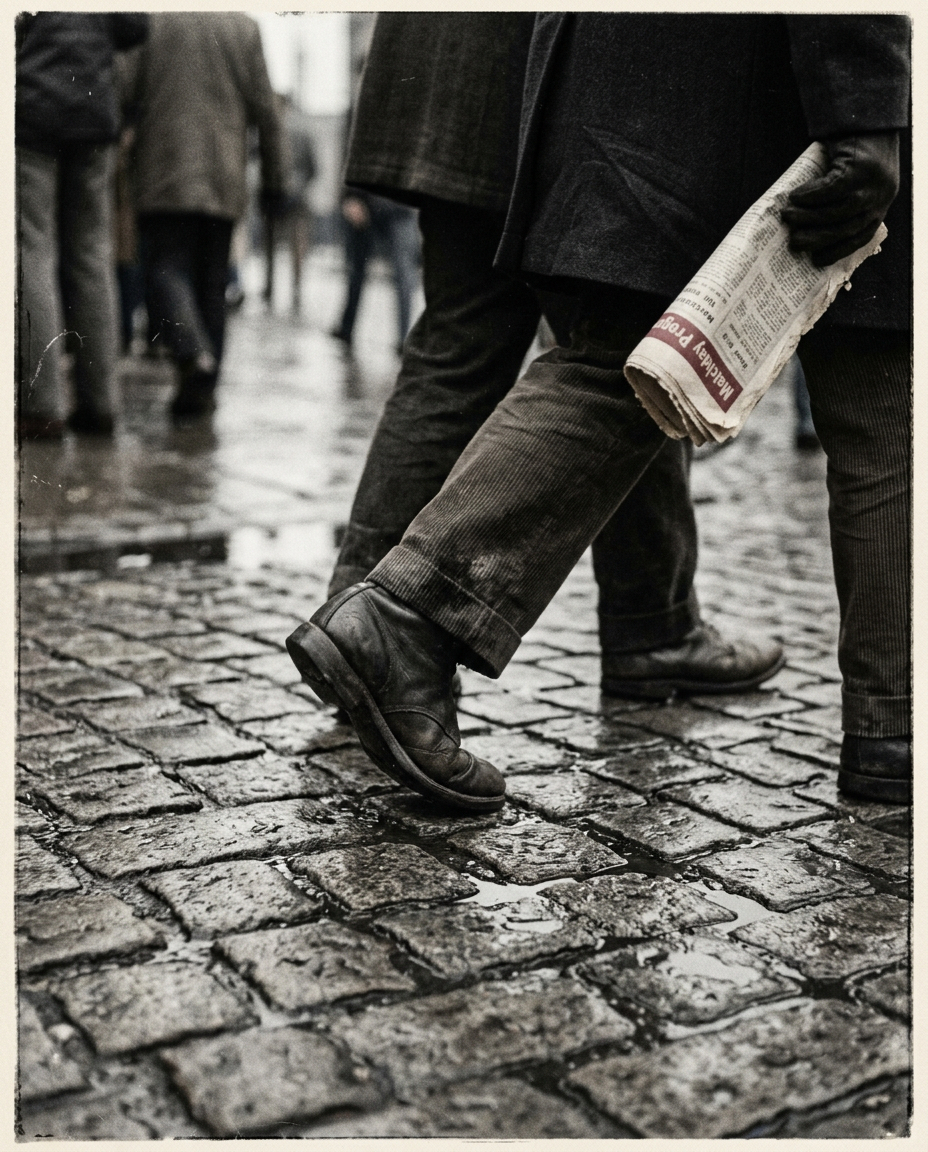
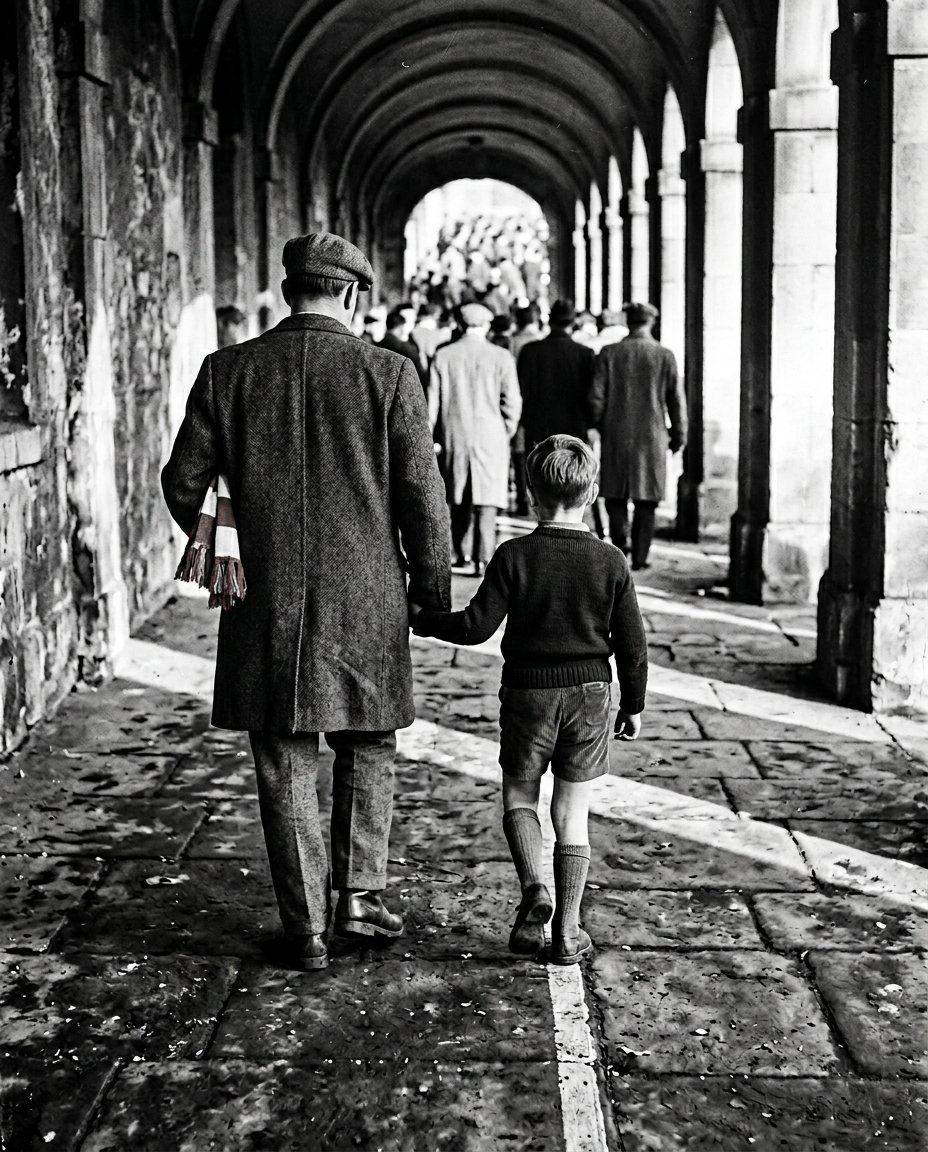
Supporters walking to the ground
The streets that became inseparable from matchday

Football possesses a remarkable ability to transform ordinary geography into something meaningful.

A street becomes associated with generations of journeys.

A particular bridge becomes inseparable from matchday.

A square acquires emotional significance simply because thousands of supporters passed through it on their way to somewhere else.

Years later, people often return to these places and discover that the physical environment remains largely unchanged.

The bakery is still there.

The café still opens on the corner.

The buildings still cast the same shadows across the pavement.

What has changed is the movement.

The river of supporters has disappeared.

The ritual has ended.

And suddenly it becomes clear that the walk was never merely a method of reaching the stadium.

It was part of the event itself.

A football match does not begin when supporters take their seats.

It begins when they start moving toward it.

The old supporters understood this instinctively. They knew that anticipation required space. The walk allowed the mind to leave ordinary concerns behind and adjust itself to the rhythms of matchday.

Modern football often values efficiency.

The old ritual valued transition.

Not because the walk was spectacular.
But because it gave significance
to everything that followed.

The goals mattered.

The result mattered.

The atmosphere mattered.

Yet before any of those things could happen, there was always the walk.

A journey so ordinary
that almost nobody talks about it.

And so important
that nobody who experienced it
ever truly forgets it.

Continue The Archive
Archive 004Community & Ritual7 min read

The Last Pub Before The Ground

Every football city had one. Its name often mattered less than its location. What people remembered was not the building itself — they remembered what...

Read Next Archive
Wear The Archive View The Collection