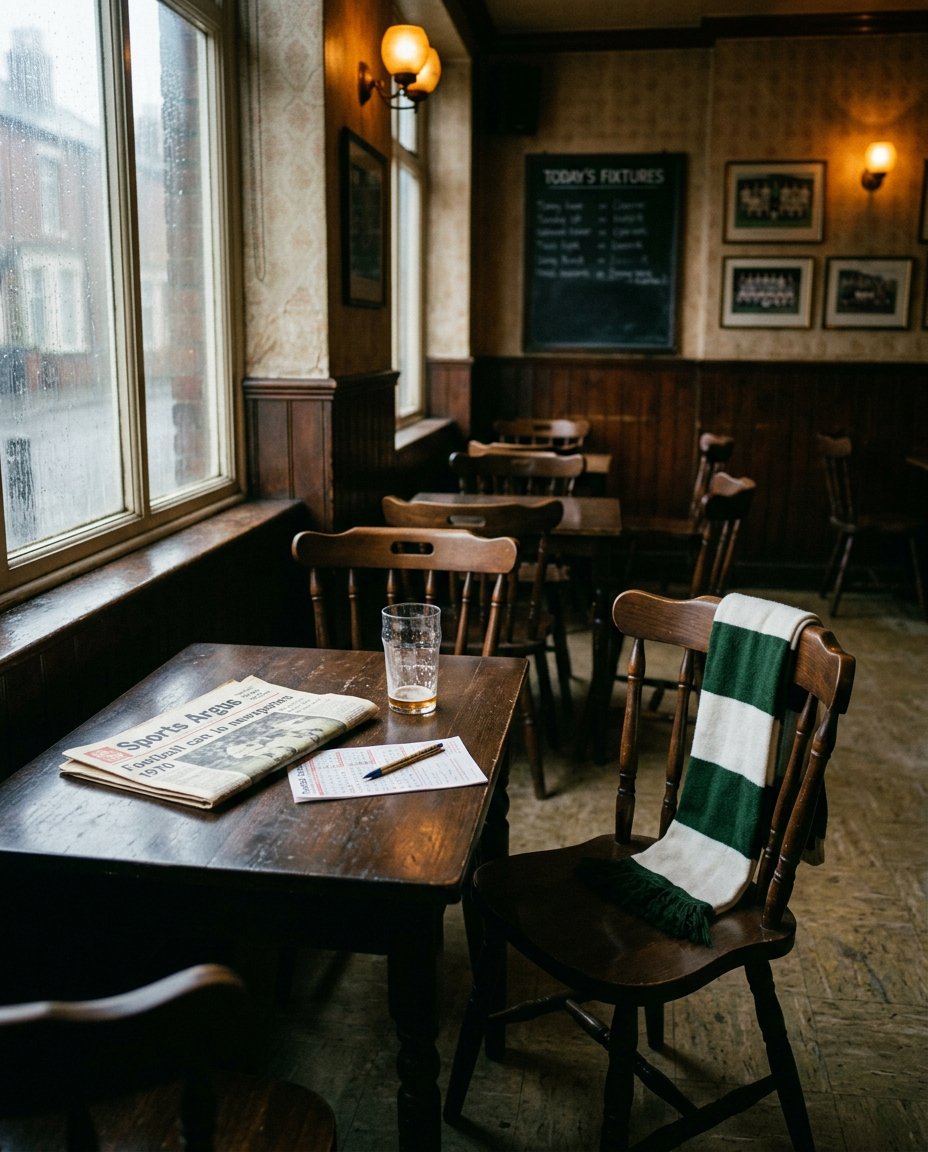
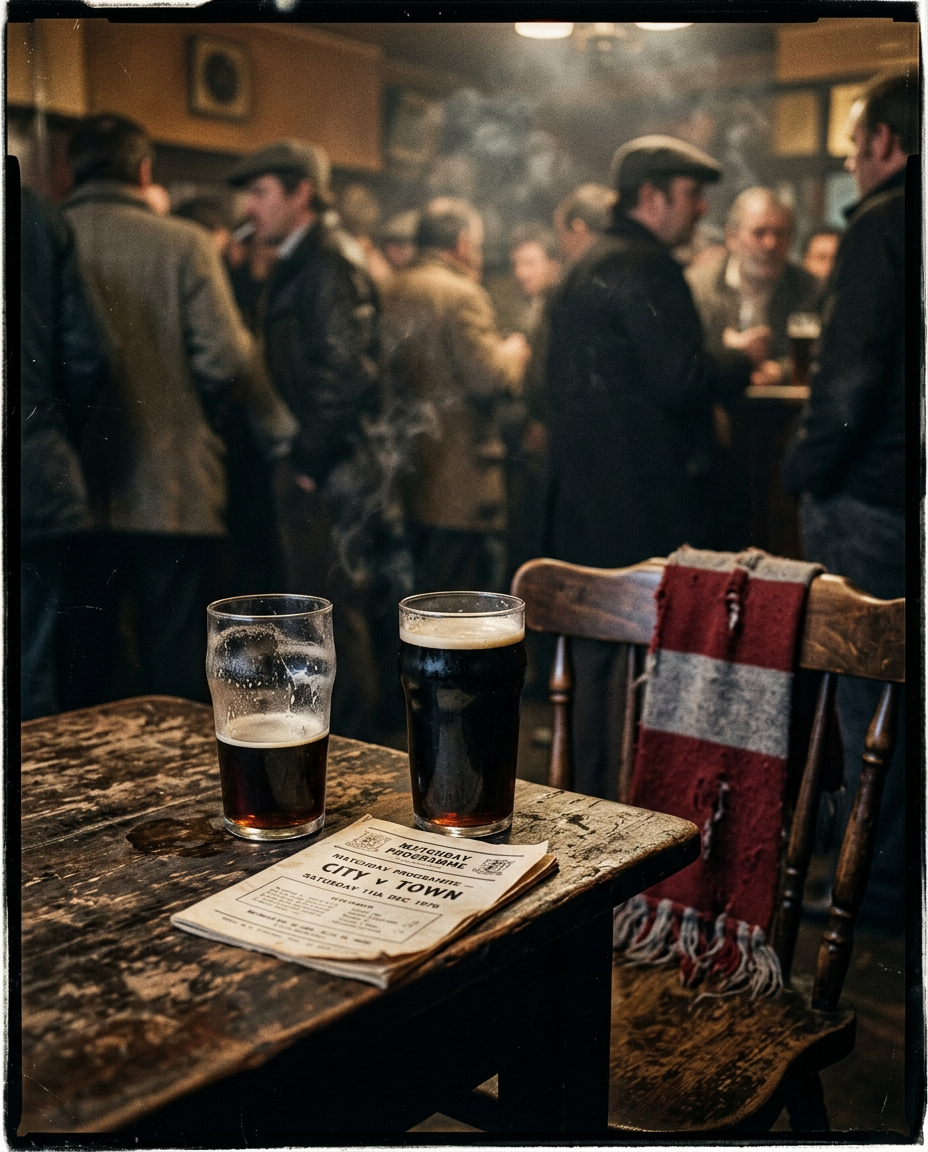
Sometimes it stood beside a railway bridge blackened by decades of smoke. Sometimes it occupied the corner of a narrow street hidden between rows of terraced houses. In other places it sat quietly across from a tram stop, its windows fogged by conversation and cigarette smoke long before the first supporters arrived.
Ask an older supporter where it was and he could point toward it immediately.
Ask him what it was called and he might hesitate.
Long before football became a product delivered directly into living rooms, attending a match required a gradual transition from ordinary life into something else. Supporters did not simply appear inside stadiums. They moved toward them through a sequence of rituals that had been repeated so often they felt permanent.
And somewhere along that journey there was usually one final stop.
The last pub before the ground.
The remarkable thing about these places was how ordinary they appeared to outsiders.
A traveller passing through the neighbourhood on a Tuesday afternoon would have noticed very little. A few tables. A wooden bar. Some framed photographs hanging on smoke-stained walls. The sort of establishment that existed in thousands of towns and cities across Europe.
Yet on matchday the building underwent a transformation.
Not dramatic.
Not theatrical.
Something subtler.
The room slowly began to fill with anticipation.