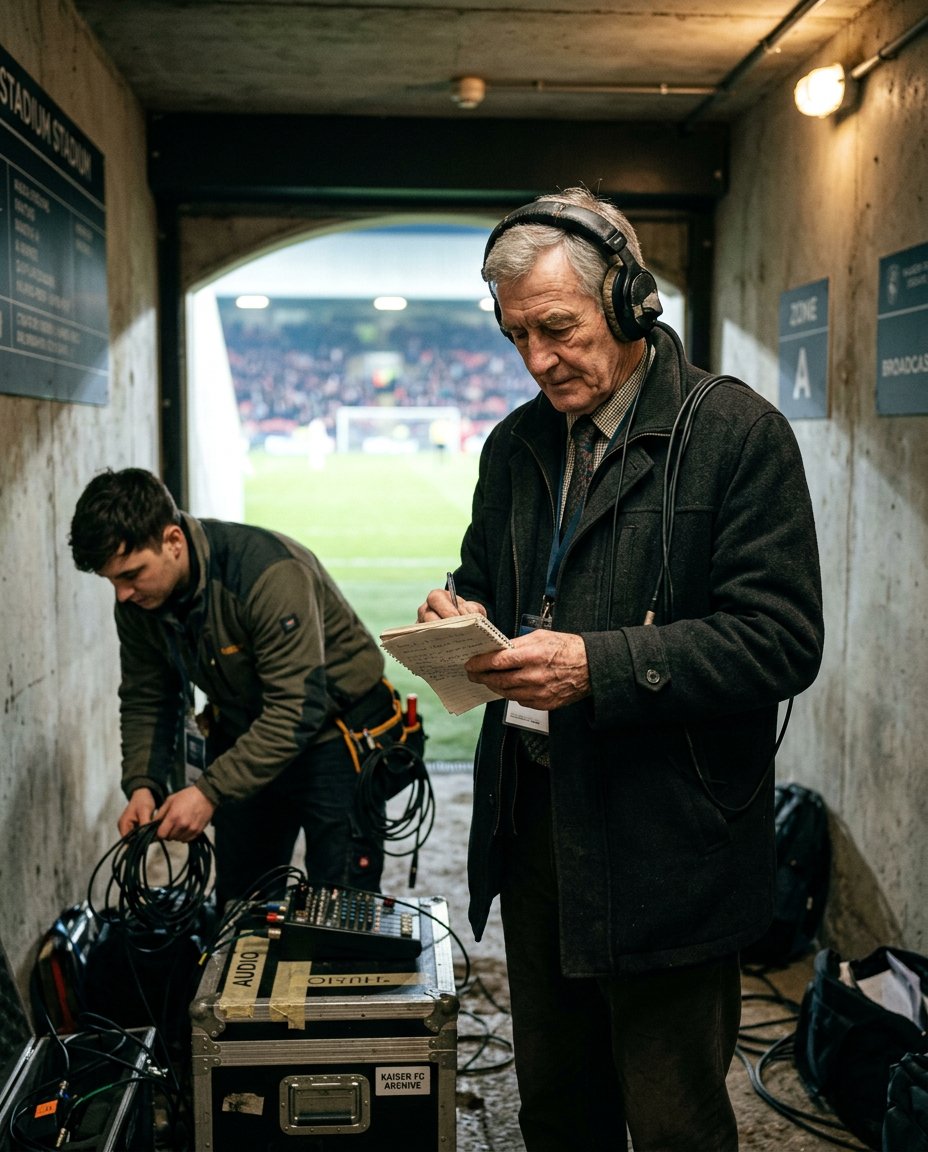
Now imagine not one of them, but eighteen.
Not eighteen tournaments as archive folders, not eighteen logo packages, not eighteen pages arranged in chronological order, but eighteen living summers, winters, journeys, voices, stadiums, hotel rooms, press boxes, microphones, cables, notebooks and matches. Eighteen moments when the world paused long enough for football to become larger than the competition itself. Eighteen times returning to the same event and finding it altered, modernised, expanded, commercialised, technologised and yet somehow still recognisable once the ball began to move.
The man who saw eighteen World Cups did not witness only football. He witnessed the changing machinery around football. He saw the game before it became a permanent global feed. He saw it when the voice mattered because images were scarce, when a commentator had to build the match inside the listener’s mind, when silence on air was dangerous and description carried responsibility. He saw the tournament when travel felt heavier, when information arrived slower, when distance still had meaning. Then he saw the same tournament become television theatre, satellite spectacle, digital platform, marketing empire and endless content stream.
The astonishing part is not only longevity. Longevity can become a number if it is not handled carefully. Eighteen World Cups is impressive, but the number itself is not the story. The story is what that number contains. It contains the movement from radio to television, from black-and-white memories to high-definition obsession, from handwritten notes to live data, from journalists trying to find a phone line to entire stadiums surrounded by instant transmission. It contains football becoming more visible than ever, and perhaps, in certain ways, harder to truly see.
A young reporter arriving at his first World Cup in the late 1950s entered a different planet from the one a modern broadcaster enters today. The tournament was smaller, rougher, less protected by corporate surfaces. The press did not move inside the frictionless system of credentials, media buses, controlled access, mixed zones and digital feeds that now shape major sporting events. Much had to be improvised. Much had to be understood on the move. The journalist was not only a narrator; he was a traveller, interpreter, witness and courier. He carried the match back to people who could not be there.
There is something almost physical about that kind of journalism. A microphone is not just equipment. A notebook is not just paper. A press credential is not only permission. Together they form a portable station from which the world can be described. The reporter takes his place somewhere above or beside the pitch, looks down at twenty-two players, listens to the crowd, measures the weather, the tension, the tempo, the fear in a defender’s clearance, the authority in a midfielder’s first touch, and then translates all of it into language quickly enough for the moment not to escape.