Kaiser FC/ Every Four Years/ Archive 007
Archive 007
Arrival & Belonging
11 min read

The Country That
Arrived For
The First Time

Every World Cup has its familiar nations — the shirts everyone recognises before the anthem begins. But somewhere in every generation, a country arrives carrying something different: not expectation, not arrogance, not history demanding another chapter, but the fragile weight of a first time. The first flag in the crowd. The first anthem on that stage. The first child who sees his country not as a small place on the edge of the football map, but as part of the tournament everyone is watching.

There is a particular kind of supporter who does not travel to the World Cup expecting the world to understand him. He travels hoping the world will finally notice that he exists.

He may arrive with a flag folded carefully in a backpack, a shirt bought from a local market, a scarf knitted by someone who could not afford the journey, and a story that is not written in any official preview. He knows the stadium will be filled with names larger than his country’s football history. He knows the commentators may mispronounce the players. He knows many people watching from far away will treat the match as a curiosity — a fixture between a familiar power and a newcomer allowed into the room for the first time.

But to him, it is not curiosity.

It is confirmation.

For the countries that arrive at the World Cup for the first time, the tournament begins long before the opening whistle. It begins in airports where groups of supporters recognise each other by colour before they know each other by name. It begins in streets where a flag that once felt regional, distant or unseen suddenly becomes international currency. It begins in messages sent back home from hotel lobbies, bus stations and stadium gates: we are here. They can see us now.

Football has always had a cruel habit of reducing new nations to difficulty level. Analysts ask whether they can defend, whether they can survive, whether they will lose heavily, whether they are tactically prepared for what is coming. Those questions may be fair inside the game, but they miss almost everything surrounding it.

A first World Cup is not only a sporting test. It is a public arrival.

It is a country walking into a global theatre with its language, colours, songs, accents, doubts and stubborn belief, and asking not to be mistaken for anyone else.

That is why the first match matters even before the scoreline begins to form. The players line up, and for a few seconds the world sees them in a way it never has before. They are no longer an underdog in a qualifying table or a federation name at the bottom of a draw graphic. They are bodies on the grass, hands over hearts, eyes fixed on a flag being raised somewhere above them.

Behind them, in the stands, there are supporters who know exactly how far the journey has been. Not only in kilometres, but in years.

For many of those supporters, the trip is financially irrational. That is the part outsiders often misunderstand. To follow a country making its first appearance can mean spending money that should have gone elsewhere, negotiating time off work, borrowing, sharing rooms with relatives of relatives, sleeping in airports, carrying food in bags, and stretching each day of the tournament like a budget that refuses to obey mathematics. It can mean travelling not because the team is expected to go far, but because this particular first time will never happen again.

There are football nations accustomed to return. They speak of campaigns, cycles, squads, expectations. Their supporters plan trips with the weary confidence of people who have lived this before. A debutant country does not have that luxury.
The Arrival

Its supporters do not travel inside a tradition.
They travel to create one.

That is why the objects around them become so important. The first ticket is not merely a ticket. It is proof. The first scarf is not only fabric. It is a declaration. The first shirt worn in a World Cup crowd carries a weight no replica can reproduce later. It remembers the heat, the flight, the fear of being eliminated immediately, the pride of hearing the anthem, the stranger who asked for a photograph, the local child who pointed at the flag and wanted to know where it came from. Those details may never appear in football history, but they are often what the people who travelled remember most.

The first goal, if it comes, changes everything. Even if the match is lost. Even if the group stage ends quickly. Even if the team returns home after three games with no great sporting achievement to show the world. The first goal creates a permanent before and after. Somewhere, in a city or village thousands of kilometres from the stadium, someone shouts in a room where the television had been surrounded by neighbours since morning. Someone who had never seen their country score on that stage now has a moment to carry. The scoreboard may treat it as one goal among many. The country does not.

And if the goal does not come, the memory can still remain intact. That is another thing football’s obsession with outcomes fails to understand. There are defeats that do not feel empty because the country has already crossed a line simply by being there. The anthem was heard. The flag appeared in the broadcast. The shirt entered the tournament archive. The name was printed on match tickets, schedules, wall charts and children’s notebooks.

The world had to make space.

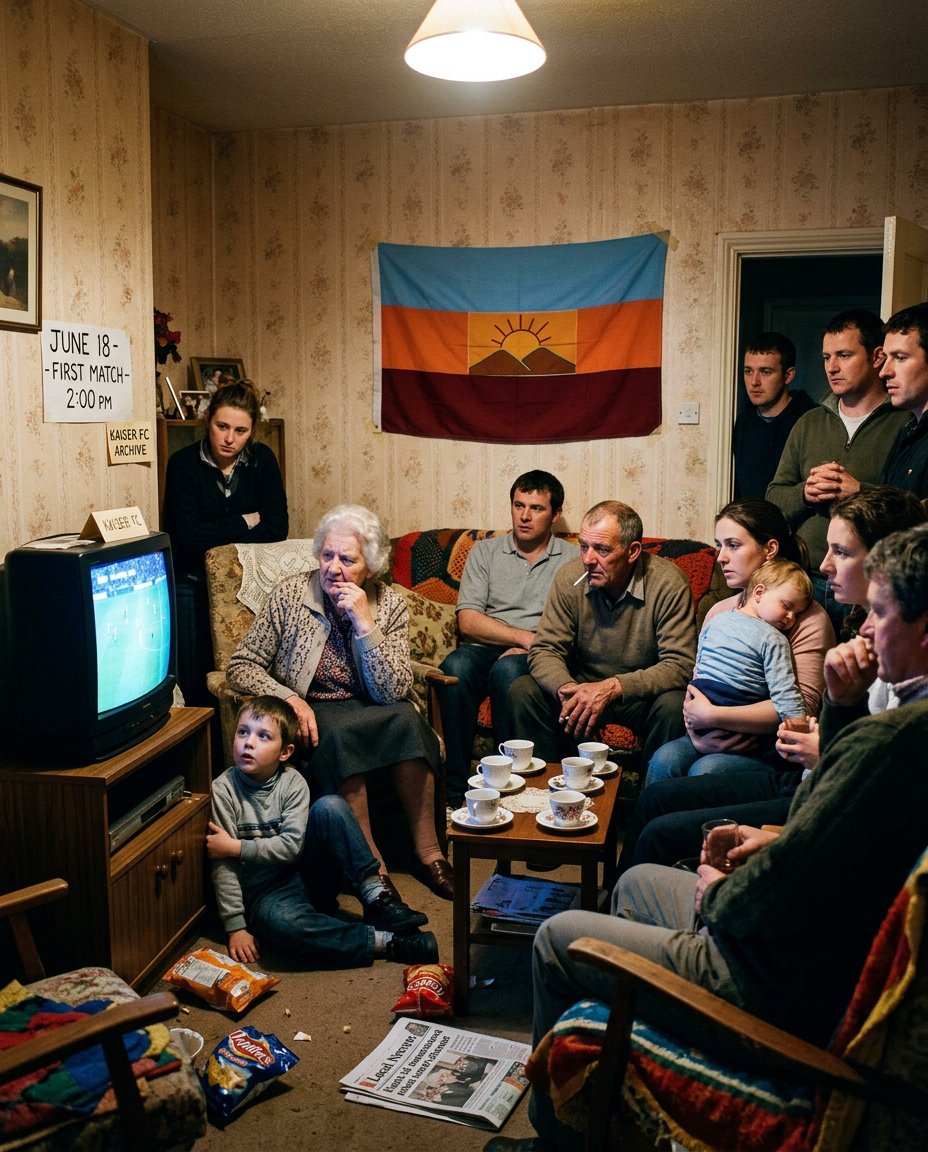
A family watching their country’s first World Cup match from a room back home

A room back home — the first time the country walked out

This does not mean the football itself is irrelevant. It matters deeply. A debutant team does not want to be patronised. It does not arrive asking for applause for participating. It arrives with players who have fought through qualifying, carried domestic expectations, endured doubts and earned the right to stand there. But the emotional scale of the first appearance cannot be measured only by tactical performance. The match is both sport and ceremony. Both test and evidence. Both ninety minutes and something much older finally becoming visible.

What makes these stories so powerful is the way they expand the meaning of the tournament. The World Cup is often sold as a festival of the greatest teams, but some of its most human moments belong to those who arrive without a catalogue of famous memories behind them.

Football is not only about dominance.
It is also about admission.

About a country seeing itself reflected on the largest screen in the game and realising that the map has changed.

There is a scene that repeats itself in different forms across tournaments. A small group of supporters stands outside a stadium hours before kickoff. They are taking too many pictures because they know they may never be in that exact place again. One of them holds the flag too carefully, as if the wind might damage not the fabric but the meaning. Another checks a phone, trying to send a video home, but the signal is weak because thousands of people are doing the same thing. Someone starts a song. Others join slowly, uncertain of how loud they are allowed to be in a place where larger nations seem to own the air by habit.

Then, gradually, the group becomes less careful. The flag rises higher. The song grows stronger. Strangers begin to look. A few smile. A few record them. The supporters realise that no one has come to move them aside. The city has accepted the sound. For the first time, their country is not watching the World Cup from the outside.

It has arrived.

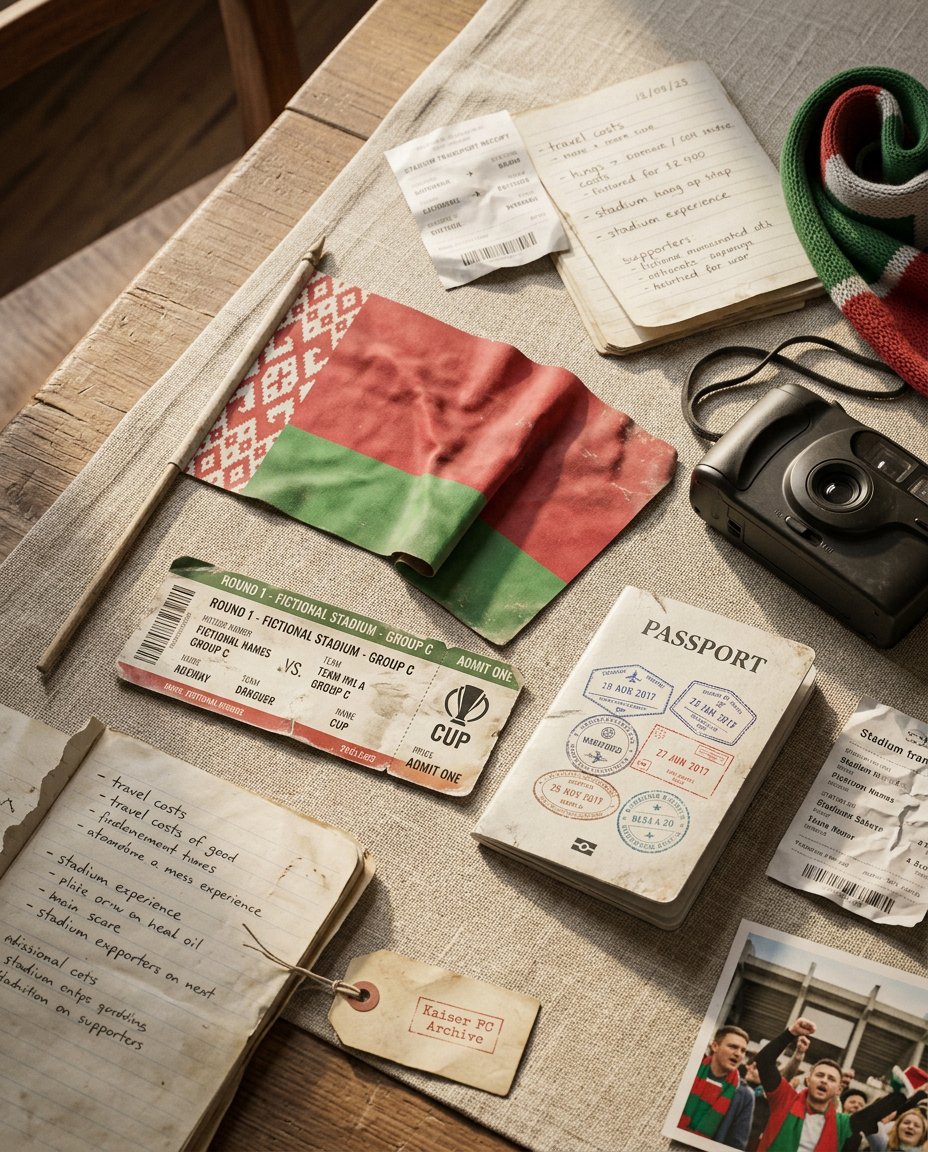
Tickets, a scarf and a flag kept as memory artifacts from a first World Cup
Kept Like Relics. The first ticket, the first flag — proof it happened

That moment is difficult to merchandise honestly because it cannot be reduced to a badge or a slogan. It is not simply pride. It is relief, disbelief, nervousness and belonging arriving at once. It is the sensation of being small and enormous in the same breath. Small because the stadium, the tournament and the world are vast. Enormous because, for one afternoon, the country you carry on your back is no longer invisible.

Every four years, the tournament gives football its familiar images. The champions lifting silver. The favourites falling. The giant banners. The goals that will be replayed forever. But hidden among those louder histories are the quieter arrivals that may matter even more to the people who lived them. The first flag. The first anthem. The first shirt. The first photograph outside the stadium. The first time a child at home saw his country walk out and understood that the world was not as closed as it had seemed.

A nation does not need to win the tournament for its first World Cup to become sacred.

Sometimes it only needs to arrive.

And when it does,
the archive begins.

Share This Archive
Reddit X WhatsApp
Next in Every Four Years
The Passport Full
Of Stamps
Every Four Years — Archive 008