Kaiser FC/ Fathers & Sons/ Archive 002
Archive 002
Objects & Identity
7 min read

The Scarf
Was Never
Really Mine

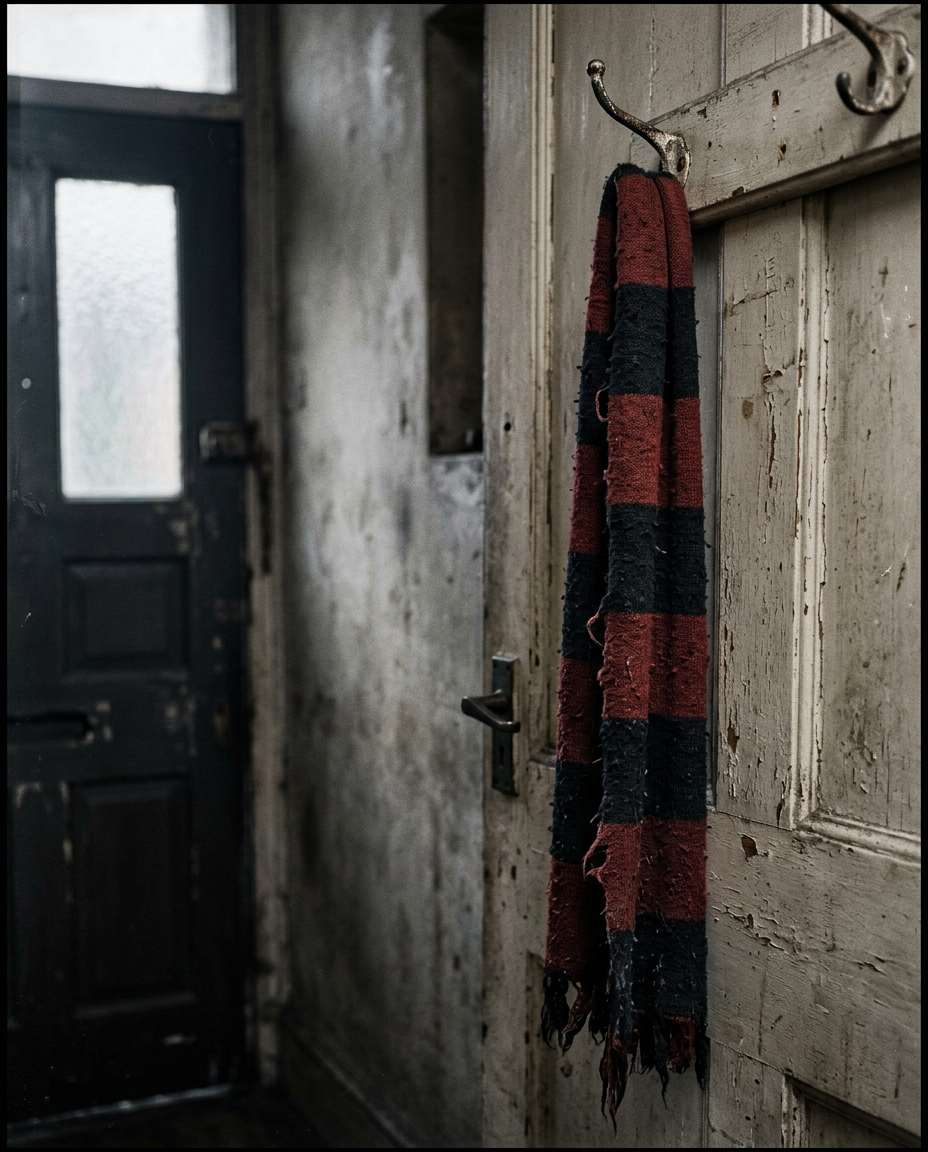
For most of my childhood, the scarf lived on a hook beside the front door. It seemed to have existed before memory itself — like the house, like the street, like my father’s voice. Every Saturday it disappeared. Every Saturday evening it returned.

At the time, I never questioned where it went.

Children rarely investigate rituals they have always known. They accept them. They grow around them. They assume the entire world functions according to the same invisible rules that govern their own home.

Only much later did I understand that the scarf was travelling somewhere important.

Or perhaps it would be more accurate to say that it was travelling with someone important.

Football supporters often speak about inheritance as though it begins with an object.

The truth is usually the opposite.

The object arrives last.

The inheritance begins years earlier.

It begins when a child notices that certain afternoons matter more than others. It begins when he understands that the person he admires most in the world behaves differently on matchday. It begins when he realises that football is not merely something his father watches, but something he feels.

Children observe these things with extraordinary precision.

They notice anticipation long before they understand its source.

They notice routines before they understand their purpose.

They notice devotion before they understand what devotion means.

My father never sat me down and explained why the club mattered. He never delivered a speech about loyalty, identity or belonging. Looking back, I suspect he would have found the idea slightly ridiculous.

Instead he taught me the way most fathers teach important things.

Indirectly.

Through repetition.

Through example.

Through years of small moments that seemed insignificant at the time.

I watched him leave for matches in the same scarf. I watched him return wearing the same scarf. I saw it hanging beside the door through victories, defeats, promotions, relegations and entire seasons I was too young to fully understand.

The scarf became part of my understanding of who he was. Not because it possessed any special qualities of its own, but because it appeared wherever football appeared.

And football, in those years, seemed inseparable from him.
1962

His first match. The scarf was new.

1971

A promotion. Worn until midnight.

1985

Rain-soaked. An old stadium. A forgotten result.

1998

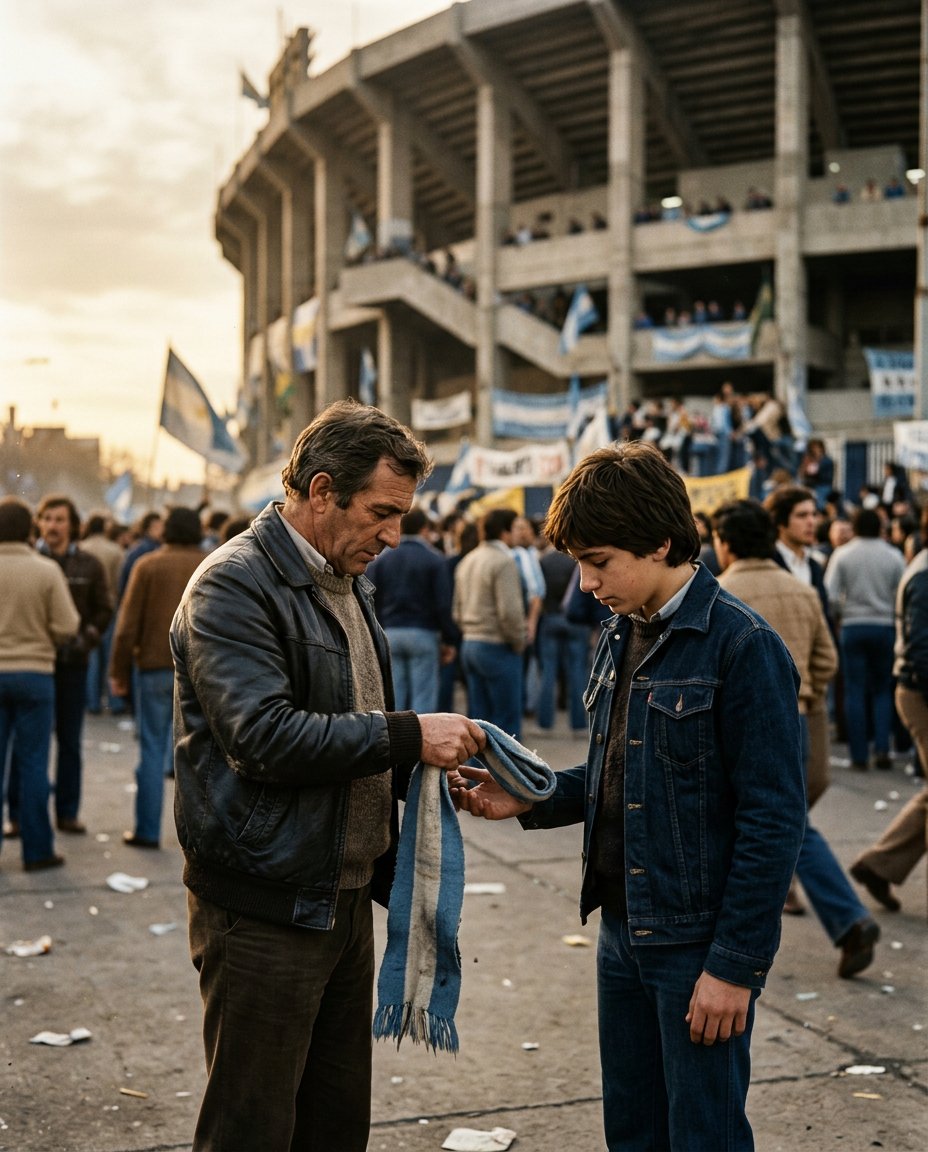
The handover. No ceremony. No words needed.

2007

My first match with it. Already mine. Not yet mine.

Today

On a hook. Waiting for the next turn.

The scarf is not property — it is a bridge between generations

Looking back now, I realise that the scarf was slowly collecting two histories at the same time.

The first belonged to my father.

Rain-soaked afternoons.

Long journeys.

Old stadiums.

Forgotten players.

Entire decades of Saturdays that existed before I arrived.

The second history belonged to me.

A child watching.

A child learning.

A child gradually absorbing a culture without even realising it was happening.

By the time he attends his first match,
much of the inheritance has
already occurred.

The stadium merely confirms what the home has been teaching him for years.

I cannot remember exactly when I first wore the scarf. The moment itself was surprisingly unremarkable.

There was no ceremony.

No dramatic significance.

No declaration that I was now old enough.

One day it simply happened. My father handed it to me.

Perhaps he was cold. Perhaps I was. Perhaps neither of us thought much about it.

The most important moments in family life rarely announce themselves while they are taking place.

Only later do they acquire meaning.

Only later do we realise that something invisible changed.

The scarf passed between generations

Not Property. A Bridge.

An inherited scarf carries
other people inside it.

Every worn thread, every faded colour,
every repair contains evidence
of lives that existed before your own.

You never truly possess it. You share it. With memory. With history. With the people who carried it before you.

My father grew older. As fathers do. Without warning, the roles began shifting.

I started making the journeys myself. I started following the same routines. I started returning to the same places. Somewhere along the way I stopped being the child watching football happen and became the person responsible for carrying the tradition forward.

That was when I finally understood
something the scarf had been
trying to teach me all along.

It was never really mine.

It had never belonged entirely to my father either.

Both of us had misunderstood its purpose.

The scarf was not property.

It was a bridge.

A physical reminder that certain loyalties survive longer than the people who first created them.

Today it still hangs in my home. The colours are more faded than ever. The wool is softer. Time has continued its work.

Occasionally younger members of the family ask about it. They want to know where it came from. They want to know why it matters. They want to know how old it is.

I answer as best I can.

And while I am speaking, I sometimes catch myself looking at the scarf and thinking about the strange journey it has taken.

Not from one stadium to another.

Not from one decade to another.

From one generation to another.

That was always the real journey.

The scarf was never really mine.

It was simply
my turn to look after it.

Continue The Archive
Archive 003Character & Loyalty8 min read

He Never Explained Why It Mattered

My father was not a man who explained things. At least not the things that mattered. Practical knowledge flowed from him easily. Feelings belonged to a...

Read Next Archive
Wear The Archive View The Collection