Kaiser FC/ Fathers & Sons/ Archive 004
Archive 004
Memory & Loss
7 min read

The Last
Match We
Watched
Together

If somebody had told me that afternoon would become important, I would have laughed. The match was ordinary. The opponent was ordinary. Even the weather felt ordinary. That is how the most significant days disguise themselves.

It belonged to the vast category of football matches that arrive, are played and disappear into memory without leaving much behind.

At least that is what I believed at the time.

Looking back now, I sometimes think the most significant days of our lives often disguise themselves as completely unremarkable ones.

Nothing announces them.

Nothing warns us.

They pass through our lives quietly, hiding their future importance beneath routines so familiar that we barely notice them while they are happening.

My father and I had attended football together for years by then. Long enough that the rituals required no discussion. We knew where to meet. We knew which route we preferred. We knew which subjects would eventually dominate conversation before kickoff and which disagreements would inevitably reappear before halftime.

Football had become less of an event and more of a rhythm.

A recurring chapter in the story of our relationship.

By that point, I was no longer the child he had first taken to the stadium. I was an adult. The imbalance between parent and son had softened. We spoke differently now. Argued more openly. Agreed less frequently.

The football remained.

Everything else evolved.

I remember meeting him outside the station. Or perhaps it was outside the café. Strangely, some details have become less certain over time while others remain impossibly clear.

Memory works that way. It preserves what it wants and ignores our preferences entirely.

We talked about the league table. About work. About a player whose form had become impossible to defend. About nothing particularly important. The conversation moved naturally between football and life, just as it always had.

Had we known what the future held,
we might have tried to create
a perfect memory.

Instead, we received something
far more valuable.
An honest one.
The Afternoon — Every Moment Looked Exactly Like The Others

Meeting

Outside the station. The usual place.

The Walk

The usual route. The usual conversation.

Turnstiles

The queue. The folded sports pages.

Kickoff

An ordinary match. An ordinary day.

Halftime

The usual opinions. The usual silence.

Full Time

A few comments on the game.

Went Home

That was all.

Nothing marked the last step as different from all the others. Nothing ever does.

The match itself has become strangely difficult to reconstruct.

I remember fragments.

A goal.

A missed chance.

A referee nobody seemed to like.

The sort of details that accompany thousands of football matches and rarely survive intact.

What remains vivid is everything around the game.

The walk toward the ground.

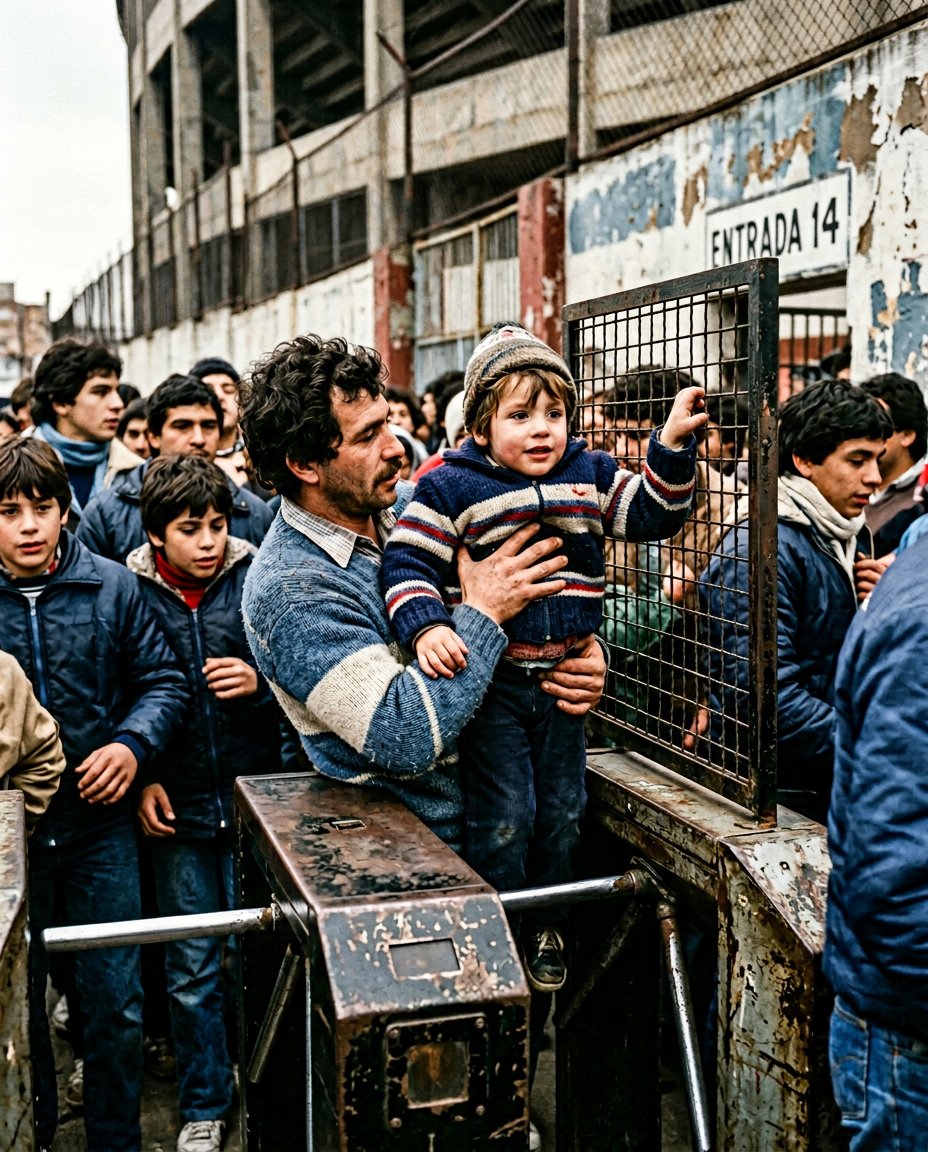
The queue at the turnstiles.

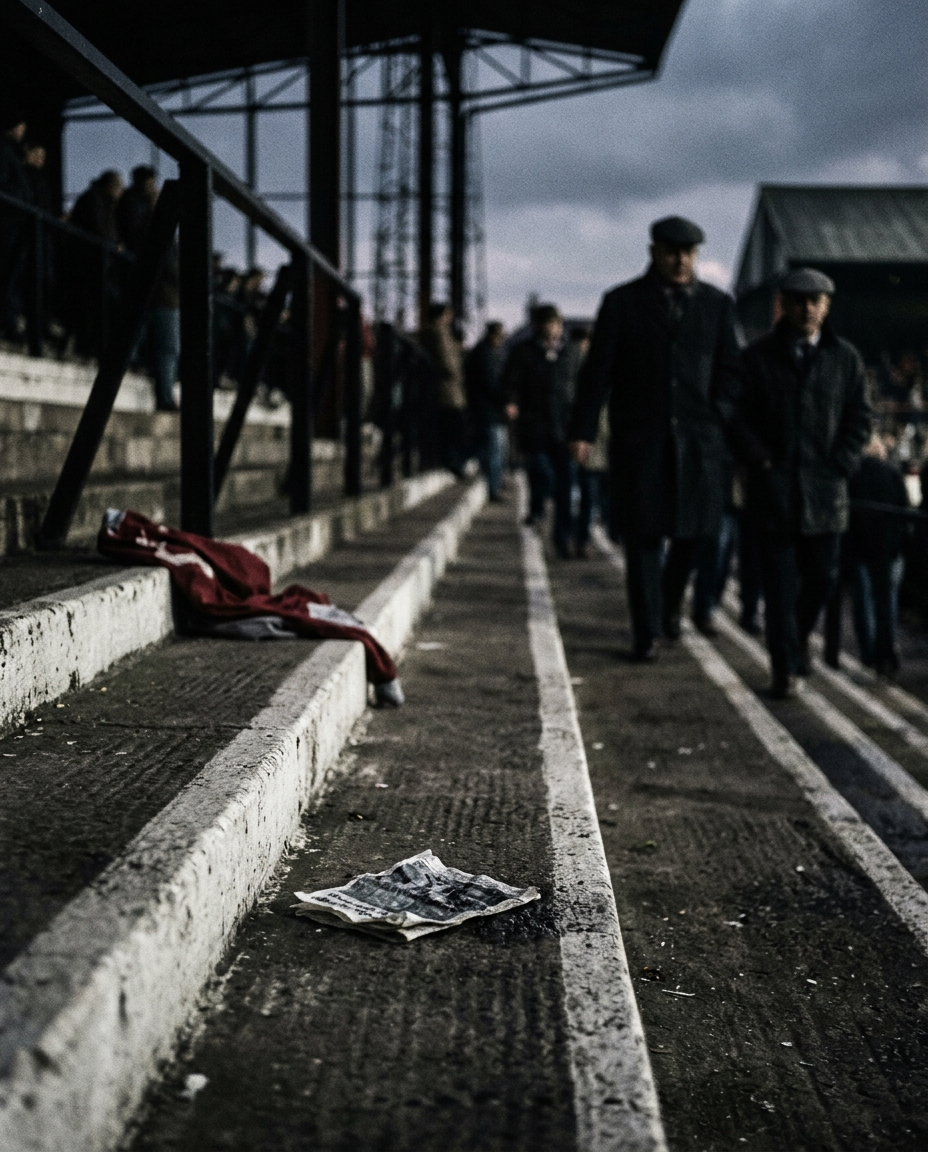
The way my father folded the sports pages and tucked them beneath his arm.

The way he looked toward the pitch during warm-ups.

The familiar rhythm of sharing an afternoon without needing to fill every silence.

The ability to sit beside someone
for hours without feeling any pressure
to speak is its own form of trust.

Football provided space for that. The match occupied our attention when conversation paused. The crowd filled the gaps. The shared experience carried the rest.

The turnstile, the last time

Ordinary Endings

Life rarely provides neat endings.

There was no final embrace.
No dramatic farewell.
No concluding speech.

The match ended.
We left the stadium.
Then we went home.

That was all. At least that is how it appeared. Only later did I discover that ordinary endings can be the most powerful ones.

For a long time, I searched that memory for something larger. Some hidden wisdom. Some final lesson. Some moment that would justify its significance.

Eventually I stopped looking.

The truth turned out to be simpler.

The memory matters because it was real.

Nothing was performed.

Nothing was arranged.

Nothing was treated as historic.

It was simply a father and son spending an afternoon together in a place that had accompanied them through much of their lives.

When people speak about inheritance, they often focus on objects.

A scarf.

A ticket.

A photograph.

Objects can be held. They can be stored. They can be passed forward.

But the things we treasure most are often less tangible.

An afternoon.

A journey.

A conversation.

A match that nobody considered important at the time.

The last match we watched together was not memorable because of what happened on the pitch. It became memorable because of what happened afterwards.

Life continued.

And one day I realised there would never be another one.

That understanding arrived slowly, years after the final whistle. Yet once it arrived, it changed the memory forever.

The score has long since disappeared.

The league table is forgotten.

Most of the details have faded.

What remains is something much simpler.

The image of two people
walking toward a stadium
without the slightest idea
that they were creating a memory
that would survive for the rest
of one of their lives.

The best memories are rarely
the ones we attempt to manufacture.
They are the ones that happen naturally
while we are busy paying attention
to something else.

Continue The Archive
Archive 005Identity & Independence7 min read

The Goals They No Longer Shared

Football culture has always been fascinated by inheritance. Far less attention is given to the moments when that continuity quietly comes to an end — not...

Read Next Archive
Wear The Archive View The Collection