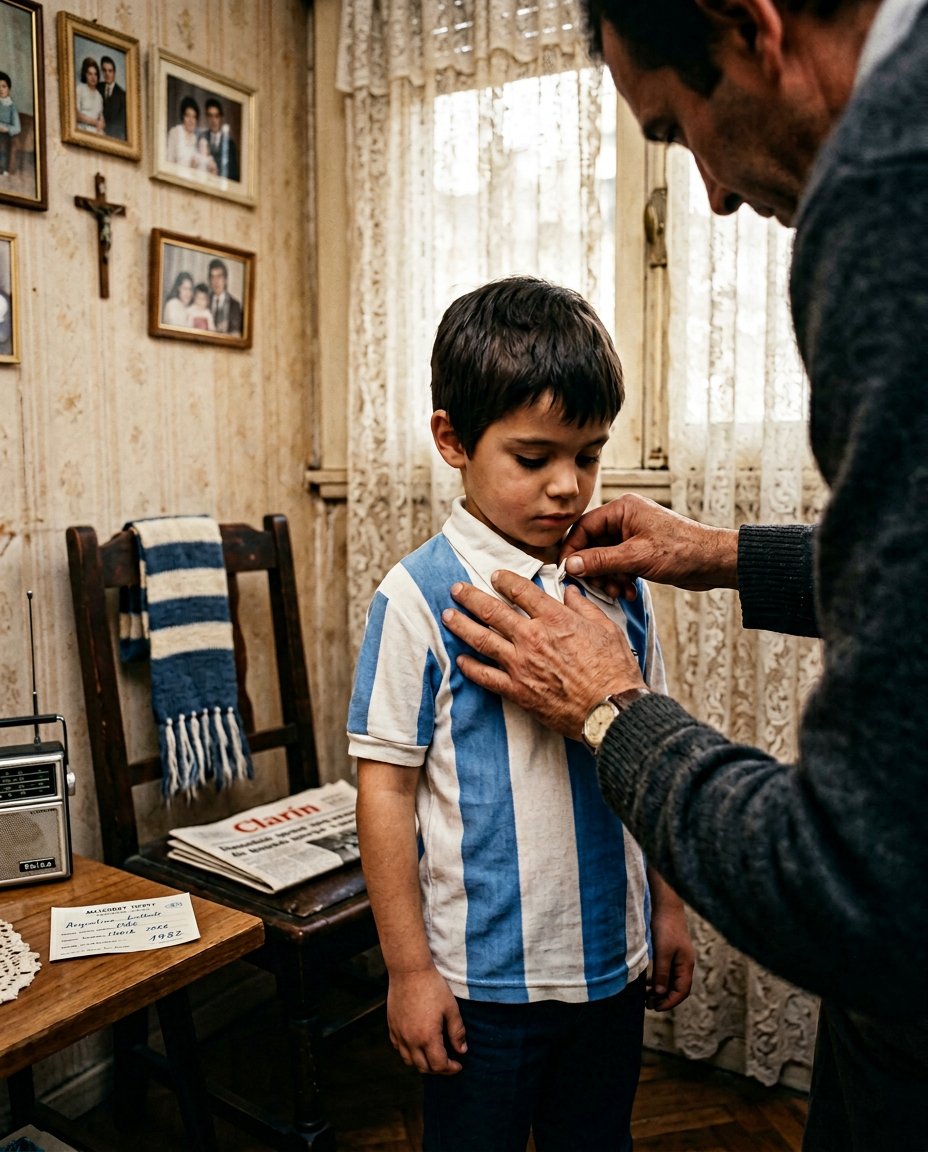
The years blur together. Opponents disappear from memory. League tables fade. Even the result, which once seemed important enough to discuss for days, eventually dissolves into the background.
Yet something else remains.
A hand.
Not the match itself.
Not the stadium.
Not the players.
A hand.
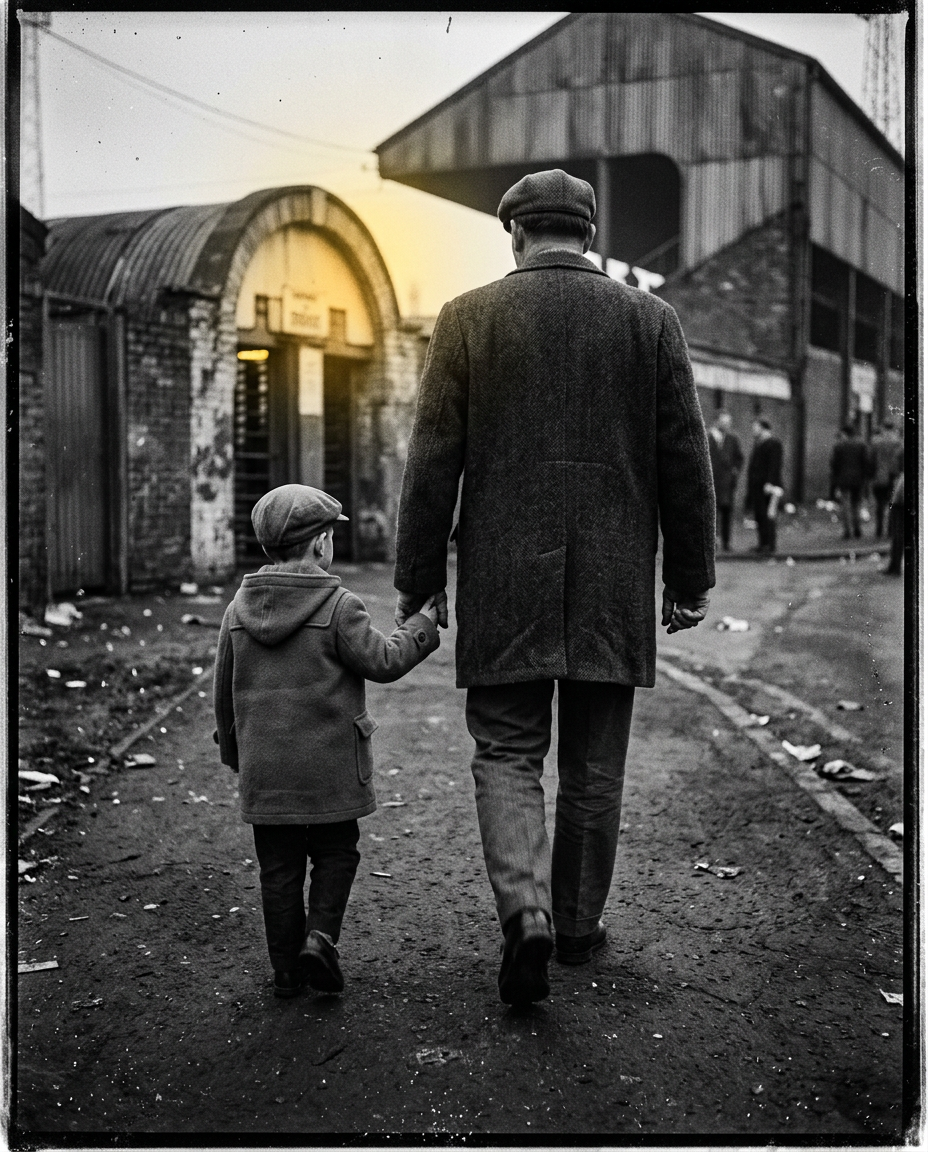
A small hand holding a larger one while moving through a crowd that seemed impossibly big.
For countless supporters, that is where football truly begins.
Not with a kickoff.
Not with a goal.
With trust.
Long before a child understands rivalries, tactics or league standings, football arrives as an experience borrowed from somebody else. The game belongs to another generation first. A father. A grandfather. An uncle. Someone who already knows the routes, the songs, the rituals and the stories. Someone who moves through this world with the quiet confidence of a person returning somewhere familiar.
The child does not yet understand any of it.
He follows.
And that is enough.
There is something almost sacred about a first journey to the football ground.
At the time, it rarely feels historic. Parents do not usually wake up believing they are about to create a memory that will survive for half a century. Most are focused on practical things. Tickets. Weather. Transportation. Making sure the child does not wander away in the crowd.
The significance only becomes visible later.
Years later.
Sometimes decades later.
Because while the adult is managing the day, the child is absorbing everything.
The smell of the station.
The noise of supporters gathering.
The sight of scarves appearing in every direction.
The sudden realisation that thousands of strangers care about the same thing.
The feeling that an ordinary Saturday has somehow become extraordinary.