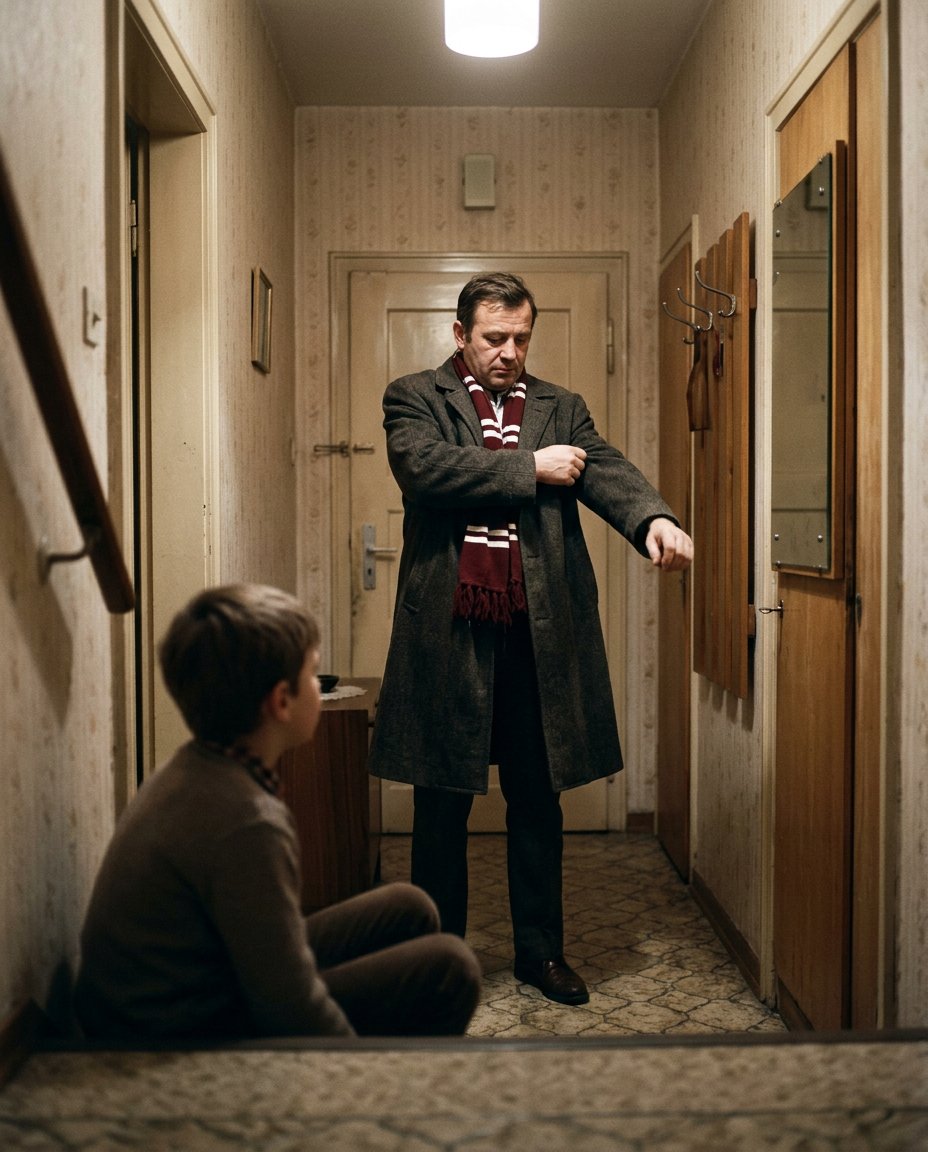
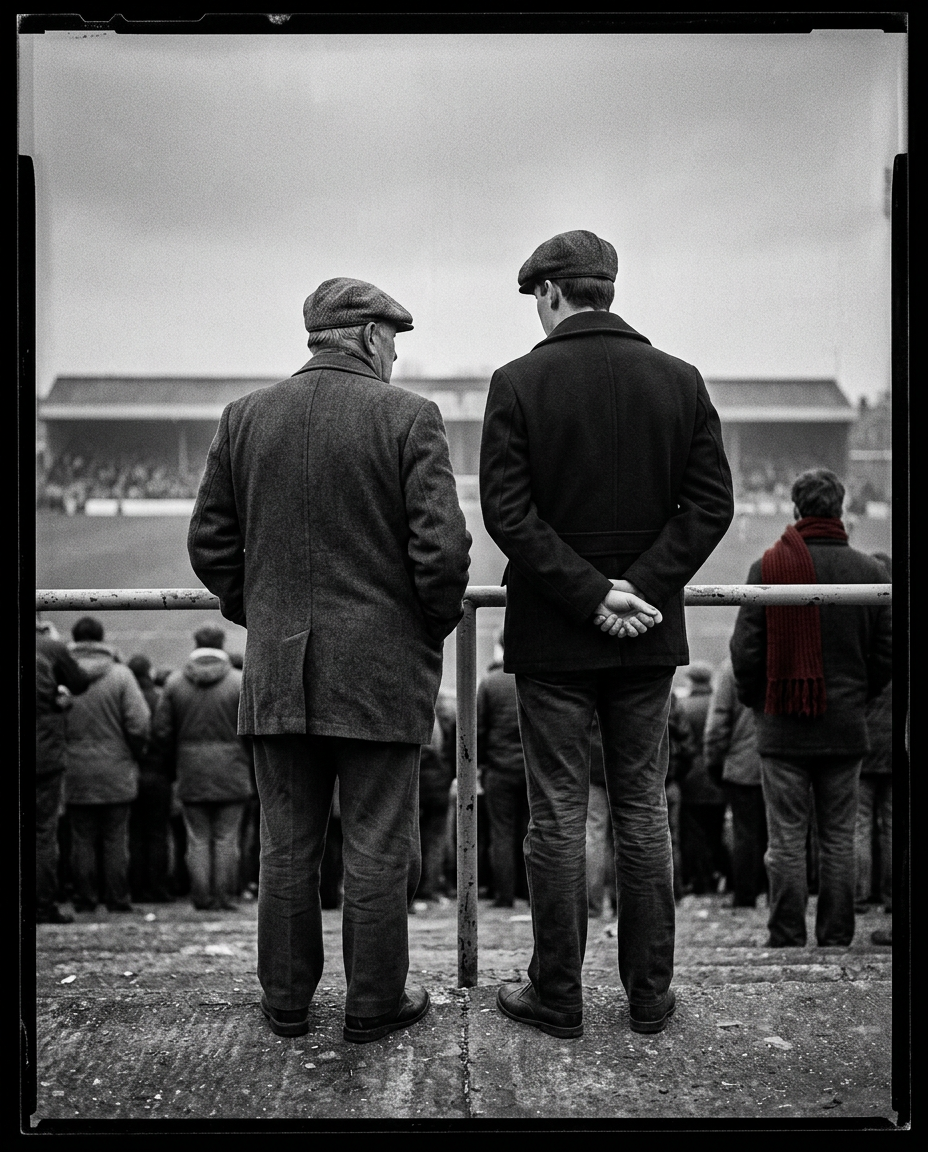
Like many men of his generation, he preferred demonstration to declaration. If something mattered, he showed it. If something needed to be understood, he expected you to observe. Words were used sparingly. Emotions even more so.
For most of my childhood, I assumed this was simply his personality.
Only much later did I begin to understand that he had been teaching me constantly.
I just happened to be looking in the wrong direction.
Football was always there. Not aggressively. Not obsessively. It existed as a permanent feature of life, occupying the same quiet certainty as family photographs, Sunday lunches and winter coats hanging beside the door.
Yet despite football’s presence, my father never sat me down to explain why it mattered.
He never described his first match.
He never spoke about loyalty.
He never delivered a speech about identity, belonging or tradition.
Looking back, I suspect the idea would have embarrassed him.
Instead he simply kept returning.
Week after week.
Season after season.
Year after year.
As a child, I assumed the lesson was football. I believed he was teaching me how to support a club. How to understand a rivalry. How to care about results.
But age has a way of revealing meanings that remain invisible to younger people.
The older I became, the more I noticed details that had escaped me entirely when I was young.
The consistency.
The commitment.
The reliability.
My father returned during successful seasons and unsuccessful ones. He returned when the football was entertaining and when it was dreadful. He returned when life was comfortable and when it was difficult.
The result never appeared to influence the decision.
He simply went.