Every old football banner eventually develops a second life.
The first life belongs to the people who create it.
The second belongs to the journeys that follow.
At the beginning, a banner is local. It belongs to a neighbourhood, a street, a pub, a group of friends who decide that their presence deserves to be seen. The fabric is purchased nearby. The paint dries in somebody’s garage. The first match takes place only a short distance from home.
Nothing about the object suggests that it is about to travel.
Yet travel is precisely what transforms an ordinary banner into something memorable.
Years pass.
Away matches accumulate.
The same piece of fabric begins appearing in unfamiliar places. New railway stations. New cities. New stadiums. New roads. New stories.
Supporters often move through these places quickly. A few hours here. A night there. A long train ride home.
The banner remains.
It appears in photographs taken hundreds of kilometres apart. It hangs from terraces that no longer exist. It witnesses victories, defeats and entire generations of supporters growing older around it.
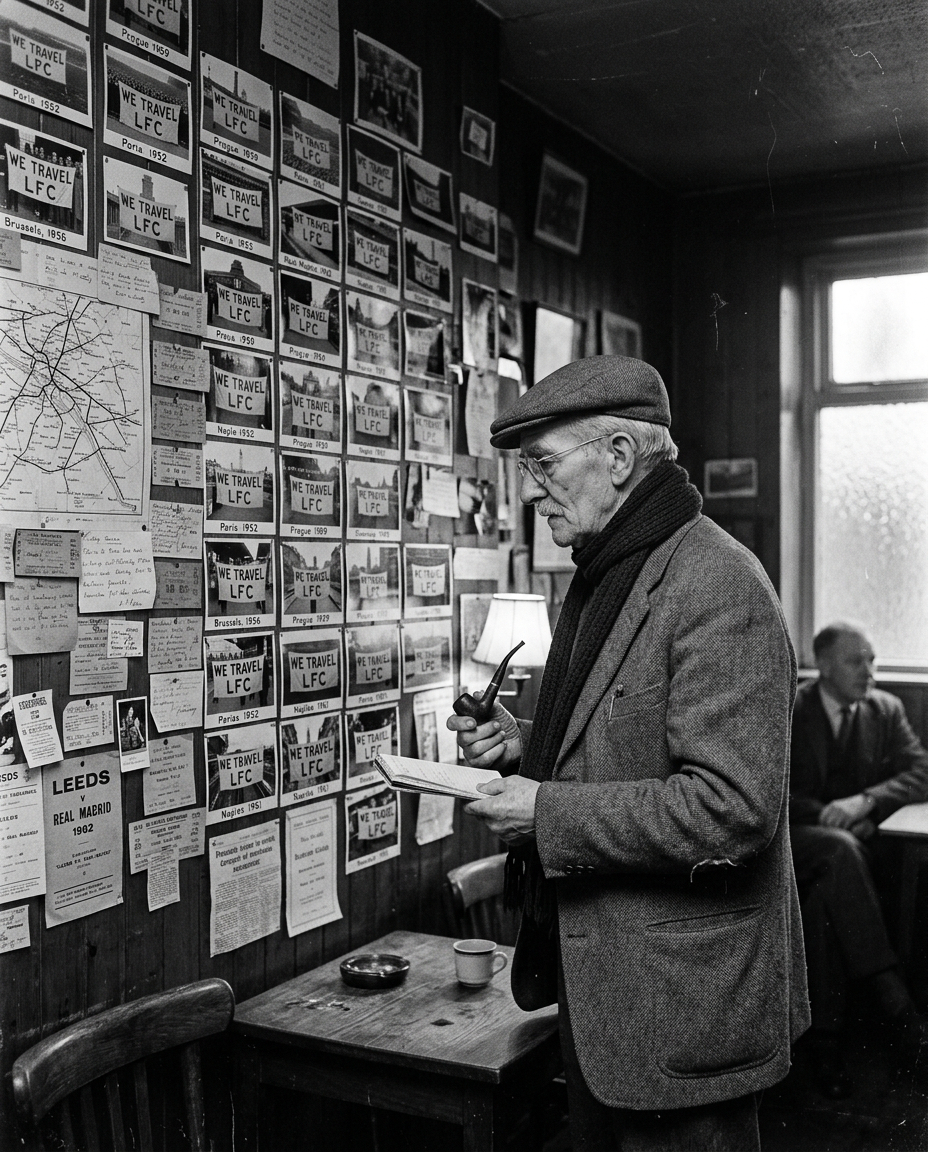
Archive 005 · Flags · Journeys
In time, something unusual begins to happen.
The banner develops a biography.
Not a written biography.
A visual one.
People stop talking about where it was painted and start talking about where it has been.
They remember the freezing journey to the coast.
The endless overnight train.
The promotion decider in a city nobody had visited before.
The cup match that required three different connections and a twelve-hour return journey.
The banner becomes a witness to all of it.
A banner that never leaves home
may be respected.
A banner that travels acquires stories.
Stories create mythology.
And mythology creates identity.
That is why older supporters often speak about famous banners almost as if they were people. They discuss where they appeared. Where they disappeared. Which journeys they survived. Which grounds they visited. Which photographs captured them.
The object becomes inseparable from the experiences attached to it.
In many cases, the banner ultimately sees more of the football world than its owner ever could. Work, family responsibilities and ordinary life impose limits on people. Banners have no such restrictions. They pass from hand to hand, generation to generation, continuing journeys long after their creators are gone.
A supporter may spend his entire life in one city.
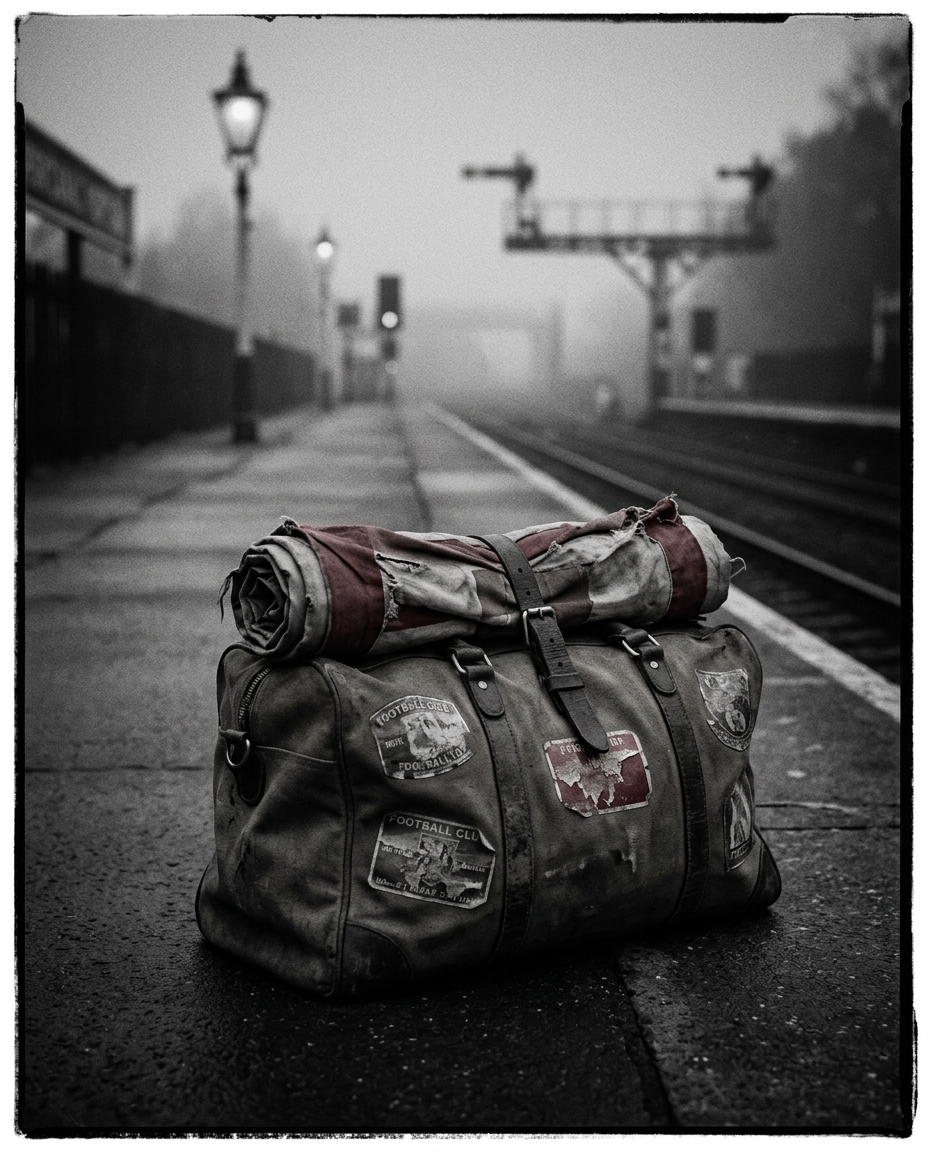
Archive 005 · Flags · Travel
His banner may cross a continent.
And when future generations look at faded photographs decades later, they will not see a piece of cloth. They will see evidence that somebody travelled extraordinary distances simply to remain connected to something they loved.
That is the true journey
recorded by a football banner.
Not across geography.
Across time.