Someone buys the cloth. Someone sketches the letters. Someone spends evenings painting names, neighbourhoods and promises onto a surface that will eventually hang above thousands of people. At first, it is simply a project. Something practical. Something to be carried to the next match.
The banner survives journeys. It survives rain. It survives seasons that most supporters would rather forget. It becomes part of photographs, part of stories, part of the visual memory of a club. Eventually people stop asking who painted it. They begin assuming it has always existed.
In the autumn of 1953, one such banner disappeared after an away match.
Nobody remembers exactly when it vanished. Some claimed it was lost in the confusion of departure. Others insisted it was taken deliberately. A few maintained they knew where it had gone but refused to say. Football culture has always produced more rumours than certainty.
What everyone agreed upon was its importance.
The banner had travelled for years. It had crossed counties, survived storms and witnessed promotions. Supporters who had never met its creators recognised it immediately. It occupied the same position at every match and appeared in countless photographs. For many younger supporters, it seemed inseparable from the club itself.
Its disappearance felt strangely personal.
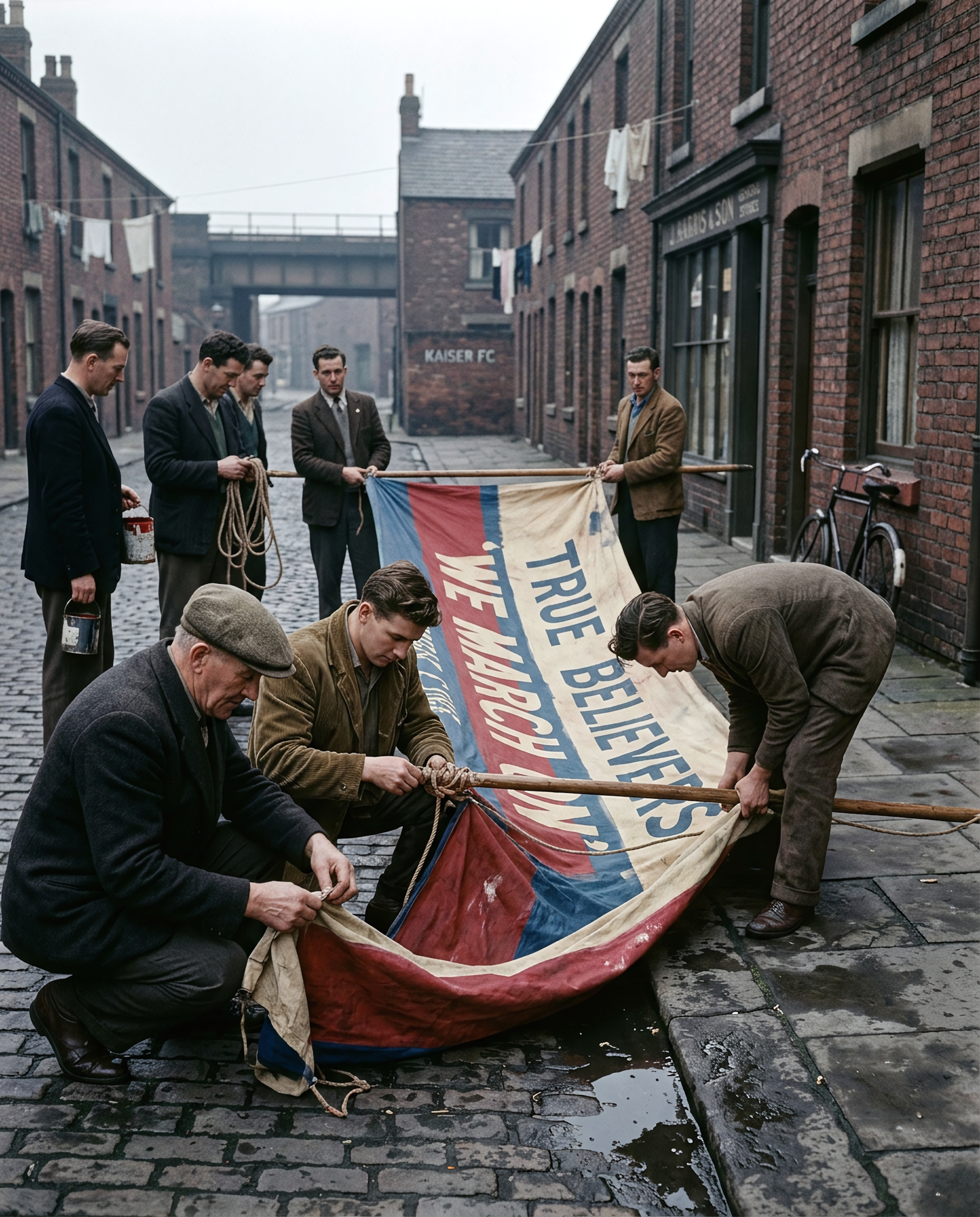
Archive 002 · Flags · 1953
People who would normally shrug at material possessions spent months discussing what had happened. New theories emerged every season. Stories grew larger with each retelling. Some swore they had seen it hanging elsewhere. Others claimed fragments of it survived in private collections. One supporter insisted he had touched the original years later and recognised the stitching immediately.
Perhaps none of these stories were true.
That is not really the point.
The significance of the banner was never found in the cloth. It lived in what the cloth represented. A banner records attendance. It proves that someone was there. It becomes a witness to matches, friendships and journeys that would otherwise disappear from memory.
That is why football supporters mourn certain banners when they vanish.
Not because they lose fabric.
Because they lose a piece of their own history.
The old supporters understood this instinctively. They guarded banners carefully. They carried them home after matches. They stored them away from curious eyes. They knew that once enough years had passed, these objects would become something far more valuable than their material worth.
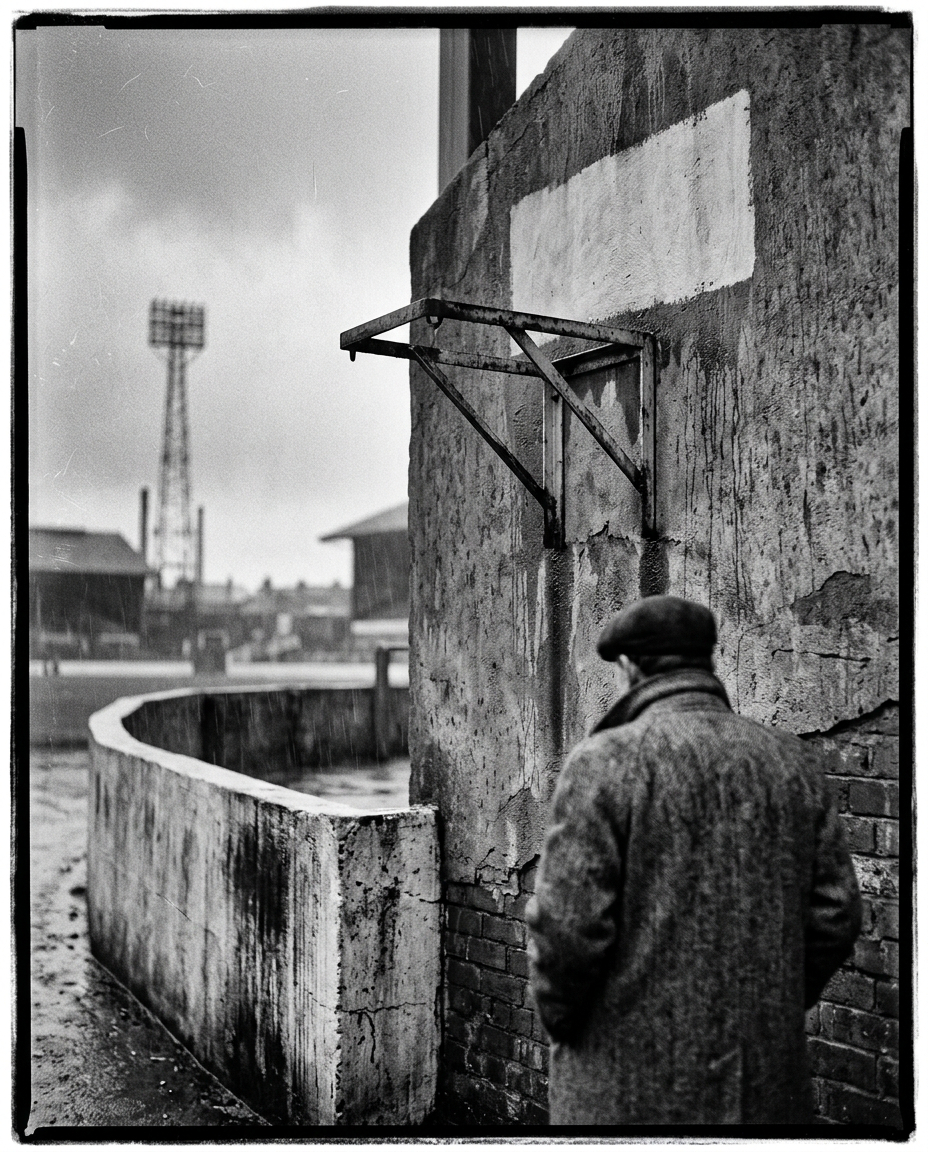
Archive 002 · Flags · Absence
The banner from 1953 never returned.
Yet in another sense,
it never truly left.
It survives in stories told by people who never stopped looking for it.
And perhaps that is the highest honour any football banner can achieve.
To disappear completely,
yet remain impossible to forget.