Football remembers banners more easily than it remembers the men who carried them.
Perhaps that is inevitable.
The banner hangs above thousands of people. It appears in photographs. It travels from stadium to stadium. It becomes part of the visual memory of a club. Entire generations grow up recognising its colours and lettering without ever wondering how it arrived there in the first place.
Yet every old banner was carried by someone.
Every journey began with somebody lifting a rolled piece of fabric onto their shoulder before dawn and beginning a trip that could last hours.
The old supporters understood this responsibility better than anyone.
A banner was never simply transported.
It was entrusted.
Long before kickoff, while most supporters were still sleeping, a small group of people had already started working. Ropes were checked. Poles were inspected. Weather was discussed. Travel plans were adjusted. Every detail mattered because once a banner became part of a club’s identity, losing it was no longer considered a personal mistake.
It became a collective wound.
This is something modern football rarely understands. Today, supporters are often photographed beneath banners. In earlier decades, certain supporters dedicated entire portions of their lives to carrying them.
Not for recognition.
Quite the opposite.
Most of them remained anonymous.
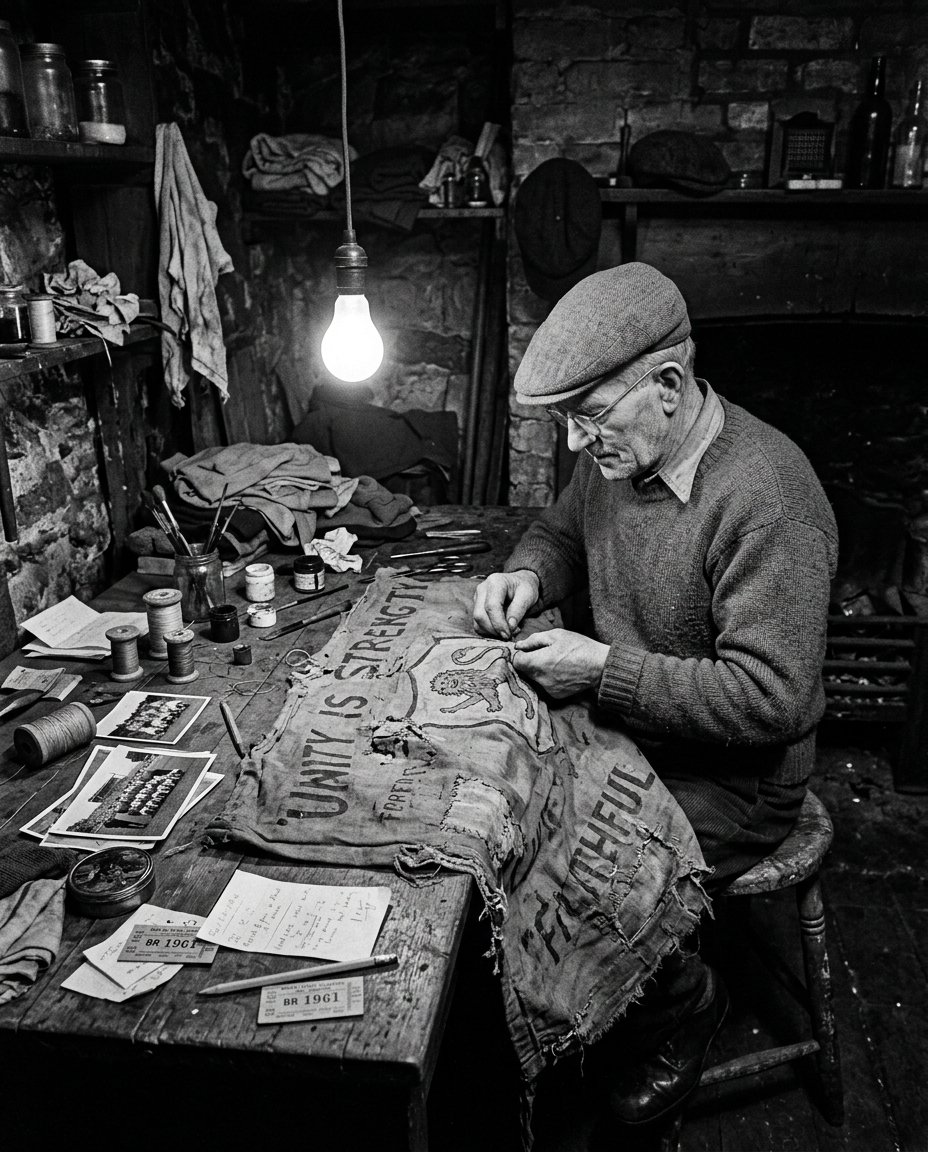
Archive 004 · Flags · Custodians
Their names never appeared in newspapers. Nobody interviewed them. They accumulated no trophies and received no applause. Yet week after week, season after season, they became custodians of objects that represented entire communities.
Many carried banners through rainstorms that destroyed ordinary fabric.
Many carried them across railway networks that no longer exist.
Many carried them into grounds that have since been demolished.
And many carried them for so long that younger supporters assumed the banner and the man belonged together.
In some cases, they did.
Stories survive of supporters who inherited banners from older relatives. Others spent decades maintaining the same piece of fabric, repairing tears, replacing ropes and protecting paintwork long after the original creators had disappeared. The banner became a responsibility that quietly passed from one generation to the next.
Like a family heirloom.
Like a promise.
Without them, many of the symbols
that supporters cherish today would never
have survived long enough to become traditions.
What outsiders often fail to understand is that football culture has always depended upon people willing to perform invisible work.
Not glamorous work.
Necessary work.
The men who carried the banners belonged to that category.
Perhaps that is why older football photographs feel different when viewed carefully.
At first you see the banner.
Then you begin to notice the faces beneath it.
The same faces appearing year after year.
Growing older.
Growing greyer.
Remaining present.
Supporting not only the club, but also the symbols that helped hold the culture together.
The banner received the attention.
The banner entered the photographs.
The banner became famous.
Yet somewhere behind every piece of cloth that ever hung above a terrace stood an ordinary supporter carrying far more responsibility than anyone realised.
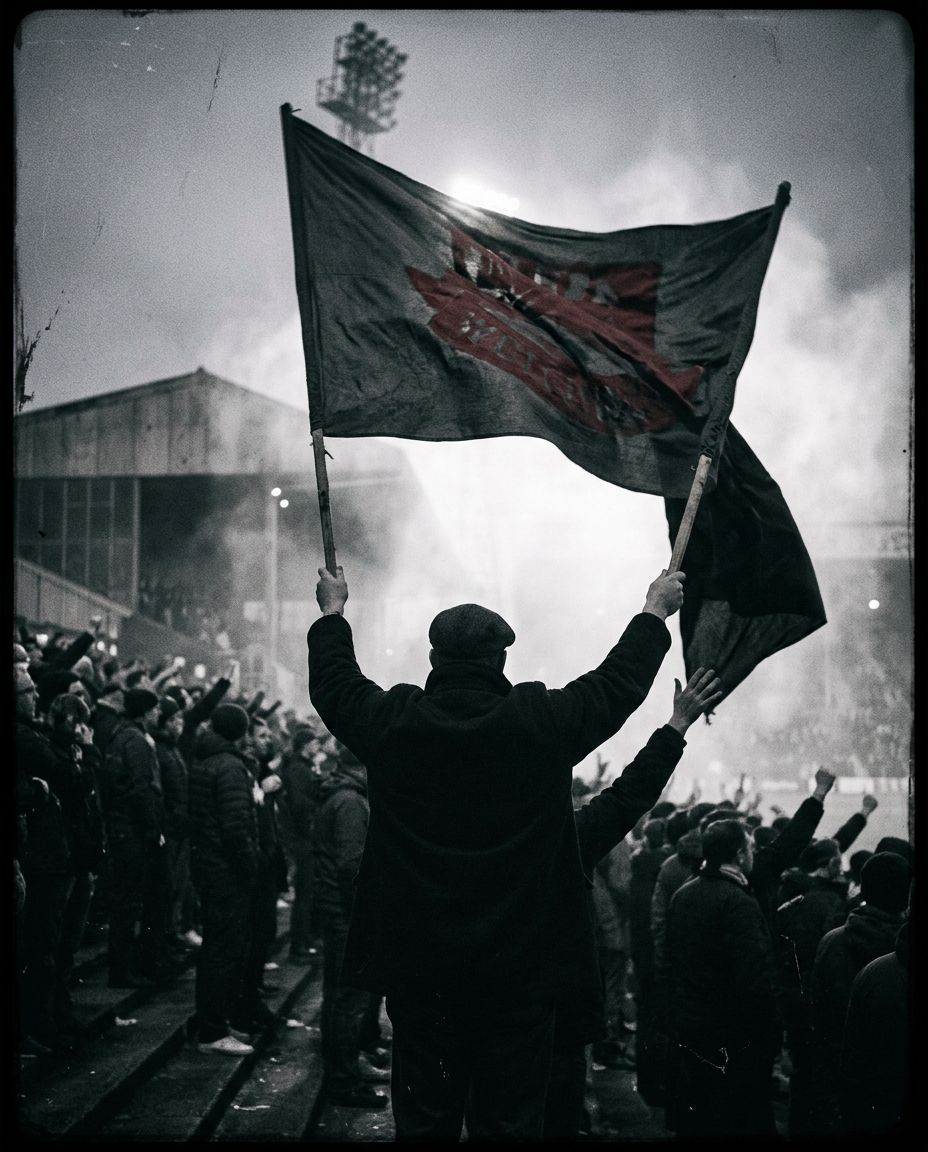
Archive 004 · Flags · The Lift
Football remembered the banner.
The people who mattered most
were often standing
directly behind it.