Kaiser FC/ Football Culture/ Archive 001
Archive 001
Identity & Culture
9 min read

Why Germany
Refused
To Sit Down

Few football cultures reveal their priorities as clearly as Germany. Not through speeches. Not through slogans. Through architecture — and through the decisions made about what to keep when everything else was changing.

Not through speeches.

Not through slogans.

Not through carefully crafted mission statements.

Through architecture.

For more than three decades, while much of the football world moved steadily toward larger commercial revenues, corporate hospitality and increasingly controlled matchday experiences, Germany continued defending something many considered outdated. Vast standing terraces remained part of the game. Ticket prices stayed comparatively accessible. Stadiums evolved without entirely abandoning the people who had given them life in the first place.

To outsiders, these choices often appeared practical or economic.

They were neither.

They were cultural.

The story is frequently simplified into discussions about safe standing sections, supporter ownership models or the famous 50+1 rule. Those subjects matter, but they explain the mechanics rather than the philosophy. They describe how the system functions without fully explaining why so many people fought to preserve it.

To understand that question, it helps to look beyond football.

Germany has long possessed a strong tradition of organised civic life. Associations, clubs, local communities and volunteer organisations occupy an important place within society. Participation often matters as much as observation. Belonging is not viewed exclusively as consumption. It is something people actively contribute to.

Football developed inside that environment.

Many supporters never viewed themselves as customers in the modern sense of the word.
They saw themselves as participants.

The stadium was not simply a venue where entertainment was delivered. It was a place where community assembled.

That distinction changes everything.

In many countries, the transformation of football followed a familiar path. Stadiums became cleaner, safer and more commercially efficient. Matchday experiences became increasingly comfortable. Hospitality areas expanded. Ticket prices climbed. The atmosphere remained important, but it gradually became one feature among many others.

Germany followed a different route.

Not because German football rejected modernity.

The country possesses some of the most advanced football infrastructure in the world.

Not because German supporters rejected investment.

Many clubs operate inside sophisticated modern stadiums.

German football modernised without entirely surrendering its collective identity.
COLLECTIVE.
NOT INDIVIDUAL.
NOT EXCLUSIVE.
NOT PREMIUM.
COLLECTIVE.

The terraces illustrate this better than any policy document ever could.

To someone unfamiliar with football culture, standing throughout an entire match may appear inconvenient. Seats are more comfortable. Seats are easier to sell. Seats create orderly rows and predictable behaviour. From a purely commercial perspective, the advantages seem obvious.

Yet supporters continued defending standing sections because comfort was never the objective.

Participation was.

Standing changes the relationship between supporter and match. It transforms passive observation into physical involvement. People move together. React together. Sing together. Emotion spreads differently when thousands of individuals occupy a shared space without fixed boundaries separating them.

The experience becomes collective.

Central Europe — Germany

Standing changes
the relationship
between supporter
and match.

It transforms passive observation into physical involvement. People move together. React together. Sing together. Emotion spreads differently when thousands of individuals occupy a shared space.

German football standing terrace culture

That word appears repeatedly when discussing German football because it sits near the centre of the culture itself.

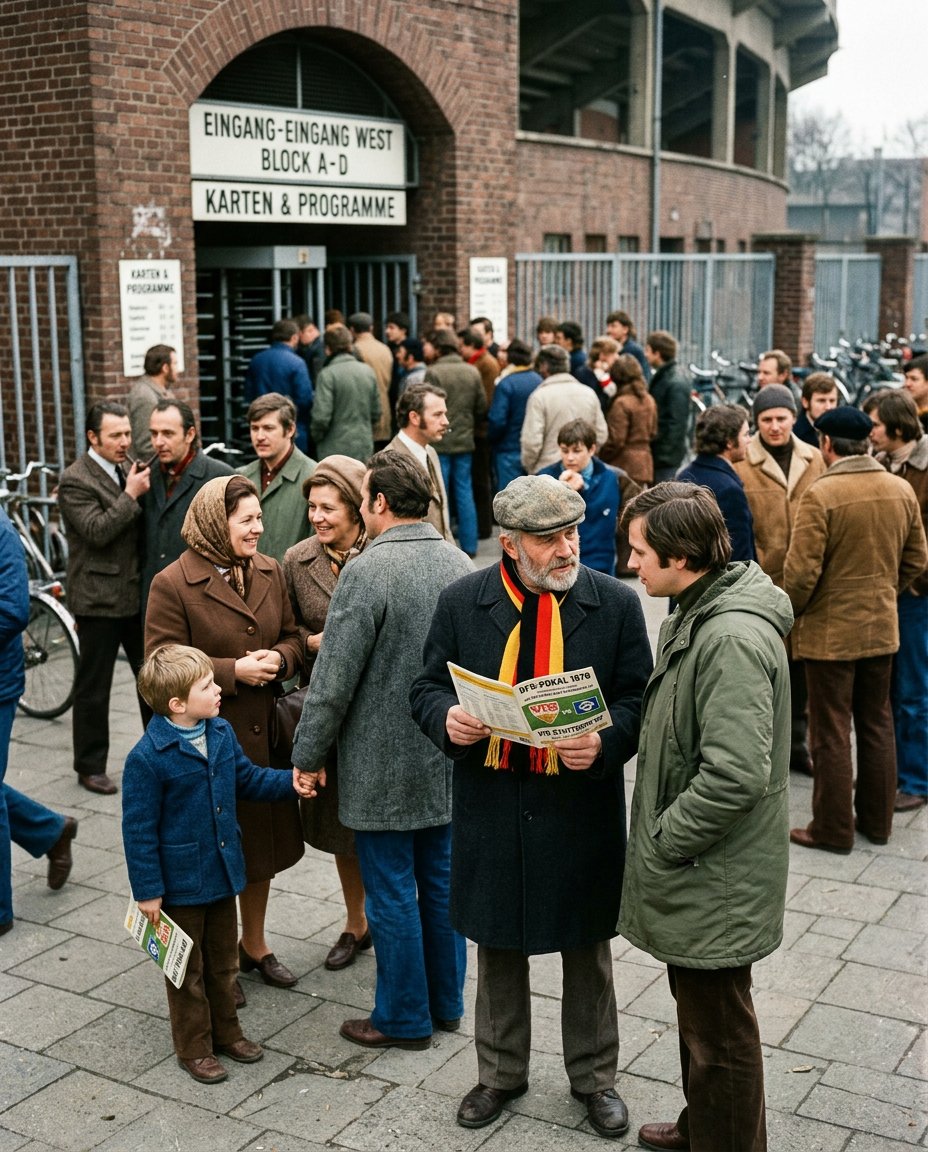
A person attending football in Dortmund, Hamburg, Bremen or Stuttgart quickly notices that the crowd behaves less like an audience and more like a temporary community. The distinction can be subtle, yet it influences everything. The journey matters. The songs matter. The gathering matters. The ninety minutes remain important, but they exist within a larger social ritual.

Football is something people do together.

That idea sounds deceptively simple.

In reality, it is increasingly rare.

Modern life encourages personalisation. Algorithms create individual experiences. Entertainment arrives tailored to individual preferences. Consumption becomes increasingly private. The same technological forces that connect society also fragment it into smaller and smaller units.

Football remains one of the last places where thousands of strangers willingly share a single emotional experience.

German football culture recognised the value of that long before many others did.

Perhaps that is why so many supporters fought to protect it.

Not because they opposed progress.

Because they understood that progress sometimes asks people to surrender things they only appreciate once they are gone.

Atmosphere is one of those things.

Belonging is another.

The feeling of being part of something larger than oneself is remarkably difficult to quantify. It does not appear neatly on financial reports. It cannot be measured through television audiences. It rarely attracts headlines outside football circles.

Yet anyone who has stood among twenty thousand supporters singing the same song understands its significance immediately.

The experience leaves an imprint.

And once experienced, it becomes difficult to replace.

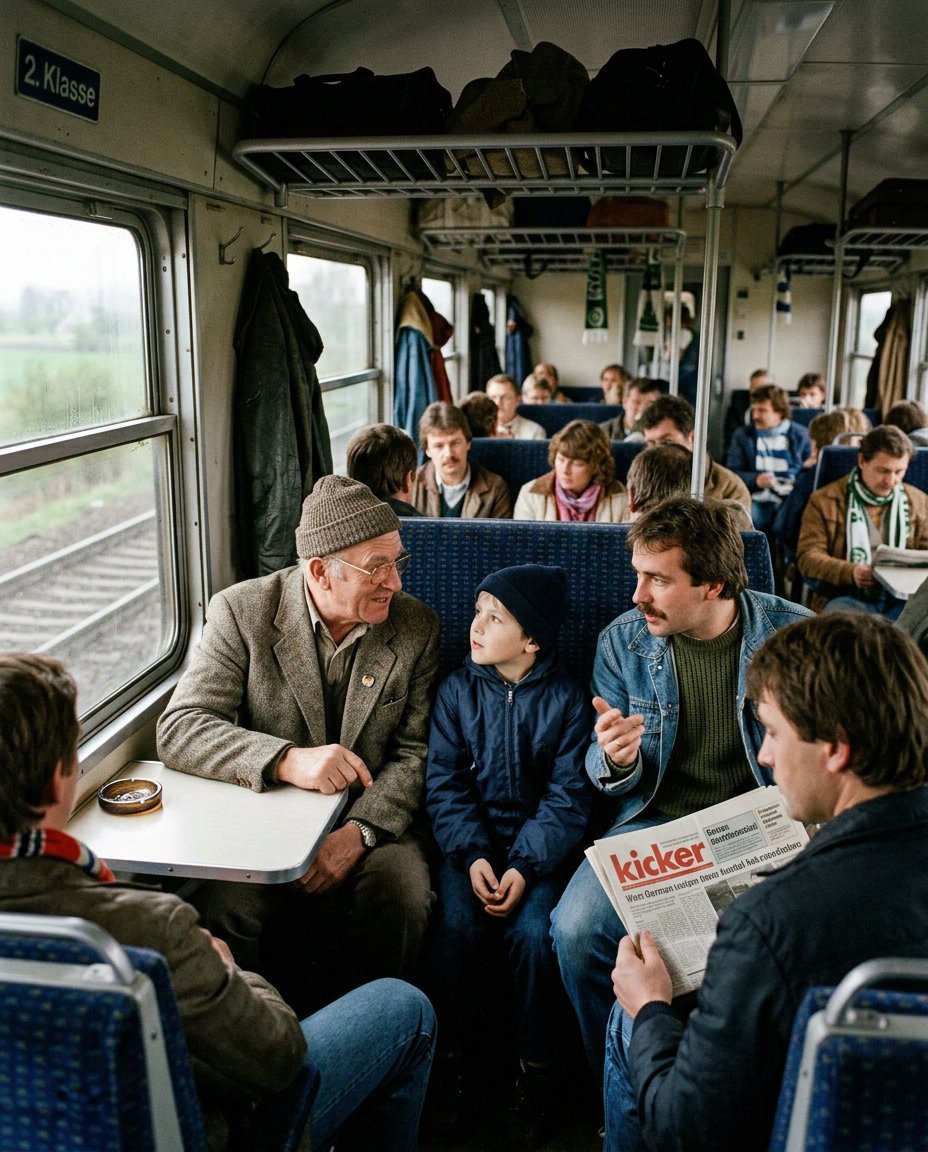
Three generations traveling to the match
Three Generations. Central Europe — The Same Saturday, Every Saturday

This helps explain why German football culture often feels different even to visitors who cannot immediately identify the reason. The difference is not found exclusively in the stadiums. It exists in the relationship between clubs and supporters. In the expectation that football should remain accessible. In the belief that atmosphere is not a decorative feature but a fundamental component of the game itself.

Many countries possess passionate supporters.

Many countries possess historic clubs.

What makes Germany unusual is the extent to which those supporters successfully defended their place within the modern game.

Not completely.

Not perfectly.

No football culture escapes commercial pressure entirely.

But enough survived to preserve something increasingly uncommon.

A sense that the stadium still belongs, at least in part, to the people standing inside it.

That may ultimately be the real story behind Germany’s terraces.

The terraces survived because they represented something larger than concrete.

They represented a philosophy.

One that insisted football should remain a shared experience before it becomes a product.

Decades later, that philosophy continues to attract admiration from around the world.

Not because Germany refused to change.

Because it chose carefully what was worth preserving.

The supporters were never simply
defending the right to stand.

They were defending
the right to participate.

And in an era when football
was becoming increasingly packaged,
that distinction mattered
more than ever.

Continue The Archive
Archive 002Community & Theatre5 min read

The City That Sings Before Kickoff

In some places, football begins when the referee blows the whistle. In Naples, it begins long before anyone reaches the stadium.

Read Next Archive
Wear The Archive View The Collection