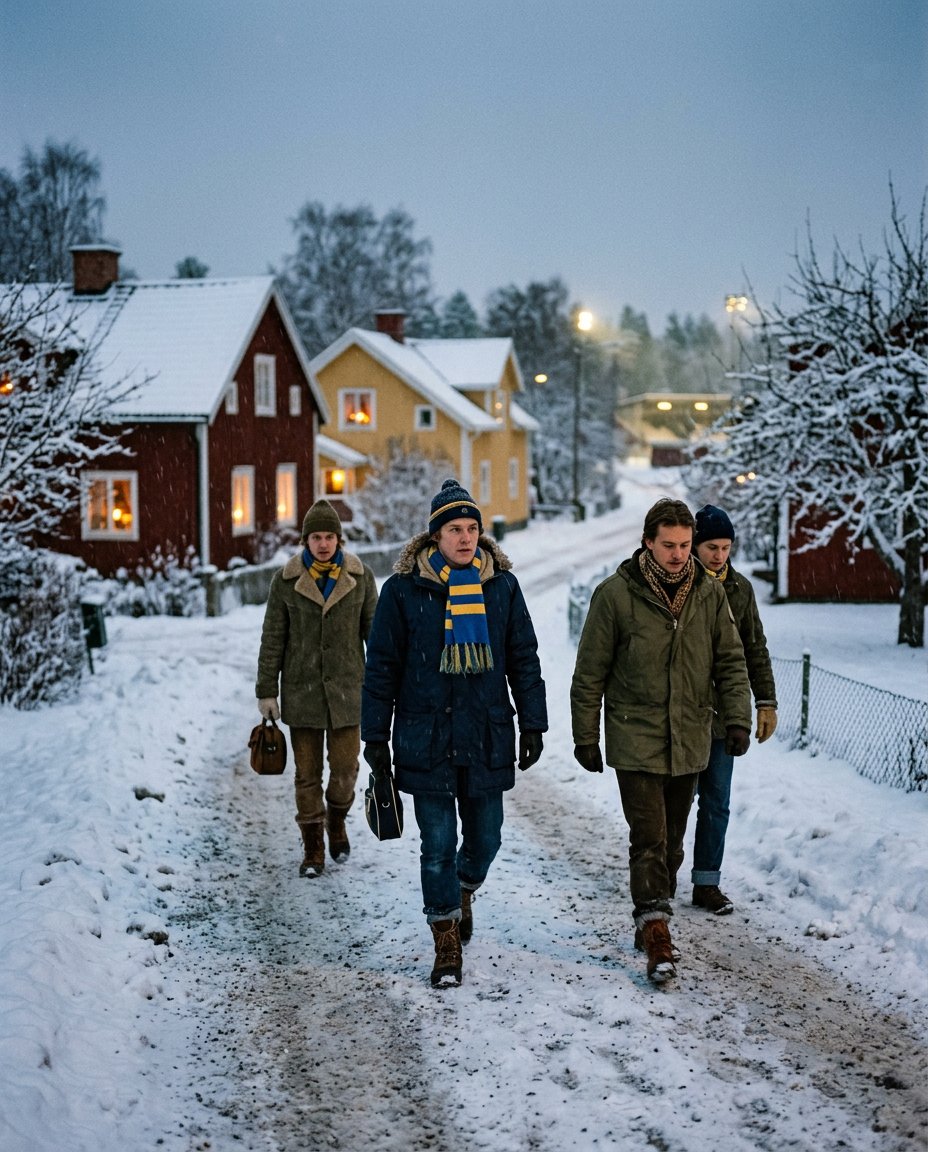
Supporters speak about passion. Commentators speak about intensity. Stadiums are said to erupt. Entire cities are imagined as places where football burns constantly beneath the surface of everyday life.
Much of that language emerged in climates where warmth feels natural.
The first thing many visitors notice is not the football.
It is the light.
Or rather, its absence.
Winter arrives gradually and then seems determined to stay. Days shorten. Shadows lengthen. Entire afternoons dissolve into darkness long before evening officially begins. Streets grow quieter. Landscapes become softer, muted beneath snow and low skies that appear to stretch endlessly toward the horizon.
For someone arriving from southern Europe or South America, the environment can feel almost incompatible with football.
And yet football survives here.
Not reluctantly.
Not as a curiosity.
As a tradition.
That survival tells us something important.
Many football cultures developed in places where the game naturally occupied public life. Crowded cities provided endless opportunities for conversation. Dense neighbourhoods created atmospheres capable of carrying excitement from one street to the next. Football became visible because people lived visibly.
Scandinavia followed a different path.
Space changes behaviour.
Climate changes behaviour.
Distance changes behaviour.
When winter dominates much of the year, communities develop different rhythms. Public life becomes more deliberate. Gatherings require intention. Movement requires preparation. Even ordinary journeys can feel significant when undertaken through darkness, snow and temperatures capable of discouraging all but the most determined travellers.
Football adapted accordingly.
The result is a culture that often expresses devotion in quieter ways.