DOSSIER · WK–66/78 Brief Timeline Evidence Verdict
Kaiser FC/ Dark Archive/ Cover-Up/ The Match the Country Was Not Allowed to Win
Historical Football Fiction
Dossier Cover-Up Alleged REF. AUR–78/01 South America · 1978 13 min read

The Match the Country
Was Not Allowed to Win

Everyone remembered the order. No record of it survived.

FICTIONAL DOSSIER

The countries, players, officials, competition, records and events in this dossier are fictional. The story draws on recurring patterns of political interference, match manipulation, institutional coercion and national-team secrecy. The cases are fictional. The patterns are not.

The 60-Second Brief

In July 1978, the Republic of Aurelia reached the final of the Continental Nations Cup. Its national team had scored sixteen goals in five matches — more than any other side in the tournament. The final was against neighbouring Belmonte, whose federation controlled the votes Aurelia needed to host the next edition.

Seventy-five minutes before kickoff, Aurelia's federation president, Octavio Salcedo, entered the team's hotel conference room accompanied by two government officials. He told the coach that winning the final would end negotiations over the future tournament, expose undeclared federation debts and jeopardise a wider trade agreement.

Aurelia was not instructed to concede deliberately. The order was more precise: do not press high; do not commit more than three players forward; do not shoot from outside the penalty area; avoid a public collapse; lose narrowly if necessary. The federation called it restraint. The players called it surrender.

Aurelia lost 1–0. The tournament's highest-scoring team did not register a single shot. Four months later, Aurelia was awarded hosting rights. Salcedo remained in office for another eleven years.

No written instruction has ever been produced. This dossier is an attempt to reconstruct an event that was designed to leave no direct proof.

01 — What SurvivedThe evidence survived in fragments

The archive contains no written instruction ordering Aurelia to lose the final.

What survives is more difficult to dismiss:

The official version survived intact. The evidence survived in fragments.

That imbalance was not incidental. It was the mechanism.

02 — The Official ExplanationBy midnight there was only one version

By midnight, the federation had reduced the final to one explanation: Aurelia had respected a superior opponent.

The language appeared first in Orsini's press conference. The following morning, it appeared in the federation bulletin. By afternoon, identical phrases had entered radio summaries and newspaper reports:

None of the explanations was impossible. That was their strength.

A cover-up does not always require a false fact. Sometimes it requires enough plausible facts to prevent the dangerous question from becoming the official one.

Within a week the explanation had stopped being an argument and started being a record. Newspapers cited the bulletin. Later reports cited the newspapers. By the time anyone asked what had happened inside the hotel, the answer already existed in print, repeated often enough to look like documentation.

03 — The CountryA football culture larger than its economy

Aurelia was a narrow republic along the southern Atlantic coast. It had five million inhabitants, recurrent military governments and a football culture considerably larger than its economy. The national team had never won the Continental Nations Cup. Its domestic clubs were financially unstable, but the federation was politically influential.

Presidents appeared beside players after victories. Ministers attended training. Football was presented not as entertainment but as evidence that Aurelia still mattered.

In 1978, the country needed that evidence. Inflation was rising. Industrial strikes had spread through the port districts. The government's approval was collapsing. The federation proposed hosting the 1982 Continental Nations Cup as a national recovery project. New stadiums. New roads. Television contracts. Foreign visitors. A country rebuilt through football.

Only one obstacle remained: Belmonte controlled seven of the fourteen federation votes required to approve the bid.

04 — Octavio SalcedoHe never needed to control the ball

Octavio Salcedo had been president of the Aurelia Football Federation since 1967. He was not a former player. He was a lawyer, importer and political intermediary.

He understood that football officials rarely needed to control the ball. They needed to control appointments, travel, contracts, disciplinary committees, television access, national selection — and the official account of what occurred.

Salcedo called the national team “the country's most visible diplomatic delegation.” When Aurelia won, he stood near the players. When it lost, he spoke about sacrifice.

He had spent eleven years making himself inseparable from both.

05 — The Road to the FinalThe team that refused to retreat

Aurelia played aggressive football. Its front three constantly exchanged positions. Its fullbacks attacked simultaneously. The midfield pressed immediately after losing possession. The system was considered reckless. It was also devastating.

Sixteen goals. Ninety-three attempts. Thirty-eight shots on target. No team in the competition attacked more often. No Aurelia match finished without at least eleven attempts.

Before the final, newspapers called them the team that refused to retreat.

By kickoff, retreat was the only instruction that mattered.
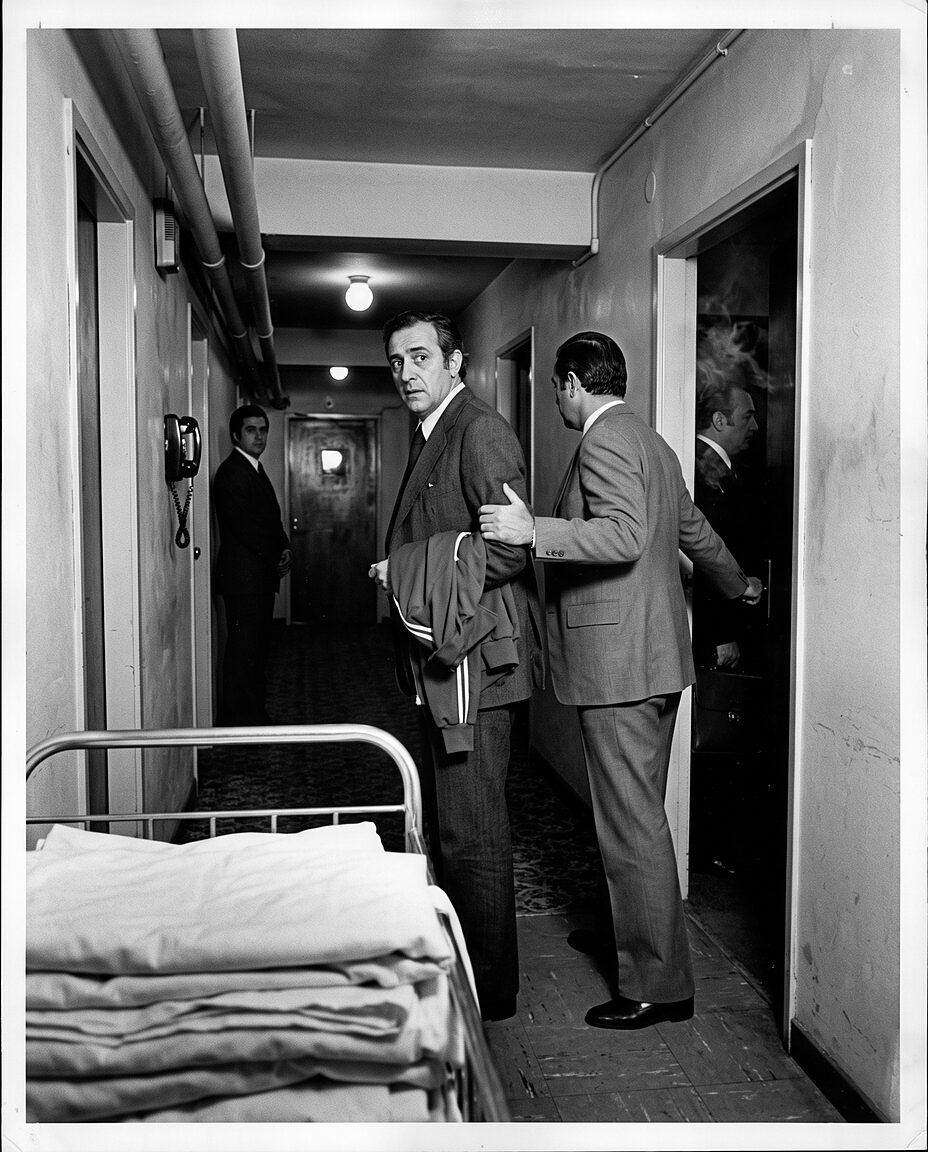
A head coach is escorted along a hotel corridor by officials in suits, seventy-five minutes before a national final in 1978
The Summons Called down from the team meal, 16:55 KAISER FC · FICTIONAL RECONSTRUCTION

06 — The Hotel RoomHe was told the meeting concerned security

At 16:55, head coach Gabriel Orsini was called downstairs from the team meal. He was taken to a small conference room normally used by tournament officials.

Inside were Octavio Salcedo; Deputy Interior Minister Ramón Alvear; trade envoy Luis Montal; federation treasurer Víctor Carena; an unopened leather document case; and a tactical board already displaying Aurelia's formation.

Orsini was told the meeting concerned security. It did not.

Salcedo began with the hosting bid. Belmonte's federation, he said, would formally support Aurelia the following morning. In return, Aurelia was expected to demonstrate that regional cooperation mattered more than sporting provocation.

Orsini asked whether that meant losing. Salcedo answered: “It means not making victory necessary.”

The coach asked again. This time, the deputy minister spoke.

“This is not a football decision.”

07 — The Verbal OrderNothing was written that could be read as defeat

No surviving document states that Aurelia must lose. Nothing in the federation's holdings uses the word at all. What exists instead is a set of tactical restrictions, delivered verbally and transcribed by the man receiving them.

That distinction was the point. A written instruction creates a document. A document creates a custodian. A custodian creates a witness. The order was constructed to stop before any of that could happen.

A missed penalty creates a suspect. A passive system creates explanations.

08 — The Tactical NotesEvery line defensible on its own

The instructions appear in handwritten notes attributed to Orsini, recovered among his personal papers and never authenticated by the federation.

Handwritten sheet attributed to G. Orsini · 17:15

Defensive line five metres deeper. No coordinated press. One fullback forward at a time. Captain remains behind the ball. No quick restarts. No shots outside the area. No more than three players entering the final third. Protect the draw until instructed otherwise.

Do not create an irreversible situation.

Undated. Unsigned. The federation has never accepted the sheet as an official record, and has never explained the formation change either.

The meaning remained deniable. Every instruction could be defended as caution. Together, they removed everything that had taken Aurelia to the final.

09 — The CaptainReliable because he did not dramatise conflict

National-team captain Mateo Vergara was thirty-one. He had played eighty-four internationals and spent nine years in European club football. Vergara was not politically active. He rarely gave interviews. He was considered reliable precisely because he did not dramatise conflict.

At 17:35, Orsini asked him to come to the conference room alone. Salcedo repeated the argument. Hosting rights. National investment. Federation solvency. Regional stability.

Vergara listened without interruption. Then he asked: “Do the others know?”

Salcedo replied: “They only need to know the plan.”

Vergara asked what would happen if the team scored naturally. Nobody answered immediately.

The deputy minister closed the door.

10 — The MatchBelmonte expected pressure. It did not arrive.

The teams lined up at 18:36. Aurelia's supporters filled three sides of the stadium. Flags covered the upper stands. The players sang. Vergara did not.

A press photograph shows him facing forward with his mouth closed while the men beside him sing. The image later became evidence for several contradictory theories: he knew; he was protesting; he was concentrating; the photograph merely caught him between words. The camera preserved one fraction of a second. The country supplied the meaning afterward.

Aurelia retreated immediately. Its forwards allowed Belmonte's defenders to carry the ball beyond halfway. The midfield remained narrow. Loose balls were cleared instead of controlled. When Aurelia won possession, the first pass went backwards.

In the 14th minute, winger Esteban Rivas broke into space on the left. Three teammates began running forward. Vergara shouted. Rivas stopped. He turned toward his own goal and passed the ball forty metres backwards.

The crowd whistled. The television commentator said: “Aurelia appears unusually cautious.”

That remained the official explanation for decades.

11 — The Chance Not TakenThe second everyone understood

In the 37th minute, Belmonte's goalkeeper misplaced a pass. Aurelia striker Elías Casaravilla intercepted the ball twenty-five metres from goal. The goalkeeper was outside the penalty area. The net was exposed.

Casaravilla normally shot from that distance. He had scored twice from outside the area during the tournament. This time, he waited. He looked to his right. No teammate advanced. He turned away from goal. A defender recovered possession.

The crowd's whistle became a roar. Casaravilla placed both hands on his head.

The following morning, newspapers described the moment as indecision. Years later, a teammate called it “the second when all of us understood that the order was real.”
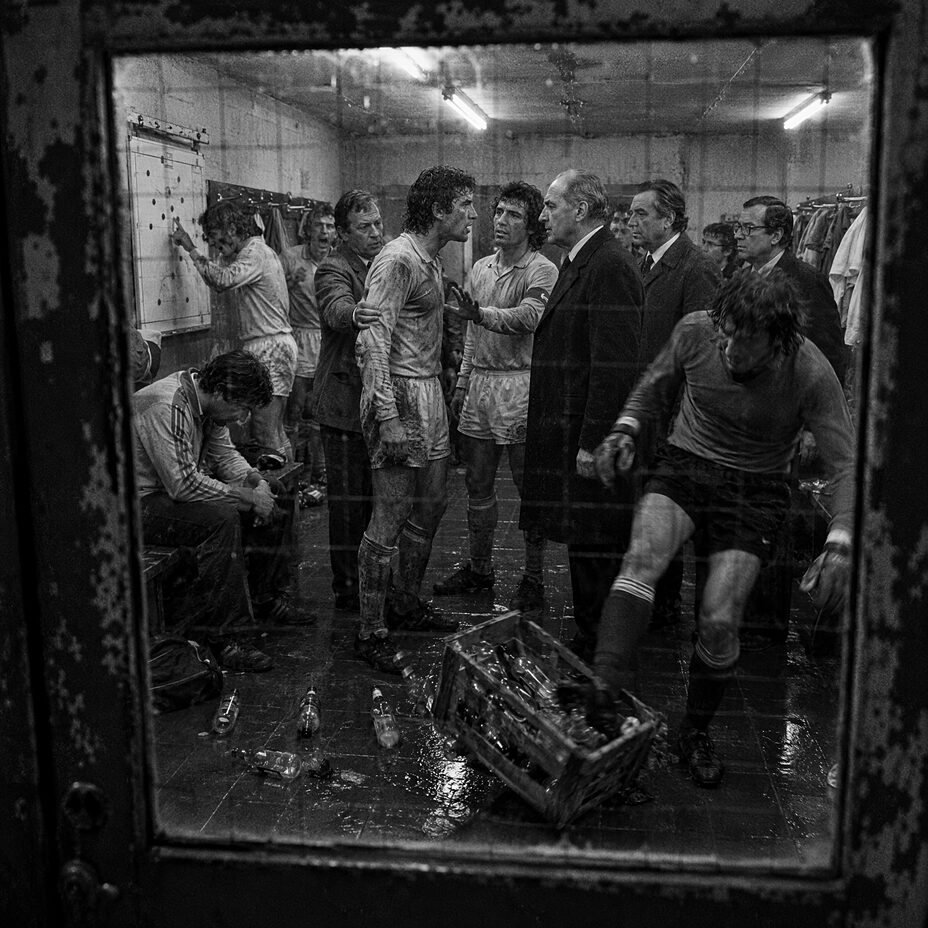
A national team dressing room at half-time in 1978, players in muddy kit confronting officials in overcoats, an overturned water crate on the floor
Half-Time No president had entered the dressing room during the tournament KAISER FC · FICTIONAL RECONSTRUCTION

12 — Half-Time“And what does the team get?”

The score was 0–0. Aurelia had taken no shots.

The dressing room erupted before the door had fully closed. Rivas accused the coaching staff of humiliating them. Casaravilla demanded permission to attack. Goalkeeper Adrián Sosa kicked a water crate across the room.

Vergara stood between the players and Orsini. The coach did not defend the tactics. He looked toward the door.

Octavio Salcedo entered with two federation officials. No president had entered the dressing room during the tournament.

Salcedo said: “Forty-five more minutes and the country gets what it needs.”

Casaravilla stepped toward him. A federation official moved between them.

Vergara asked: “And what does the team get?” Salcedo answered: “A future.”

The captain replied: “Not ours.”

13 — The Second HalfNeither defensive nor attacking — paralysed

Aurelia continued retreating. But the obedience was no longer complete. Rivas pressed alone. Casaravilla ignored instructions and chased long balls. Two midfielders began moving forward.

The team fractured between those still following the plan and those attempting to recover the match. Aurelia became neither defensive nor attacking. It became paralysed.

Belmonte recognised the uncertainty. Its fullbacks advanced. Its midfield surrounded Vergara.

The decisive goal arrived in the 71st minute. A low cross entered Aurelia's penalty area. Two defenders could have cleared it. Both hesitated. Belmonte forward Julián Barreto scored from six metres.

Nobody celebrated inside Aurelia's penalty area. Nobody protested. The goalkeeper remained on his knees.

The score had finally reached the result the federation could accept.
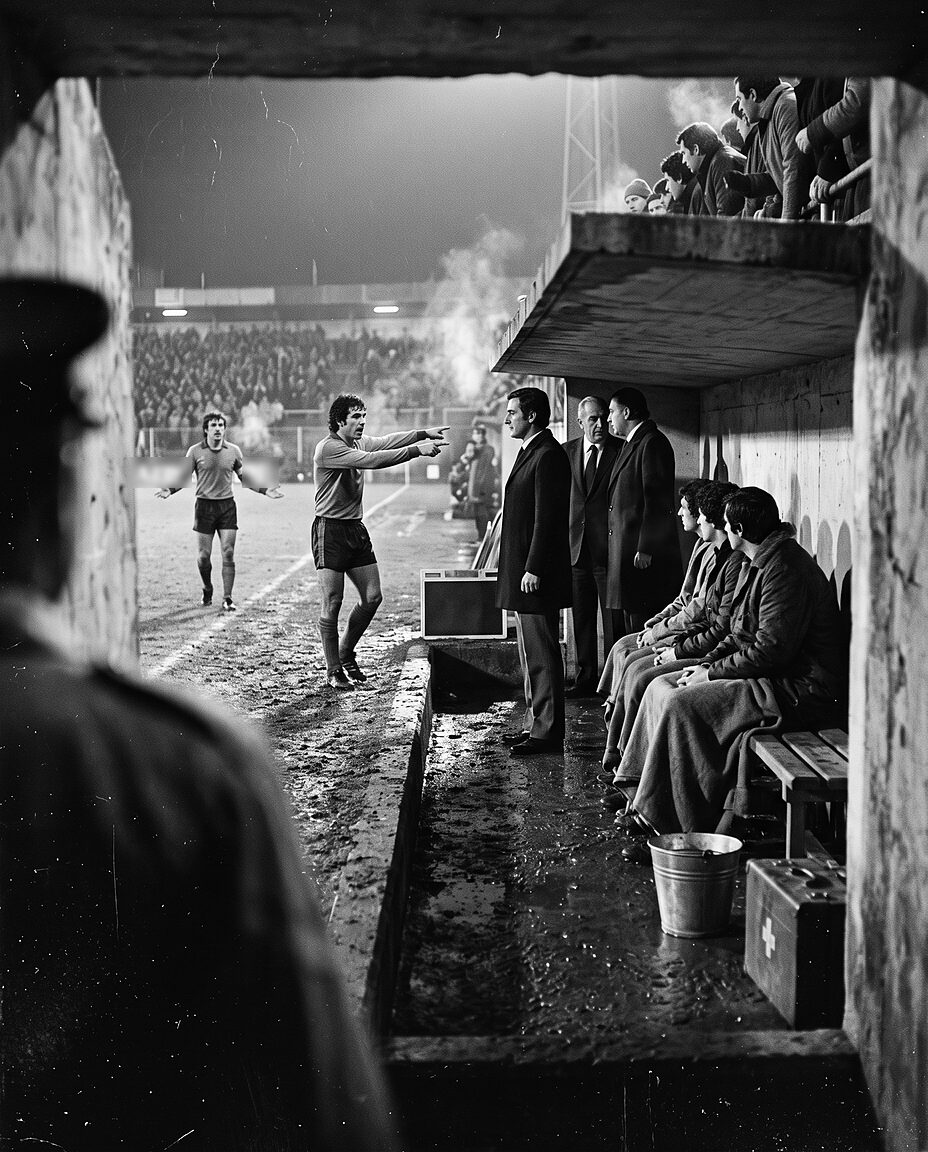
A player leaves his position and shouts toward the bench from the touchline late in a 1978 final, officials in overcoats watching from the dugout
The 83rd Minute “Do you want us to lose or do you want us to disappear?” KAISER FC · FICTIONAL RECONSTRUCTION

14 — The Final Nineteen MinutesThe justification had disappeared. The system had not.

Aurelia now needed to attack. The tactical justification had disappeared. It still did not.

Orsini made no substitutions. The fullbacks remained deep. Quick free kicks were delayed. Vergara repeatedly requested permission to move into midfield. The bench refused.

In the 83rd minute, Casaravilla abandoned his position and walked toward the touchline. He shouted at Orsini: “Do you want us to lose or do you want us to disappear?” The coach turned away.

Aurelia completed the final with 41% possession, no shots, no corners, and one touch inside Belmonte's penalty area after half-time.

The tournament's highest-scoring team completed ninety minutes without testing the goalkeeper. Belmonte won 1–0.

15 — After the WhistleThe medal that left no footage

Belmonte's players celebrated. Aurelia's players did not immediately leave. Vergara gathered them near the centre circle. No camera recorded what he said.

Seven players removed their federation blazers before approaching the presentation platform. Casaravilla refused his runner-up medal. An official placed it inside his hand. He dropped it on the table.

Television cameras cut away. The medal never appeared in the broadcast replay.

16 — The Press Conference“Finals create caution”

Orsini appeared alone. Salcedo did not attend. The coach described the performance as “a disciplined attempt to control a superior opponent.”

A journalist asked why the tournament's highest-scoring team had not attempted a shot. Orsini answered: “Finals create caution.”

Another asked whether the federation had influenced the tactics. The press officer ended the conference.

Orsini resigned nineteen days later. His resignation cited exhaustion. He never coached another national team.

The most direct institutional witness removed himself from the record before anyone could compel him to speak.

17 — The RewardA victory greater than one match

Four months after the final, Aurelia was awarded hosting rights for the 1982 Continental Nations Cup. Belmonte supplied six of the decisive votes.

Construction contracts were awarded to a consortium connected to federation treasurer Víctor Carena. The federation's previously undisclosed debt was refinanced. Octavio Salcedo remained president.

The government called the successful bid “a victory greater than one match.” The phrase appeared on stadium posters throughout Aurelia.

Nobody credited the players.

The Recording · Chain of Custody
I
The Line
The room was wired

The conference room used by tournament officials was connected to the hotel's international telephone line — the only line in the building routed through the telecommunications room rather than the front desk.

Hotel wiring schedule, 1974 refit
II
The Unit
International calls were recorded

The hotel recorded international calls on a reel-to-reel unit, a standard practice for billing disputes with foreign guests. The unit captured the line, not the handset. Anything said in the room while the line was open was on the reel.

Standing instruction to switchboard staff
III
The Maintenance Log
The machine was working that week

The technical log records the unit being serviced four days before the final. The entry notes new belts and a cleaned head assembly. Whatever else is disputed, the machine was not broken.

Maintenance book, entry dated 12 July 1978
IV
The Reel Change
Someone changed it after the meeting

An employee stated that he replaced a reel late in the afternoon of the final, outside the normal schedule, and that the reel he removed was not full.

Statement given 1991
V
The Request
The federation asked for the room

The following day, the federation requested access to the hotel's telecommunications room. The stated reason was a billing reconciliation for the delegation's calls. No reconciliation document was ever filed.

Hotel access register, 17 July 1978
VI
The Inventory
One reel is missing from the count

The hotel's next quarterly inventory lists one reel fewer than the previous count, with no disposal entry. The discrepancy was recorded, noted as unexplained, and closed.

Quarterly stock reconciliation, October 1978
VII
The Sentence
He remembers one line of it

The employee said the reel carried seventeen minutes of conversation between the federation president, government officials and the coaching staff. He remembered one sentence: “The cup lasts a year. The stadiums last twenty.”

Two interviews, 1991
VIII
The Audio
Nobody has produced it

No recording has ever been played, submitted, broadcast or entered into any proceeding. Every link in the chain can be documented except the one that would settle the question.

No record

18 — The Employee Who Heard ItHe did not disappear. He stopped speaking.

The chain above does not prove what the reel contained. It proves that an infrastructure capable of recording the meeting existed, that it was working, and that people connected to the federation reached it first.

The employee gave two interviews in 1991 and then withdrew. He did not disappear physically. He simply stopped answering questions, declined every later approach, and lived the rest of his life in the same city under the same name.

That distinction became part of the legend. A man who vanishes suggests violence. A man who stays and says nothing suggests something harder to name and impossible to charge.

The absence of the tape is the most documented object in this dossier.

19 — The Captain's StatementEleven seconds of silence

Mateo Vergara refused to discuss the final for twenty-seven years. In 2005, a television interviewer asked whether Aurelia had been ordered to lose.

Vergara remained silent for eleven seconds. Then he said: “No one told us to score an own goal.”

The interviewer repeated the question. Vergara answered: “There are many ways to give away a match without touching the result.” He refused to explain further.

It was the closest any player came to confirming the order — and it still confirmed nothing that could be written down.

20 — Timeline

Ninety Minutes, Then Twenty-Seven Years

Time / DateEventRecord
12 Jul 1978Hotel recording unit servicedMaintenance book entry
16:55Orsini summoned to hotel conference roomFederation officials present
17:15Tactical restrictions presentedNotes attributed to coach
17:35Captain Vergara called into meetingNo official record
17:56Formation rewritten4–3–3 replaced by 4–5–1
18:36Teams enter for anthemVergara photographed silent
37th minuteCasaravilla refuses exposed long-range chanceBroadcast footage survives
Half-timeSalcedo enters dressing roomMultiple player testimonies
71st minuteBelmonte scoresFinal result 1–0
Full-timeAurelia finish with no shotsOfficial match record
17 Jul 1978Federation requests telecommunications roomStated billing reason; no document filed
4 Aug 1978Orsini resignsExhaustion cited
Oct 1978Quarterly inventory omits one reelNoted as unexplained, then closed
Nov 1978Aurelia awarded 1982 tournamentBelmonte votes decisive
1991Hotel employee describes the reelRecording never produced
2005Vergara gives only public statementMeaning disputed

21 — Who Held the PowerFive people decided what eleven would represent

Federation president
Octavio Salcedo

Controlled the coaching appointment, player bonuses, travel, contracts and the public explanation. Presented defeat as national responsibility. Benefited institutionally from the hosting decision, and was the first to reach the room where the recording was kept.

Deputy interior minister
Ramón Alvear

Converted a sporting instruction into a government demand. His presence in the room demonstrated that the decision extended beyond football — and ensured no one present could treat refusal as a purely professional choice.

Head coach
Gabriel Orsini

Delivered the tactical order and then supplied the language that explained it. Whether he believed it protected the federation or merely feared refusing remains disputed. His resignation removed the most direct institutional witness.

Federation treasurer
Víctor Carena

Held the undeclared debt that the hosting agreement refinanced, and the connections to the consortium that received the construction contracts. The financial motive for the arrangement passed through his office.

Captain
Mateo Vergara

Understood the instruction but did not openly rebel. Tried to contain the dressing room. His later statements suggest complicity, coercion or both — and were phrased so precisely that they could never be used against anyone.

The squad
The players

They were not given equal knowledge. Some believed the tactics were fear. Some understood the arrangement. Some resisted individually. A manipulated team does not require eleven conspirators. It requires enough uncertainty to prevent collective refusal.

Archive Status

The following classifications apply only within the fictional record of this dossier.

Proved
  • Aurelia entered the final as the competition's highest-scoring team, with sixteen goals in five matches.
  • The team recorded no shots in the final and no corners after half-time.
  • Its usual attacking system was replaced shortly before kickoff.
  • Federation president Octavio Salcedo entered the dressing room at half-time.
  • Gabriel Orsini resigned nineteen days later and never coached another national team.
  • Aurelia received hosting rights four months afterward; Belmonte's votes were decisive.
  • Federation-connected companies received construction contracts.
  • The hotel conference room was connected to a working recording system, and the federation requested access to it the following day.
Alleged
  • Salcedo explicitly instructed the coaching staff not to win.
  • Government officials connected the result to diplomatic and commercial negotiations.
  • Players were threatened with exclusion from future squads.
  • A recording of the hotel meeting existed and was removed.
  • The hosting agreement depended upon Aurelia's defeat.
Disputed
  • Whether every player understood the order.
  • Whether Vergara cooperated or attempted to limit the damage.
  • Whether the defenders deliberately hesitated before Belmonte's goal.
  • Whether Orsini could have refused safely.
  • Whether the final was formally fixed or tactically neutralised through institutional pressure.
Unresolved
  • Who first proposed sacrificing the match.
  • What was inside the leather document case.
  • Whether money changed hands independently of the hosting agreement.
  • Why no substitution was made after Aurelia conceded.
  • What happened to the reel that the inventory could not account for.
23 — The Kaiser Verdict

They Stood for the Anthem. Then They Played for the Agreement.

Editorial interpretation. Not a legal finding.

The crudest form of match-fixing tells a player what score to produce. The more sophisticated form changes what victory means.

Octavio Salcedo did not need eleven footballers to accept money. He needed a federation that controlled their futures, a coach capable of translating politics into tactics, and a captain uncertain whether resistance would protect the team or destroy it.

The order was never written as defeat. It was written as caution. Do not press. Do not commit. Do not shoot. Do not make the situation irreversible. Each instruction was defensible. Together, they removed the possibility of winning.

That is why the performance could survive scrutiny. No goalkeeper threw the ball into his own net. No defender deliberately kicked it backward. No striker missed a penalty. Aurelia simply stopped becoming the team it had been for five matches.

The country watched ninety minutes of absence. Later, the federation offered explanations: nerves, fatigue, respect for the opponent, finals are different. All were plausible. None explained why every attacking instinct disappeared at the same time.

But the manipulation of the match is only half of what happened, and it is the smaller half. The same people who could reach the dressing room could also reach the telecommunications room. The same authority that rewrote the formation rewrote the account. Within a week the explanation had been repeated often enough to function as documentation; within a quarter, the one object that could have contradicted it was missing from an inventory and the discrepancy was closed.

The stadiums were built. The contracts were awarded. Salcedo remained president. The players carried the shame. Institutions prefer this division of labour: officials keep the benefit, footballers preserve the image, supporters debate the performance instead of the decision.

The most disturbing possibility is not that Aurelia's players betrayed their country. It is that the people claiming to represent the country changed the definition of loyalty before the players entered the field — and then made sure that the change itself left no paper.

Winning the cup would have served the supporters. Losing the final served the federation. Only one of those groups controlled the team sheet. And only one of them controlled the archive.

A national anthem asks eleven men to represent millions. That night, eleven men represented a negotiation conducted by five — and the only surviving record of it is the ninety minutes the crowd was allowed to see.

In-Universe Source Register

The following records are fictional components of the story world. They are not real archival holdings, recordings or publications.

Federation records

  • Aurelia Football Federation bulletin, 17 July 1978; delegation travel and accommodation schedules.
  • Treasury correspondence on undeclared liabilities; hosting bid submission file, 1978–1979.

Hotel & telecommunications records

  • Wiring schedule from the 1974 refit; switchboard standing instructions; maintenance book entry, 12 July 1978.
  • Access register, 17 July 1978; quarterly stock reconciliation, October 1978.

Match records & broadcast

  • Official match report, Continental Nations Cup final, 16 July 1978; tournament shot and possession returns.
  • Regional broadcast footage of the 37th and 83rd minutes; presentation-ceremony feed.

Papers & testimony

  • Handwritten tactical sheet attributed to G. Orsini, undated and unsigned; his resignation letter, 4 August 1978.
  • Hotel employee interviews, 1991; Vergara television interview, 2005; later statements from squad members.
The Pattern Behind the Story

The people able to issue the order are often the same people able to define the record.

The Match the Country Was Not Allowed to Win does not reproduce one identifiable national-team scandal. It combines documented patterns from international football:

  • governments treating national federations as instruments of political policy;
  • officials interfering in supposedly autonomous football institutions;
  • hosting decisions becoming entangled with state interests, contracts and opaque voting systems;
  • match manipulation being communicated through intermediaries and deniable tactical instructions;
  • coaches and players carrying public responsibility for decisions made by administrators;
  • official sporting explanations outlasting incomplete or inaccessible records.

Octavio Salcedo did not exist. Aurelia did not exist. The hotel tape did not exist. But the imbalance between institutional power and surviving evidence is recognisable.

The fictional mechanism is not that every unusual performance proves manipulation. It is that institutions capable of influencing teams are also capable of shaping which explanation survives afterward. The cases are fictional. The patterns are not.

Real-World Context

The dossier is fiction, but the conditions it combines are documented in real football governance:

  • Political interference in national associations. FIFA's formal insistence on federation autonomy exists precisely because government intervention has repeatedly affected national associations. FIFA has suspended or threatened associations in response to state interference, and legal scholarship documents the recurring conflict between sporting autonomy and state power.
  • Hosting decisions and governance scrutiny. The politics surrounding major tournament hosting have produced extensive scrutiny and corruption allegations. Academic and parliamentary analyses of football governance describe investigations, indictments and accusations involving officials connected to major hosting votes.
  • Deniable instruction as a method. Where manipulation has been documented in football, it has more often travelled through intermediaries, informal pressure and instructions that stop short of writing anything down — which is why so many cases end in suspicion rather than proof.

Further reading: Sporting autonomy and state interference (Maryland Journal of International Law) · FIFA governance and accountability (European Journal of International Law).

A Kaiser FC Fictional Dossier

The countries, players, officials, competition, records and events in this story are fictional. This dossier uses historical football fiction to explore recurring patterns of political interference, institutional coercion, deniable instruction and the disappearance of evidence. It is not an account of any real match, team, federation or person, and it makes no claim about any real result.

The cases are fictional. The patterns are not.

Open the case
The Dark Archive

Power, Fear, Money & Betrayal

Fictional dossiers set inside the hidden rooms of football history. Invented characters and clubs. Recognisable patterns.

MF–58/70Unresolved
Boardroom
The Ninth Contract
Open Dossier →
BF–69/11Mixed
Dressing Room
The Captain Who Refused
Open Dossier →
WK–66/78Proved
Crowd Power
Loyalty Was the First Weapon
Open Dossier →
AUR–78/01Alleged
Cover-Up
The Match the Country Was Not Allowed to Win
You are reading this
SV–72/YUUnresolved
Cover-Up
No One Could Prove He Existed Twice
Dossier in preparation
AV–64/67Mixed
Cover-Up
The Dead President's Signature
Dossier in preparation
The Human Archive

Why Football Matters

The Dark Archive explains what people have done because it mattered so much. The rest of the archive explains why it mattered at all — terraces, fathers and sons, matchday, brotherhood and the culture the game was built on.

Enter the Archive
The Kaiser Transmission

Get the next dossier first.

New Dark Archive dossiers reach The Kaiser Transmission before anywhere else. Join and get the free Kaiser FC wallpaper pack as a welcome — five cinematic frames for your phone.

The Related Artifact

The Anthem Ended.
The Order Remained.

A numbered archive artifact derived from the Aurelia final — a piece that carries the idea, not the tragedy. Sixteen goals before the final. Zero attempts when victory mattered most. One reel that never turned up. Members of The Kaiser Transmission get first access.

Archive Status · Alleged  ·  Ref. AUR–78/01
Join The Transmission for first access