The characters, club, documents and events in this dossier are fictional. The story draws on recurring patterns in the commercialisation and governance of football. The cases are fictional. The patterns are not.
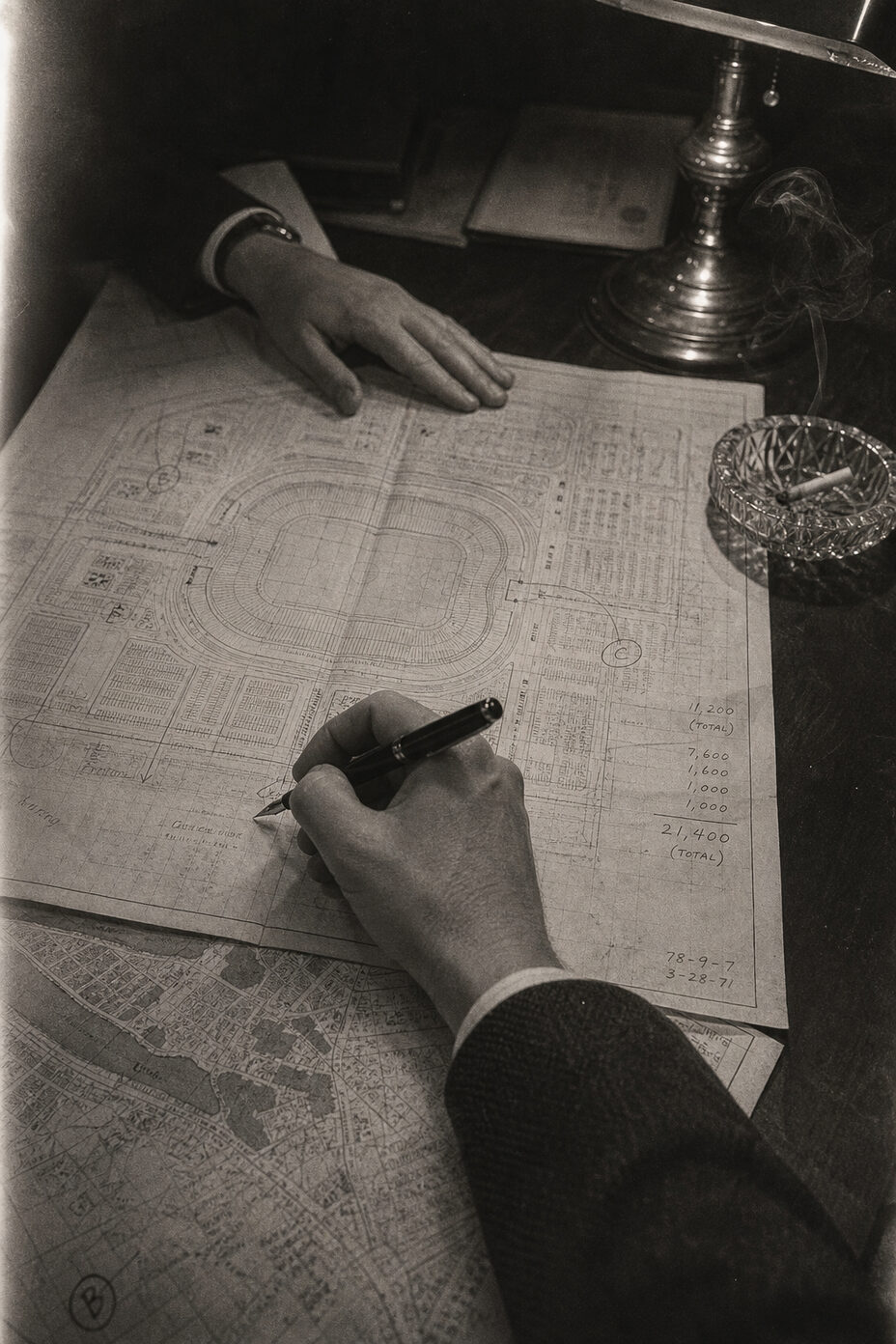
In the spring of 1974, weeks after A.C. Aldenza won a domestic trophy in front of its own supporters, that trophy was lowered into a crate and shipped out of a room six hundred kilometres away — a room with no minutes taken, maps of stadiums on the table instead of team sheets, and four men in suits.
A federation accountant, Tullio Reveglia, carried a copy of the contracts to a journalist in 1976. Three weeks later he was removed from his post on expense charges nobody believed. He never worked in football again.
What the file records is not a theft. It is a change of purpose — the evening a football club quietly stopped belonging to the people who filled it.
This file almost didn't survive.
For years it sat in a storage room nobody was supposed to enter, mislabelled, boxed between kit inventories and travel receipts nobody would ever audit. It was found by accident, by someone who was looking for something else entirely, and who has asked, for reasons that will become obvious, not to be named here.
What follows is what was inside.
There is a photograph in the file, dated the spring of 1974. A trophy — the kind that had only ever been lifted, never shipped — lowered into a wooden crate marked FRAGILE, hoisted by a pulley, watched by four men in suits holding clipboards instead of scarves. Nobody in the photograph is smiling. A.C. Aldenza had won the thing weeks earlier, on a Sunday, in front of its own people. What was happening in this room, six hundred kilometres from that Sunday, had nothing to do with the score.
For decades, football had moved by instinct. The men who ran it were mostly former players, local administrators, people who had once been cold on the same terraces as everyone else. Their decisions were often poor. But they were decisions made by people who had paid, at some point in their lives, to get in.
Then, quietly, a different kind of meeting began appearing on internal calendars. Not board meetings. Meetings with no minutes taken, in rooms with maps of stadiums spread across the table instead of team sheets — capacity figures, camera angles, advertising sightlines.
"The product is not the match. The product is the attention around it."
— The Informant —
A second document sits behind it — a transcript, typed, several lines struck through by hand. It is attributed to a federation accountant named Tullio Reveglia, referred to throughout the rest of the file only as T.R., who in the winter of 1976 carried a copy of the contracts to a journalist. The journalist's notes, also preserved in the file, record the meeting lasting eleven minutes before Reveglia left without finishing his coffee.
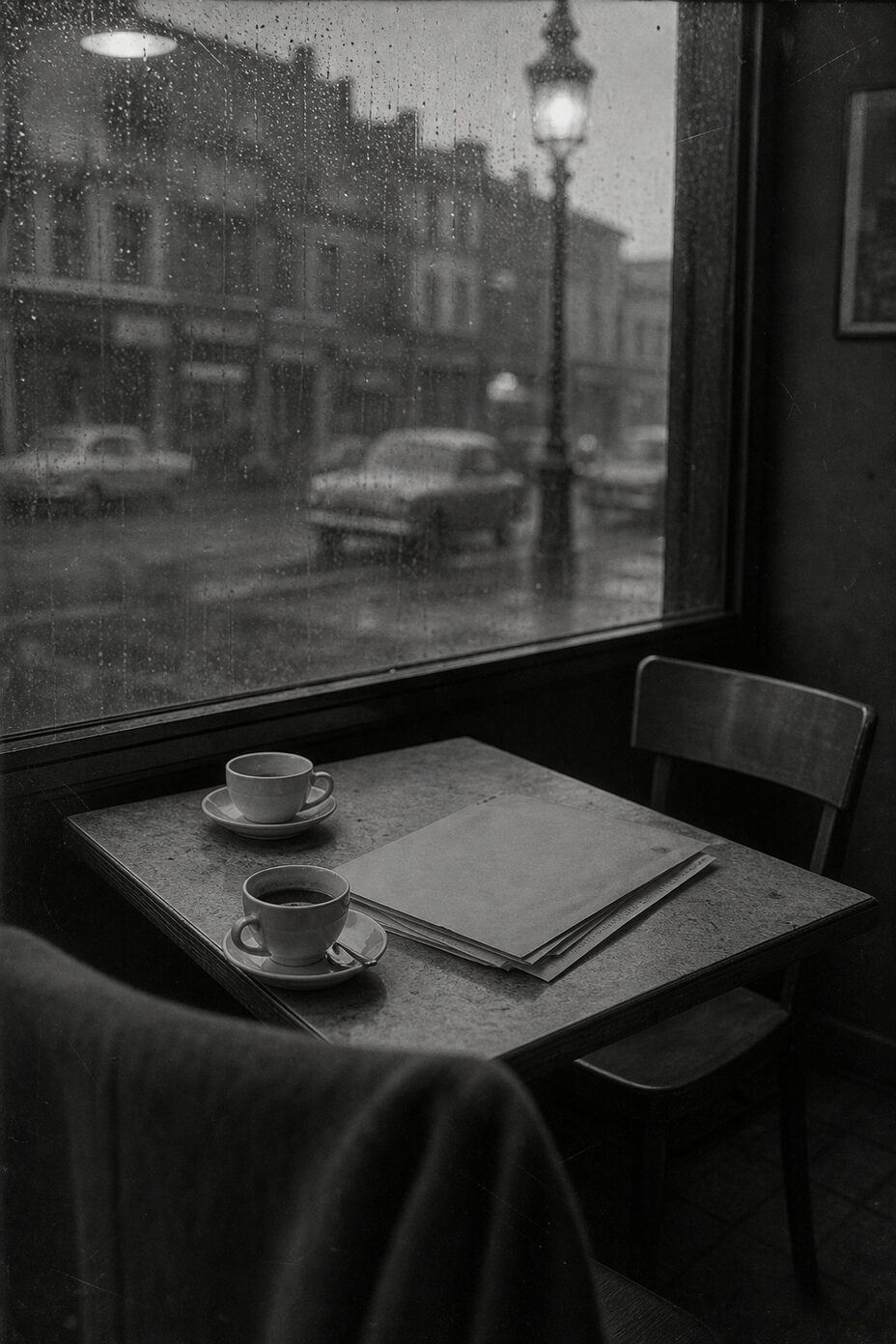
Three weeks later, Reveglia was removed from his post. The official record cites "irregularities in his own expense filings" — a charge nobody who worked with him believed, and nobody could ever disprove. He never worked in football again. His name does not appear in any federation yearbook printed after 1976.
The file contains no further trace of him. That absence is, itself, part of the record.
— The Signature —
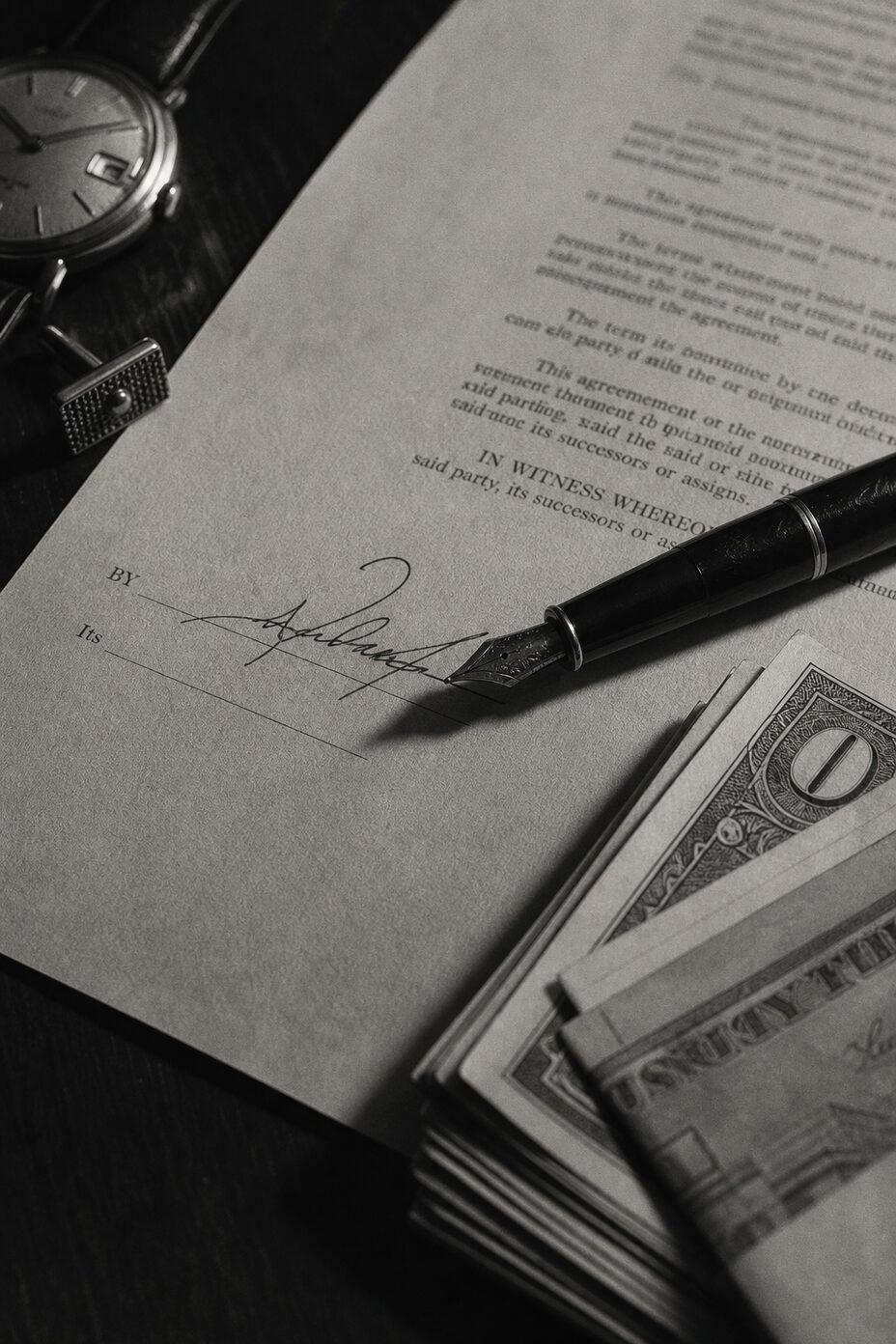
The last document in the file is the one investigators have spent the most time on. It is a single sheet, four signatures, dated the same evening the trophy left in its crate. Beside it, in a separate photograph, sits a sum of cash on the same table — never itemised, never explained, present in the frame for reasons the file does not clarify.
Nobody has ever proven what the cash was for.
Nobody has ever proven it wasn't for exactly what it looks like.
What the file does confirm is smaller, and somehow heavier: that same evening, in Aldenza, six hundred kilometres away, thousands of supporters queued for a match they believed still belonged to them. They sang the same songs they had always sung. They paid what they had always paid.
Not one of them ever saw this room.
Not one of them ever saw the crate, insured for a sum greater than most of them would earn in a lifetime, or the memo that quietly rewrote what a football club was for.
They only ever saw the match.
Which may be the most unsettling line in the entire file.
The crate, the memo and the four signatures are documented in the file. What they were for is not. The record confirms that football's purpose was being rewritten in rooms its supporters never entered — and cannot confirm the price. Boardroom · 1974.
— The Pattern Behind The Story —
A.C. Aldenza never existed. Tullio Reveglia never filed a report. The crate, the memo, the four signatures — invented, all of them.
The shift they describe is not.
Across the 1960s and 1970s, sociologists watching football from the inside — among them Ian Taylor and Chas Critcher — were already documenting a game being pulled, slowly, out of the hands of the people who built it and reorganised around something else: broadcast value, sponsorship, the sale of attention. The money that arrived over the following decades did not ask permission; by the late 1980s, live television rights alone were being negotiated in figures no terrace could imagine.
What arrived with the money was a new question, asked in rooms with no minutes taken: not "who are we," but "what are we worth." And a counter-movement arrived with it — supporters, in country after country, organising against a version of football they no longer recognised, sometimes buying back the clubs that had been sold out from under them.
The names in this dossier are invented. The room is not. It has existed, in some form, in every country where football became worth more than the people who love it.
Every name, club, document and event in this dossier is fictional. This dossier uses historical football fiction to explore recurring patterns in the commercialisation and governance of football — the sale of broadcast and commercial rights, opaque institutional decision-making, and the distance between a club's supporters and the rooms where its future is decided.
The cases are fictional. The patterns are not.