01 — What SurvivedThe evidence survived in fragments
The archive contains no written instruction ordering Aurelia to lose the final.
What survives is more difficult to dismiss:
- a formation rewritten less than an hour before kickoff;
- handwritten restrictions that removed every aggressive principle used during the tournament;
- telephone records connecting the conference room to the hotel's recording system;
- testimony placing the federation president and two state officials inside the room;
- a match in which the competition's most prolific attack produced no attempt;
- a coach who resigned nineteen days later;
- a hosting decision delivered four months afterward;
- construction contracts linked to federation officials;
- later statements from players who denied an explicit order without denying institutional pressure.
The official version survived intact. The evidence survived in fragments.
That imbalance was not incidental. It was the mechanism.
02 — The Official ExplanationBy midnight there was only one version
By midnight, the federation had reduced the final to one explanation: Aurelia had respected a superior opponent.
The language appeared first in Orsini's press conference. The following morning, it appeared in the federation bulletin. By afternoon, identical phrases had entered radio summaries and newspaper reports:
- tactical caution;
- emotional fatigue;
- respect for Belmonte's midfield;
- the pressure of a first final;
- the natural conservatism of decisive matches.
None of the explanations was impossible. That was their strength.
A cover-up does not always require a false fact. Sometimes it requires enough plausible facts to prevent the dangerous question from becoming the official one.
Within a week the explanation had stopped being an argument and started being a record. Newspapers cited the bulletin. Later reports cited the newspapers. By the time anyone asked what had happened inside the hotel, the answer already existed in print, repeated often enough to look like documentation.
03 — The CountryA football culture larger than its economy
Aurelia was a narrow republic along the southern Atlantic coast. It had five million inhabitants, recurrent military governments and a football culture considerably larger than its economy. The national team had never won the Continental Nations Cup. Its domestic clubs were financially unstable, but the federation was politically influential.
Presidents appeared beside players after victories. Ministers attended training. Football was presented not as entertainment but as evidence that Aurelia still mattered.
In 1978, the country needed that evidence. Inflation was rising. Industrial strikes had spread through the port districts. The government's approval was collapsing. The federation proposed hosting the 1982 Continental Nations Cup as a national recovery project. New stadiums. New roads. Television contracts. Foreign visitors. A country rebuilt through football.
Only one obstacle remained: Belmonte controlled seven of the fourteen federation votes required to approve the bid.
04 — Octavio SalcedoHe never needed to control the ball
Octavio Salcedo had been president of the Aurelia Football Federation since 1967. He was not a former player. He was a lawyer, importer and political intermediary.
He understood that football officials rarely needed to control the ball. They needed to control appointments, travel, contracts, disciplinary committees, television access, national selection — and the official account of what occurred.
Salcedo called the national team “the country's most visible diplomatic delegation.” When Aurelia won, he stood near the players. When it lost, he spoke about sacrifice.
He had spent eleven years making himself inseparable from both.
05 — The Road to the FinalThe team that refused to retreat
Aurelia played aggressive football. Its front three constantly exchanged positions. Its fullbacks attacked simultaneously. The midfield pressed immediately after losing possession. The system was considered reckless. It was also devastating.
- Group stage — Aurelia 4–1 Costa Verde;
- Group stage — Aurelia 3–0 San Jerónimo;
- Group stage — Aurelia 2–2 Belmonte;
- Quarter-final — Aurelia 4–0 Nueva Esperanza;
- Semi-final — Aurelia 3–1 República del Plata.
Sixteen goals. Ninety-three attempts. Thirty-eight shots on target. No team in the competition attacked more often. No Aurelia match finished without at least eleven attempts.
Before the final, newspapers called them the team that refused to retreat.
By kickoff, retreat was the only instruction that mattered.
06 — The Hotel RoomHe was told the meeting concerned security
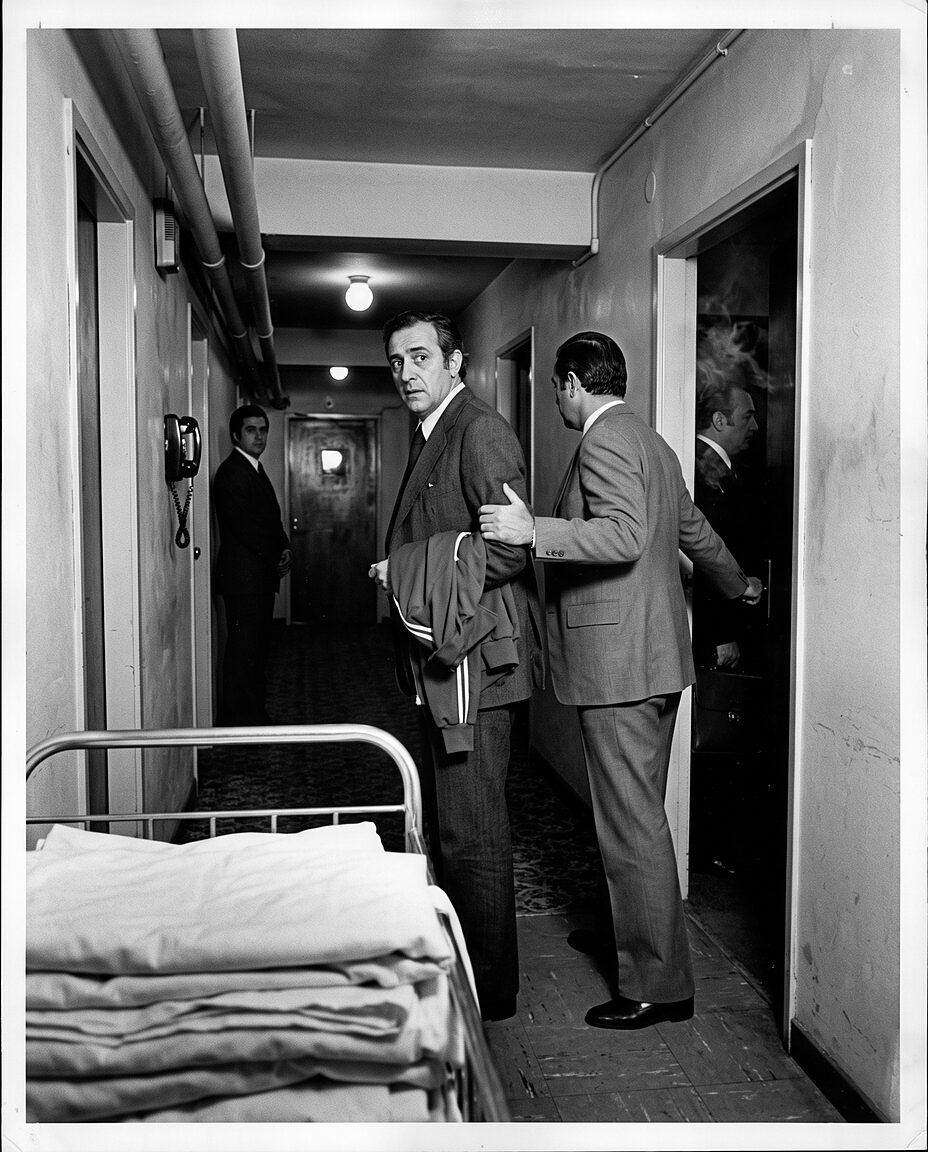
At 16:55, head coach Gabriel Orsini was called downstairs from the team meal. He was taken to a small conference room normally used by tournament officials.
Inside were Octavio Salcedo; Deputy Interior Minister Ramón Alvear; trade envoy Luis Montal; federation treasurer Víctor Carena; an unopened leather document case; and a tactical board already displaying Aurelia's formation.
Orsini was told the meeting concerned security. It did not.
Salcedo began with the hosting bid. Belmonte's federation, he said, would formally support Aurelia the following morning. In return, Aurelia was expected to demonstrate that regional cooperation mattered more than sporting provocation.
Orsini asked whether that meant losing. Salcedo answered: “It means not making victory necessary.”
The coach asked again. This time, the deputy minister spoke.
“This is not a football decision.”
07 — The Verbal OrderNothing was written that could be read as defeat
No surviving document states that Aurelia must lose. Nothing in the federation's holdings uses the word at all. What exists instead is a set of tactical restrictions, delivered verbally and transcribed by the man receiving them.
That distinction was the point. A written instruction creates a document. A document creates a custodian. A custodian creates a witness. The order was constructed to stop before any of that could happen.
A missed penalty creates a suspect. A passive system creates explanations.
08 — The Tactical NotesEvery line defensible on its own
The instructions appear in handwritten notes attributed to Orsini, recovered among his personal papers and never authenticated by the federation.
Defensive line five metres deeper. No coordinated press. One fullback forward at a time. Captain remains behind the ball. No quick restarts. No shots outside the area. No more than three players entering the final third. Protect the draw until instructed otherwise.
Do not create an irreversible situation.
The meaning remained deniable. Every instruction could be defended as caution. Together, they removed everything that had taken Aurelia to the final.
09 — The CaptainReliable because he did not dramatise conflict
National-team captain Mateo Vergara was thirty-one. He had played eighty-four internationals and spent nine years in European club football. Vergara was not politically active. He rarely gave interviews. He was considered reliable precisely because he did not dramatise conflict.
At 17:35, Orsini asked him to come to the conference room alone. Salcedo repeated the argument. Hosting rights. National investment. Federation solvency. Regional stability.
Vergara listened without interruption. Then he asked: “Do the others know?”
Salcedo replied: “They only need to know the plan.”
Vergara asked what would happen if the team scored naturally. Nobody answered immediately.
The deputy minister closed the door.
10 — The MatchBelmonte expected pressure. It did not arrive.
The teams lined up at 18:36. Aurelia's supporters filled three sides of the stadium. Flags covered the upper stands. The players sang. Vergara did not.
A press photograph shows him facing forward with his mouth closed while the men beside him sing. The image later became evidence for several contradictory theories: he knew; he was protesting; he was concentrating; the photograph merely caught him between words. The camera preserved one fraction of a second. The country supplied the meaning afterward.
Aurelia retreated immediately. Its forwards allowed Belmonte's defenders to carry the ball beyond halfway. The midfield remained narrow. Loose balls were cleared instead of controlled. When Aurelia won possession, the first pass went backwards.
In the 14th minute, winger Esteban Rivas broke into space on the left. Three teammates began running forward. Vergara shouted. Rivas stopped. He turned toward his own goal and passed the ball forty metres backwards.
The crowd whistled. The television commentator said: “Aurelia appears unusually cautious.”
That remained the official explanation for decades.
11 — The Chance Not TakenThe second everyone understood
In the 37th minute, Belmonte's goalkeeper misplaced a pass. Aurelia striker Elías Casaravilla intercepted the ball twenty-five metres from goal. The goalkeeper was outside the penalty area. The net was exposed.
Casaravilla normally shot from that distance. He had scored twice from outside the area during the tournament. This time, he waited. He looked to his right. No teammate advanced. He turned away from goal. A defender recovered possession.
The crowd's whistle became a roar. Casaravilla placed both hands on his head.
The following morning, newspapers described the moment as indecision. Years later, a teammate called it “the second when all of us understood that the order was real.”
12 — Half-Time“And what does the team get?”
The score was 0–0. Aurelia had taken no shots.
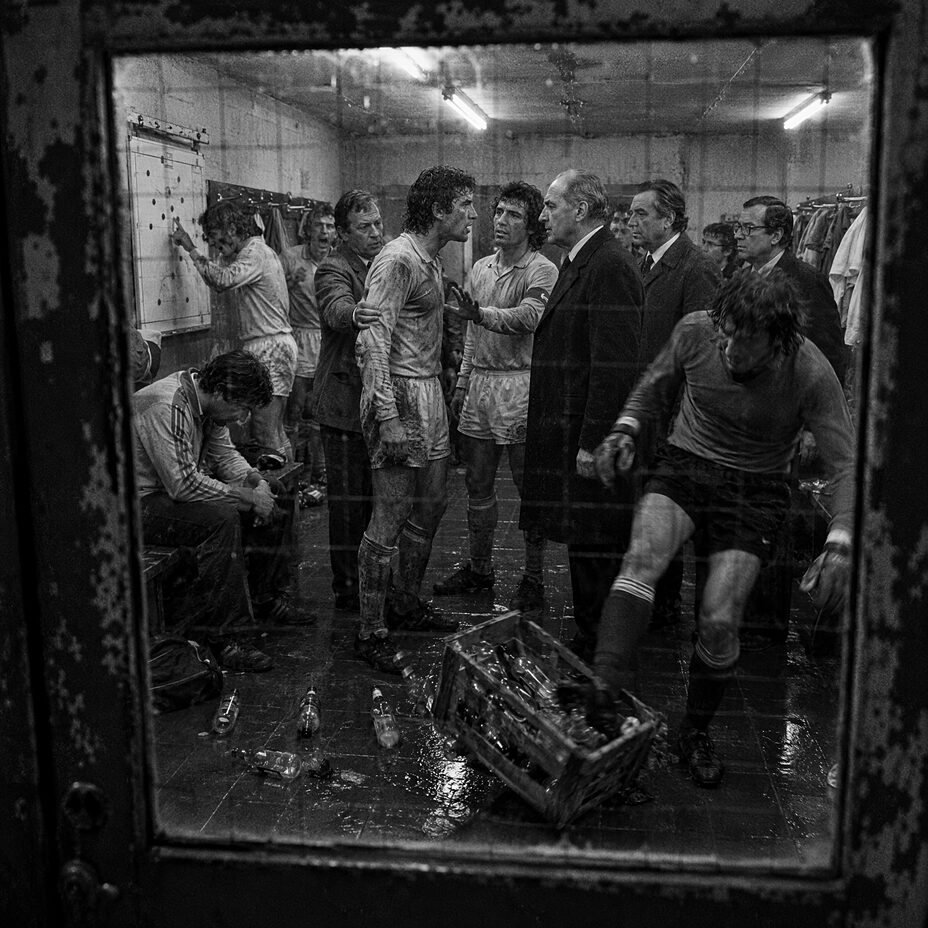
The dressing room erupted before the door had fully closed. Rivas accused the coaching staff of humiliating them. Casaravilla demanded permission to attack. Goalkeeper Adrián Sosa kicked a water crate across the room.
Vergara stood between the players and Orsini. The coach did not defend the tactics. He looked toward the door.
Octavio Salcedo entered with two federation officials. No president had entered the dressing room during the tournament.
Salcedo said: “Forty-five more minutes and the country gets what it needs.”
Casaravilla stepped toward him. A federation official moved between them.
Vergara asked: “And what does the team get?” Salcedo answered: “A future.”
The captain replied: “Not ours.”
13 — The Second HalfNeither defensive nor attacking — paralysed
Aurelia continued retreating. But the obedience was no longer complete. Rivas pressed alone. Casaravilla ignored instructions and chased long balls. Two midfielders began moving forward.
The team fractured between those still following the plan and those attempting to recover the match. Aurelia became neither defensive nor attacking. It became paralysed.
Belmonte recognised the uncertainty. Its fullbacks advanced. Its midfield surrounded Vergara.
The decisive goal arrived in the 71st minute. A low cross entered Aurelia's penalty area. Two defenders could have cleared it. Both hesitated. Belmonte forward Julián Barreto scored from six metres.
Nobody celebrated inside Aurelia's penalty area. Nobody protested. The goalkeeper remained on his knees.
The score had finally reached the result the federation could accept.
14 — The Final Nineteen MinutesThe justification had disappeared. The system had not.
Aurelia now needed to attack. The tactical justification had disappeared. It still did not.
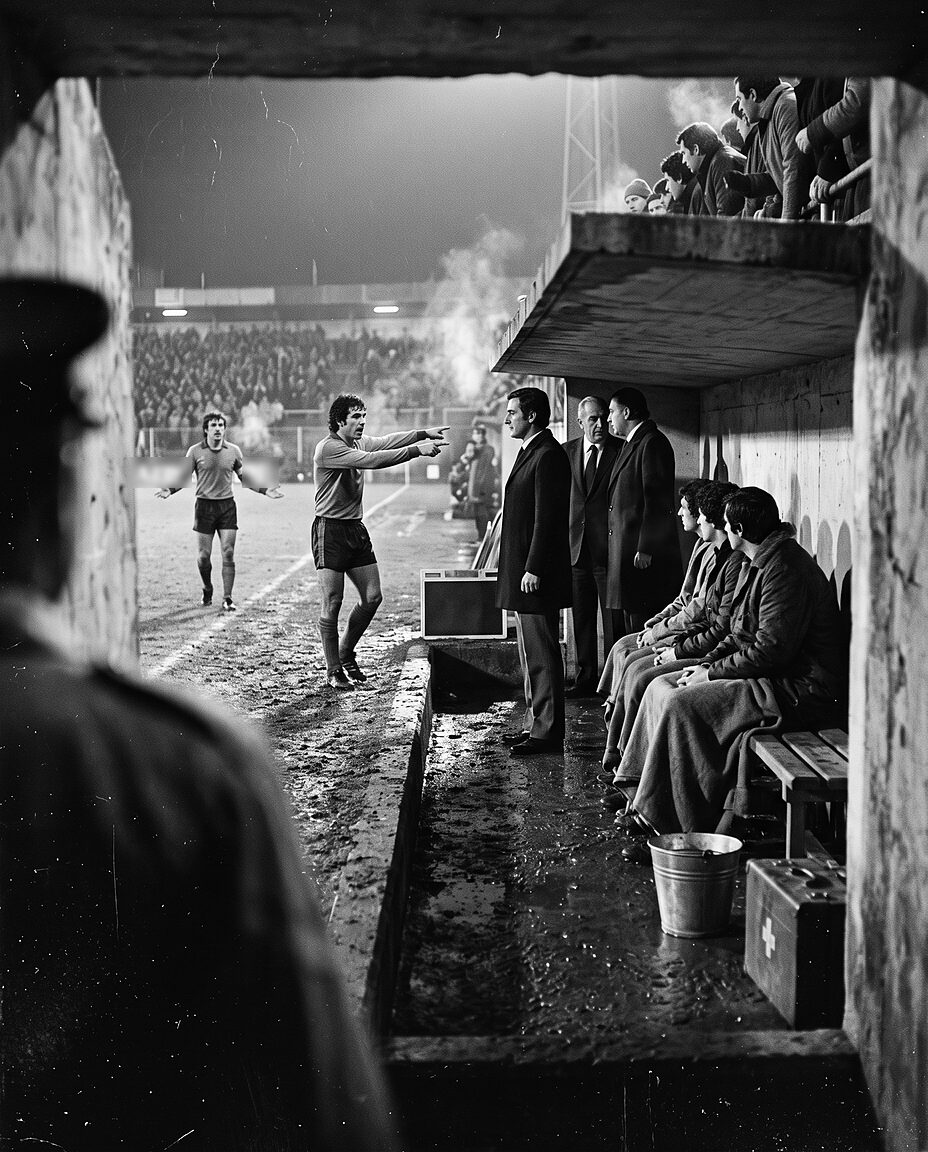
Orsini made no substitutions. The fullbacks remained deep. Quick free kicks were delayed. Vergara repeatedly requested permission to move into midfield. The bench refused.
In the 83rd minute, Casaravilla abandoned his position and walked toward the touchline. He shouted at Orsini: “Do you want us to lose or do you want us to disappear?” The coach turned away.
Aurelia completed the final with 41% possession, no shots, no corners, and one touch inside Belmonte's penalty area after half-time.
The tournament's highest-scoring team completed ninety minutes without testing the goalkeeper. Belmonte won 1–0.
15 — After the WhistleThe medal that left no footage
Belmonte's players celebrated. Aurelia's players did not immediately leave. Vergara gathered them near the centre circle. No camera recorded what he said.
Seven players removed their federation blazers before approaching the presentation platform. Casaravilla refused his runner-up medal. An official placed it inside his hand. He dropped it on the table.
Television cameras cut away. The medal never appeared in the broadcast replay.
16 — The Press Conference“Finals create caution”
Orsini appeared alone. Salcedo did not attend. The coach described the performance as “a disciplined attempt to control a superior opponent.”
A journalist asked why the tournament's highest-scoring team had not attempted a shot. Orsini answered: “Finals create caution.”
Another asked whether the federation had influenced the tactics. The press officer ended the conference.
Orsini resigned nineteen days later. His resignation cited exhaustion. He never coached another national team.
The most direct institutional witness removed himself from the record before anyone could compel him to speak.
17 — The RewardA victory greater than one match
Four months after the final, Aurelia was awarded hosting rights for the 1982 Continental Nations Cup. Belmonte supplied six of the decisive votes.
Construction contracts were awarded to a consortium connected to federation treasurer Víctor Carena. The federation's previously undisclosed debt was refinanced. Octavio Salcedo remained president.
The government called the successful bid “a victory greater than one match.” The phrase appeared on stadium posters throughout Aurelia.
Nobody credited the players.