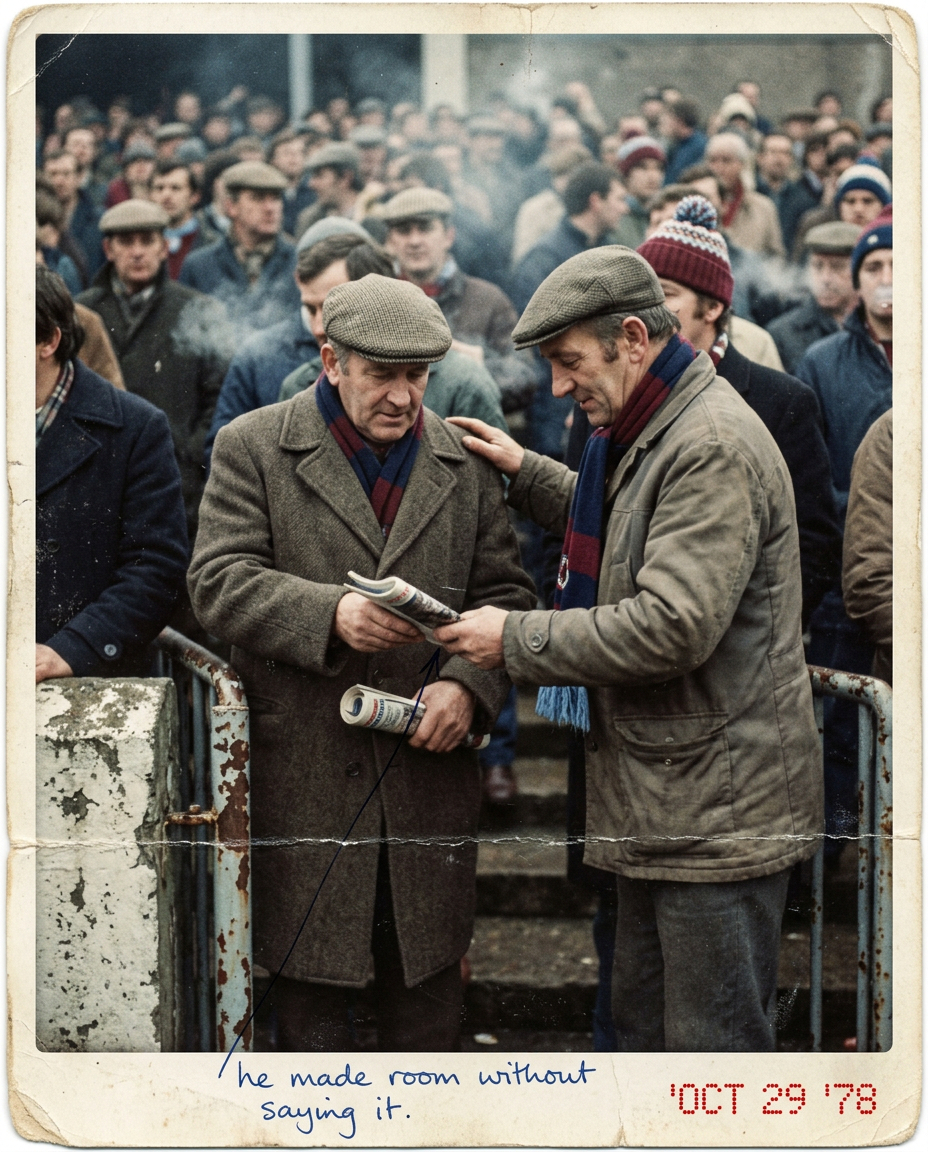
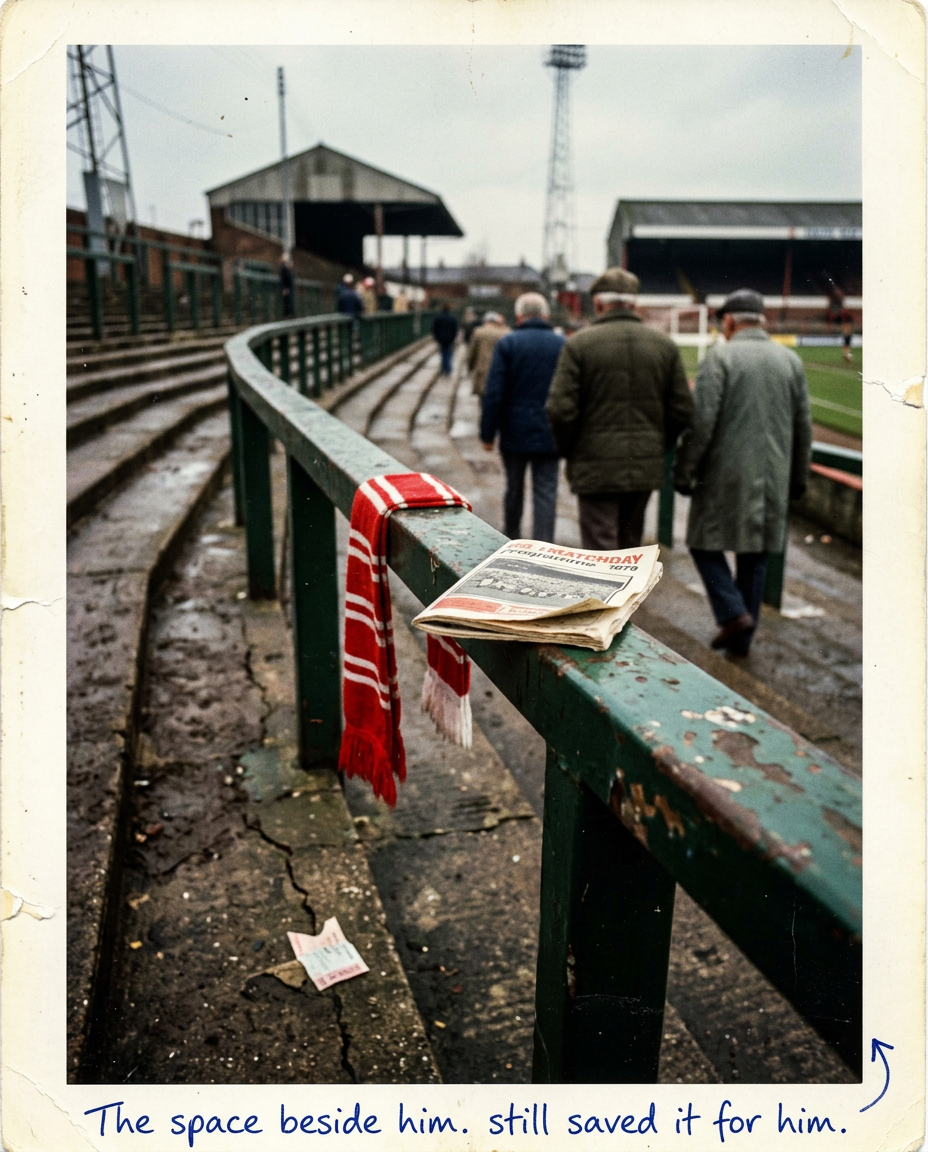
There are gestures in football that look too small to survive history.
A nod from across the terrace.
A programme folded and passed without being asked.
A hand raised above the crowd so someone can find the right step.
A man standing slightly wider than necessary, not because he needs the space, but because someone else is coming.
That is one of the quietest forms of football friendship.
Saving a place.
It does not sound like much. It will never appear in a club museum. It will not be listed among great acts of loyalty. No commentator will mention it. No camera will search for it. But for decades, in grounds where people stood close enough to learn the shape of one another’s habits, saving a place was a kind of promise. It said: I got here first, but this afternoon is not complete until you are here too.
Before football became organised around reserved seats, personal accounts and digital entry, much of matchday depended on arrival. You had to know when to leave the house, which street filled first, which gate moved fastest, which terrace steps gave the best view, where the regulars gathered, and who could be trusted to hold a place without making a ceremony of it. The ground was public, but within it there were territories built entirely from repetition.
Nobody owned them officially.
Everybody knew.
A place near the rail. Three steps down from the barrier. Just left of the post. Under the roof, but not too far back. Beside the same drainpipe. Near the man who always shouted at the linesman. Close enough to the exit for the old knees, far enough in to feel the noise properly. These locations had no legal status, but they had social weight. People returned to them because they had returned before. That was enough.
And within those unofficial maps, friendship operated with almost no language.
One man arrived early and waited.
The other came when work allowed, when the bus was late, when the child was finally ready, when the pub took longer than it should have, when life got in the way of the ritual but did not defeat it. From a distance, he would scan the terrace for a familiar coat, a raised hand, the shape of a head, the scarf tied in the usual way. And there, somehow, despite the crowd pressing forward and the steps filling quickly, there would still be room.
Not a lot of room.
Just enough.
That mattered because football places were rarely generous. They were earned through time and protected through attention. To save a place on a crowded terrace was to absorb pressure on behalf of someone else. It meant leaning slightly, shifting a shoulder, holding your ground when people arrived behind you, sometimes pretending not to hear when someone muttered about space. It meant making yourself briefly inconvenient so that another person could be included in the day.
There is a type of affection that never calls itself affection because the word would embarrass everyone involved.
Football is full of it.
The friend who saved your place might not ask how you were.