Long before football became something consumed through screens, it required movement. Supporters travelled because there was no alternative. If the club played away, the only way to witness the match was to leave home and follow it. Entire generations built their football lives around timetables, railway platforms and long journeys that often demanded far more commitment than the game itself.
Modern supporters sometimes underestimate how much football culture was shaped by travel. The match may have been the destination, but the journey was where much of the culture lived.
Certain groups of supporters became inseparable not because of what happened inside the stadium, but because of what happened before reaching it. Week after week they found themselves standing beneath the same station clock, boarding the same carriage and occupying the same collection of seats. The routine repeated so often that it gradually stopped feeling like an arrangement and started feeling like a permanent feature of life.
Nobody formally organized these gatherings.
The train simply became their meeting place.
Over time, the same faces appeared with remarkable consistency. Someone always arrived first. Someone always carried extra newspapers. Someone inevitably predicted victory regardless of the opposition. Every group contained a pessimist, an optimist and at least one supporter whose predictions had been wrong for twenty years without affecting his confidence in the slightest.
The conversations became part of the ritual.
Football was discussed, of course, but never exclusively. Work, families, local gossip, politics, weather and stories that had already been told a hundred times all found their place within the journey. Entire friendships developed between stations. Entire decades unfolded between departures and arrivals.
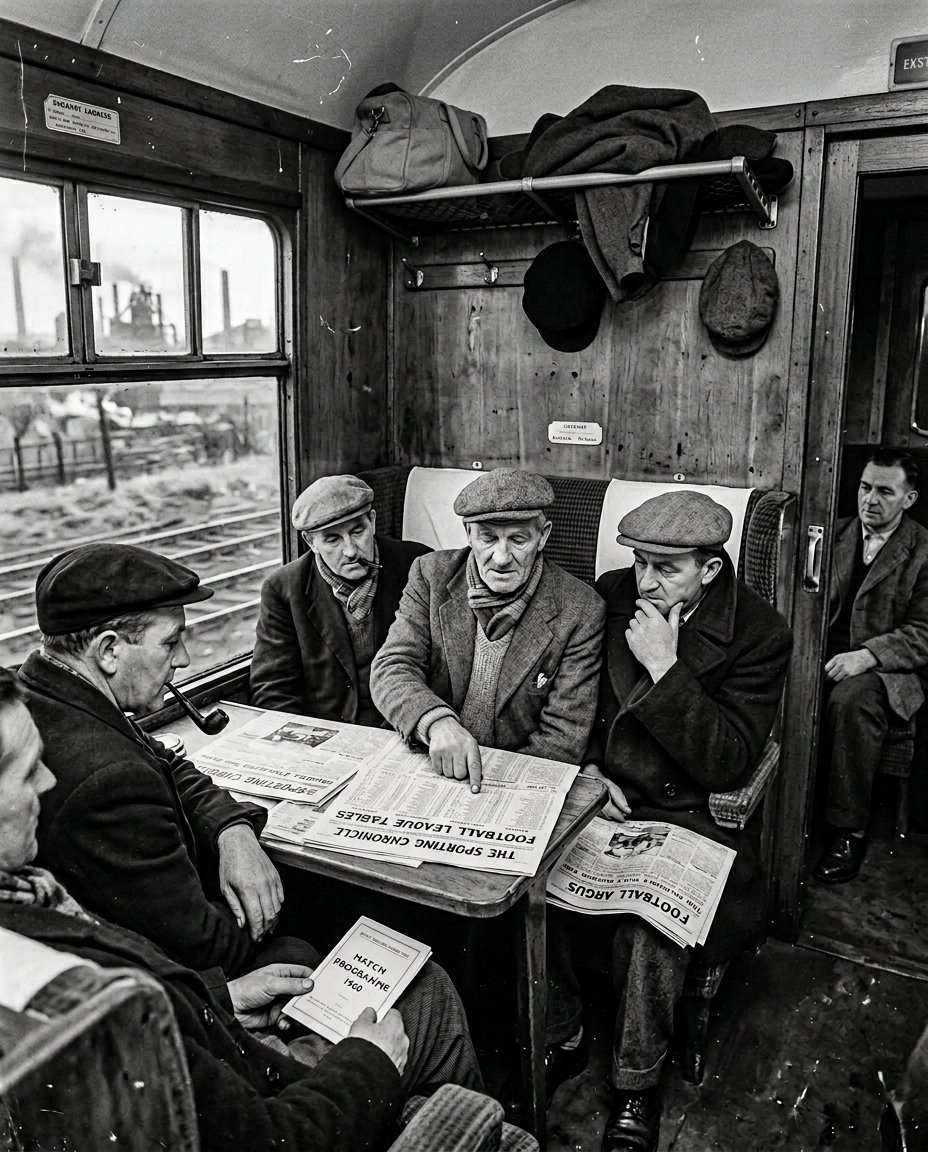
Archive 010 · Brotherhood · The Platform
What made these relationships unusual was their durability. Many people move through life surrounded by changing social circles. Colleagues come and go. Neighbours move away. Circumstances evolve. Yet the train group often remained remarkably stable. The same people continued appearing year after year, creating a continuity that became increasingly rare elsewhere in life.
Eventually the journeys accumulated into something larger than anyone intended. The train carried supporters to matches, but it also carried them through marriages, bereavements, promotions, retirements and every other milestone that quietly accompanies a lifetime. The football season provided the calendar. Life happened in between.
By the time anyone realised how important those journeys had become, they had already woven themselves into the fabric of everyday life.
Perhaps this is why older supporters often remember the travel almost as vividly as the matches themselves.
Certain away victories fade.
Certain league tables disappear.
Yet many can still describe the exact platform where they met their friends. They remember the smell of steam hanging beneath station roofs. They remember winter mornings so cold that nobody removed their gloves. They remember carriages filled with scarves, newspapers and anticipation.
Most of all, they remember the people.
Because football journeys were never simply about reaching a stadium. They were about sharing time. The train offered something modern life rarely provides: hundreds of uninterrupted hours spent alongside the same people, pursuing the same destination, season after season. Friendships grew naturally within that environment. Trust emerged gradually. Familiarity became loyalty.
Years later, many of the stations remain. Some of the tracks remain. A few of the trains even remain.
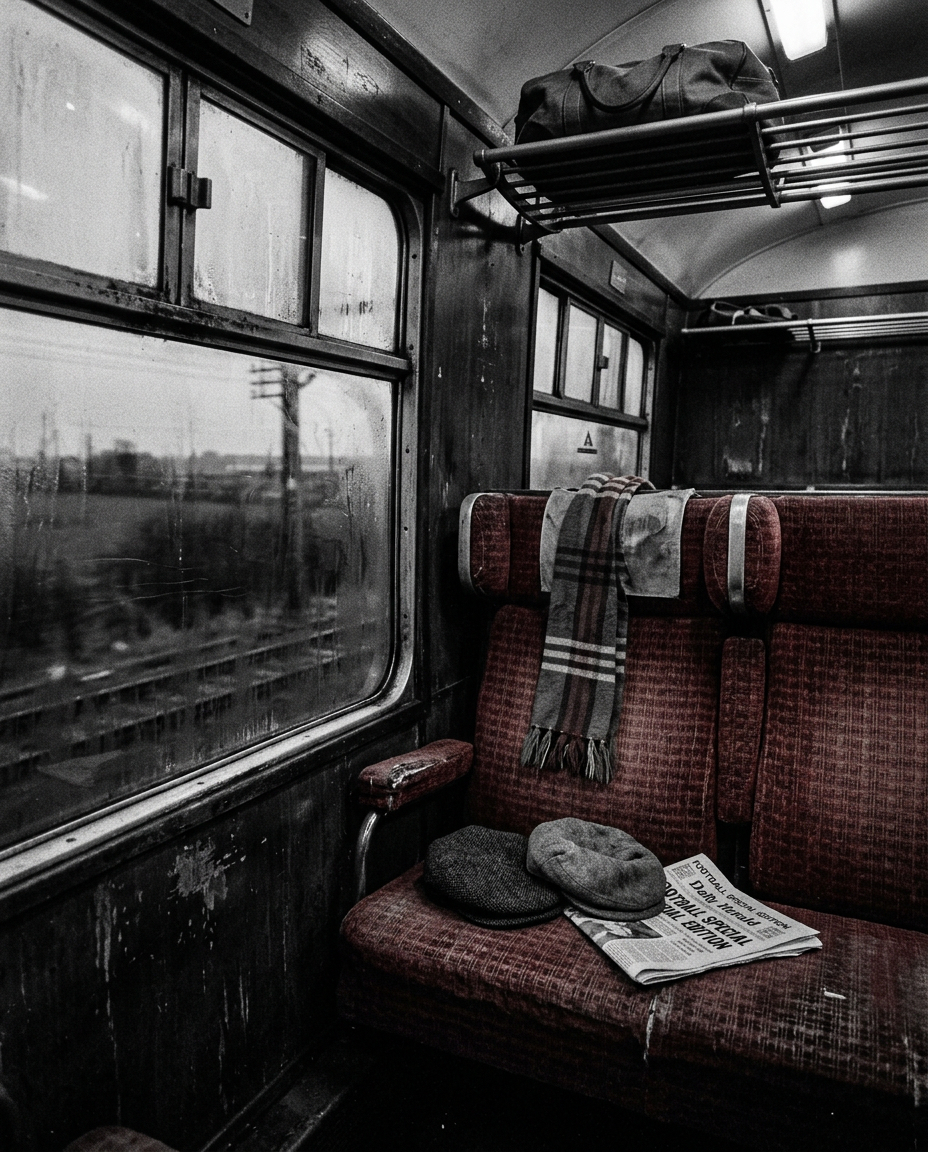
Archive 010 · Brotherhood · The Same Journey
The people do not.
That is why old railway photographs possess such emotional weight. They preserve moments that seemed ordinary at the time. A group of supporters waiting on a platform. A conversation before departure. Another journey toward another match.
Nothing extraordinary.
And yet, when viewed decades later, they reveal something priceless. A record of friendships built one train ride at a time.
The football brought them together.
The journey gave them the time
required to become brothers.