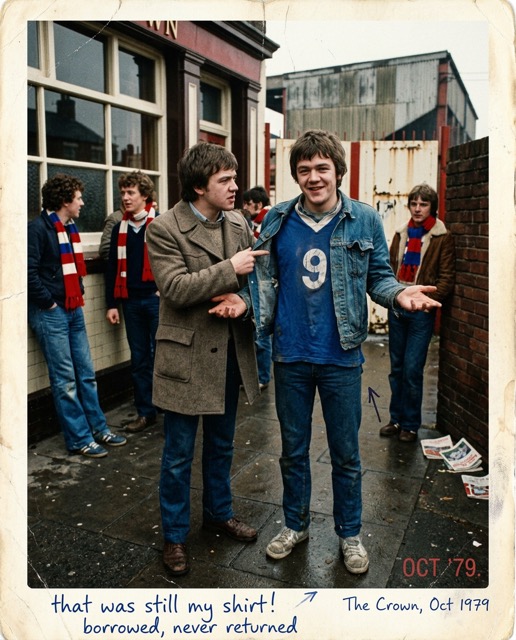
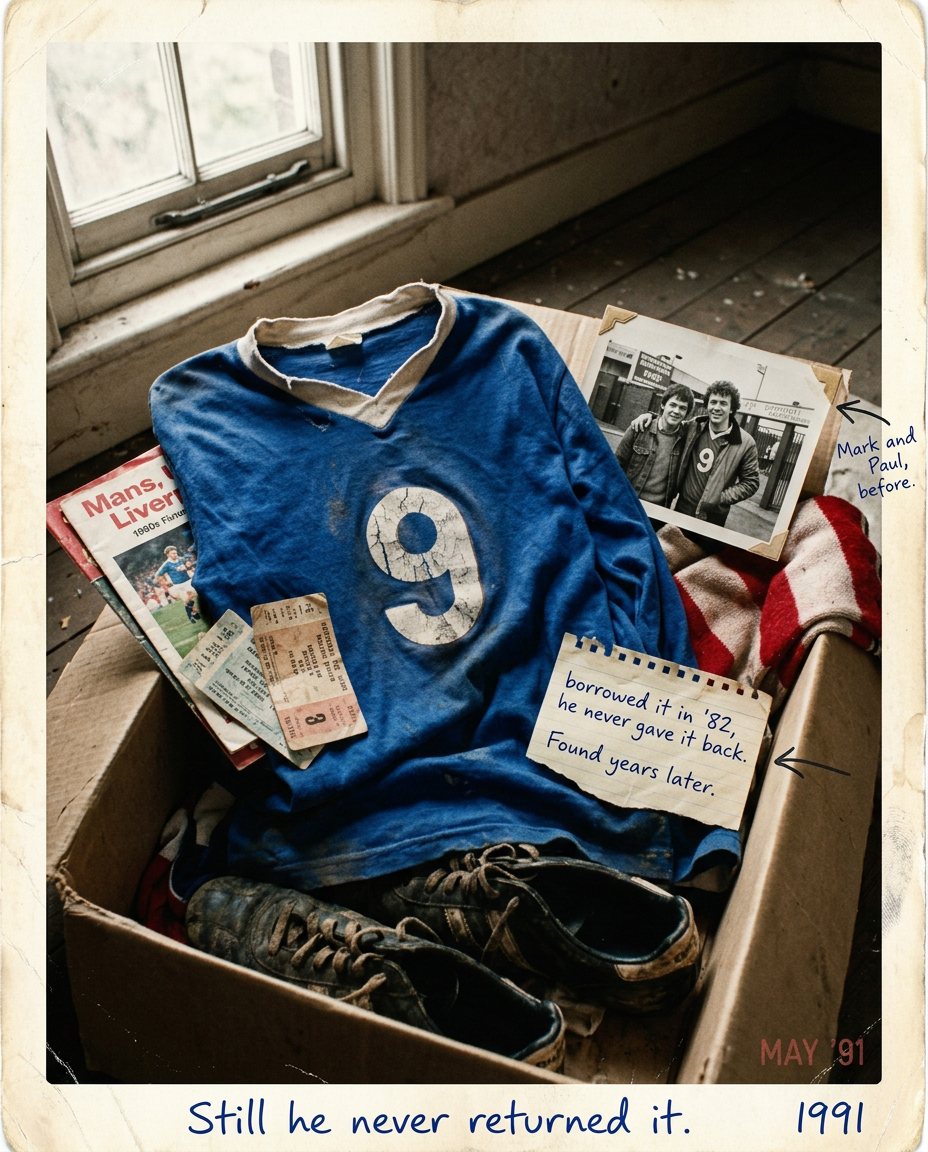
Every football friendship has at least one object that never found its way back.
A scarf left in the wrong house after an away match.
A programme borrowed to check the lineup and folded into another pocket.
A lighter passed around on a cold terrace and never seen again.
A cassette, a photograph, a pair of gloves, a ticket stub, a badge, a jacket, a shirt.
Especially the shirt.
The shirt was never meant to disappear. That is important. It was not stolen. It was borrowed under circumstances that seemed too ordinary to remember at the time. Maybe rain came down harder than expected and one friend needed something dry. Maybe a five-a-side match needed one more player in the right colour. Maybe the away trip stretched into a night no one had planned properly. Maybe someone’s own shirt was forgotten, ruined, lost, too small, too wet, too covered in beer, too associated with a defeat nobody wanted to carry home.
So one man said, “Take this.”
And the other did.
That should have been the whole story. A shirt given for a day. A shirt returned the next week. A minor exchange between men who trusted one another enough not to make a record of it.
But football has a way of making ordinary objects disobey ordinary rules.
The borrowed shirt stayed away.
At first, nobody noticed. Or rather, one noticed and chose not to care. There would be time. They would see each other next match. The shirt would come back folded badly, probably unwashed or overwashed, smelling faintly of someone else’s house. There would be insults. There would be a small complaint about stretching the collar. The debt would be closed and forgotten.
Except it was not.
Weeks passed. Then months. The borrowed shirt became part of another routine. It was worn to training, to the pub, to watch matches on television, to sleep in after late nights, to paint a room, to stand on a terrace where it had not originally belonged. It collected the wrong life and somehow became more interesting for it. The owner would see it occasionally, across a room or under a jacket, and recognize it immediately.