Before football became something people consumed, it was something people physically participated in.
Not on the pitch.
On the terraces.
There was a time when attending a football match meant standing for ninety minutes.
Sometimes longer.
Sometimes in rain.
Sometimes in snow.
Sometimes crushed among thousands of other supporters sharing the same concrete steps.
Nobody expected comfort.
Nobody asked for it.
The purpose of going to football was not to be comfortable.
The purpose was to be there.
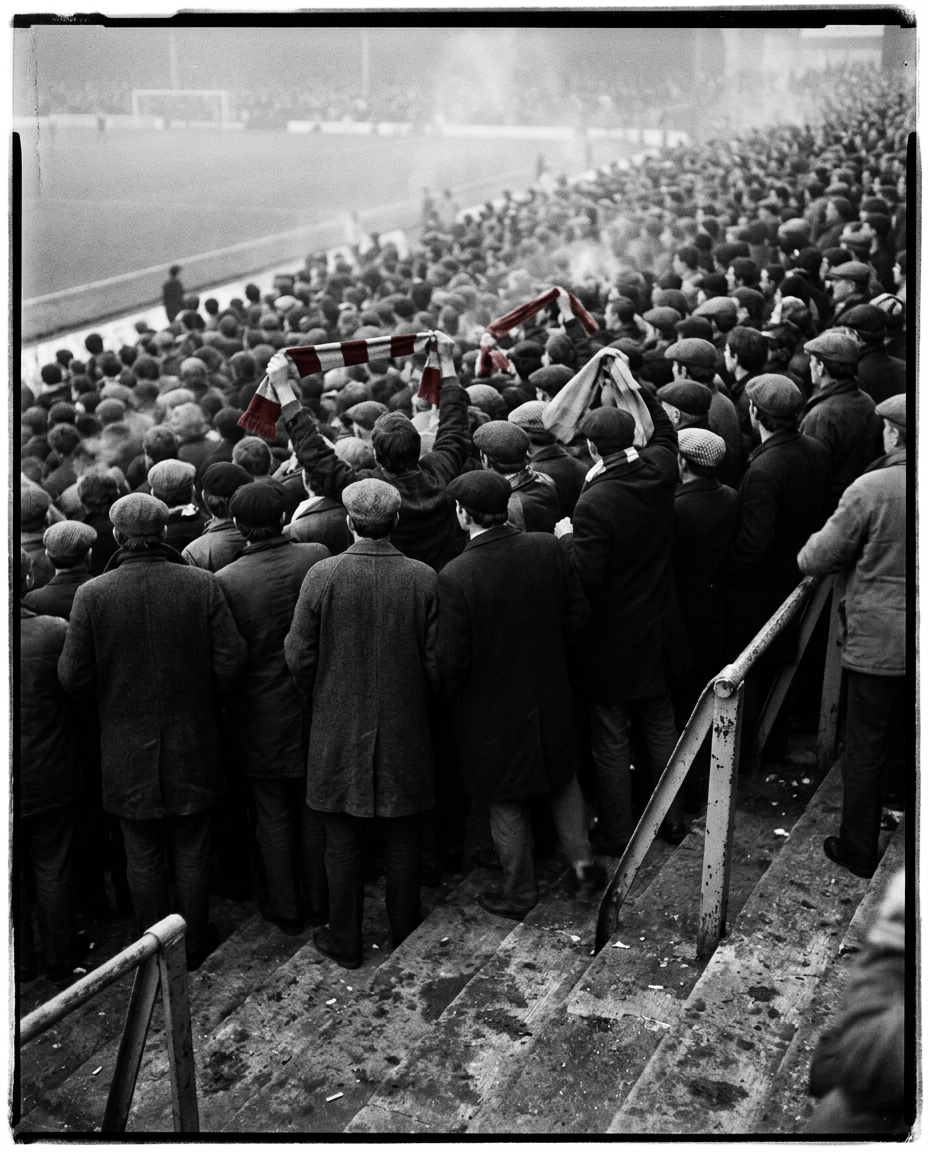
Standing changed everything.
The crowd was never still.
It swayed.
Shifted.
Surged.
Retreated.
Reacted.
A dangerous tackle on the far side of the pitch could send an entire terrace leaning forward in unison.
A shot against the post could produce a physical wave moving through thousands of bodies.
Goals were not merely celebrated.
They exploded.
People did not jump from seats.
There were no seats.
The entire stand became part of the moment.
For a few seconds, nobody knew exactly where they were being carried.
Only that they were moving together.
The old terraces possessed something difficult to explain to anyone who never experienced them.
The crowd behaved less like a collection of individuals and more like a living organism.
Every supporter retained their own thoughts, loyalties and opinions.
Yet during a match, they became part of something larger.
A single emotional force.
The pitch influenced the crowd.
The crowd influenced the pitch.
And the players felt it.
Modern stadiums are cleaner.
Safer.
More comfortable.
Few people would genuinely wish to return to the practical realities of the old days.
But comfort came with a cost.
Something subtle disappeared.
Something impossible to measure.
The sense that football existed not only in front of you but around you.
Beneath your feet.
Inside your lungs.
Within the voices of thousands of strangers standing shoulder-to-shoulder.
When football was watched standing up, people occupied less personal space.
Boundaries became blurred.
Generations mixed naturally.
Fathers stood beside sons.
Teenagers stood beside pensioners.
Factory workers stood beside businessmen.
Everyone faced the same direction.
Everyone suffered together.
Everyone celebrated together.
For ninety minutes, differences mattered less than belonging.
Perhaps that is why old terrace photographs still feel alive.
The faces are often frozen.
The stadiums may no longer exist.
The players are long gone.
Yet the images continue to communicate movement.
You can almost hear them.
Almost feel the pressure of the crowd.
Almost sense the anticipation.
The collective intake of breath before a chance.
The roar after a goal.
The endless noise that seemed to rise directly from the concrete itself.
Football still creates unforgettable moments.
It always will.
But there was something unique about the standing era.
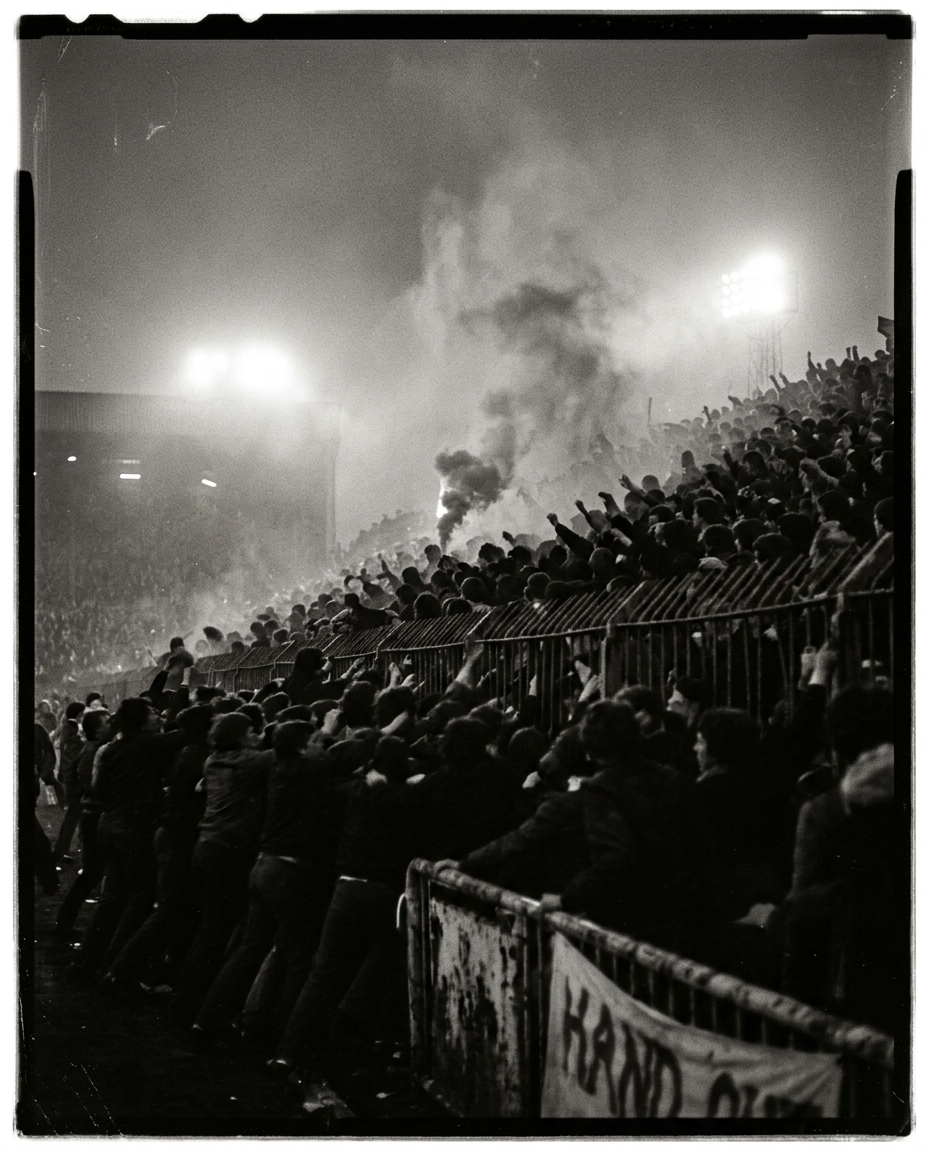
A relationship between crowd and match that felt physical rather than observational.
People did not simply watch football.
They stood inside it.
And for those who remember it,
that feeling never truly disappeared.