There is an uncomfortable truth at the heart of modern football, one that rarely appears in documentaries, anniversary celebrations or promotional campaigns.
The people most responsible for creating football culture were never the people who profited from it.
They were not chairmen, television executives, sponsors or investors. They were not the faces on magazine covers or the names stitched onto the backs of shirts.
They were ordinary supporters.
People whose contribution to the game was so constant, so ordinary and so completely taken for granted that it became almost invisible.
The man who travelled every week.
The woman who never missed a home match.
The father who passed his club to his children.
The group of friends who occupied the same corner of the terrace for twenty years.
The supporter who learned the songs, taught the songs and then watched somebody younger inherit them.
Football remembers many things.
It remembers goals.
It remembers trophies.
It remembers records.
What it often forgets is who built the atmosphere in which those memories became possible.
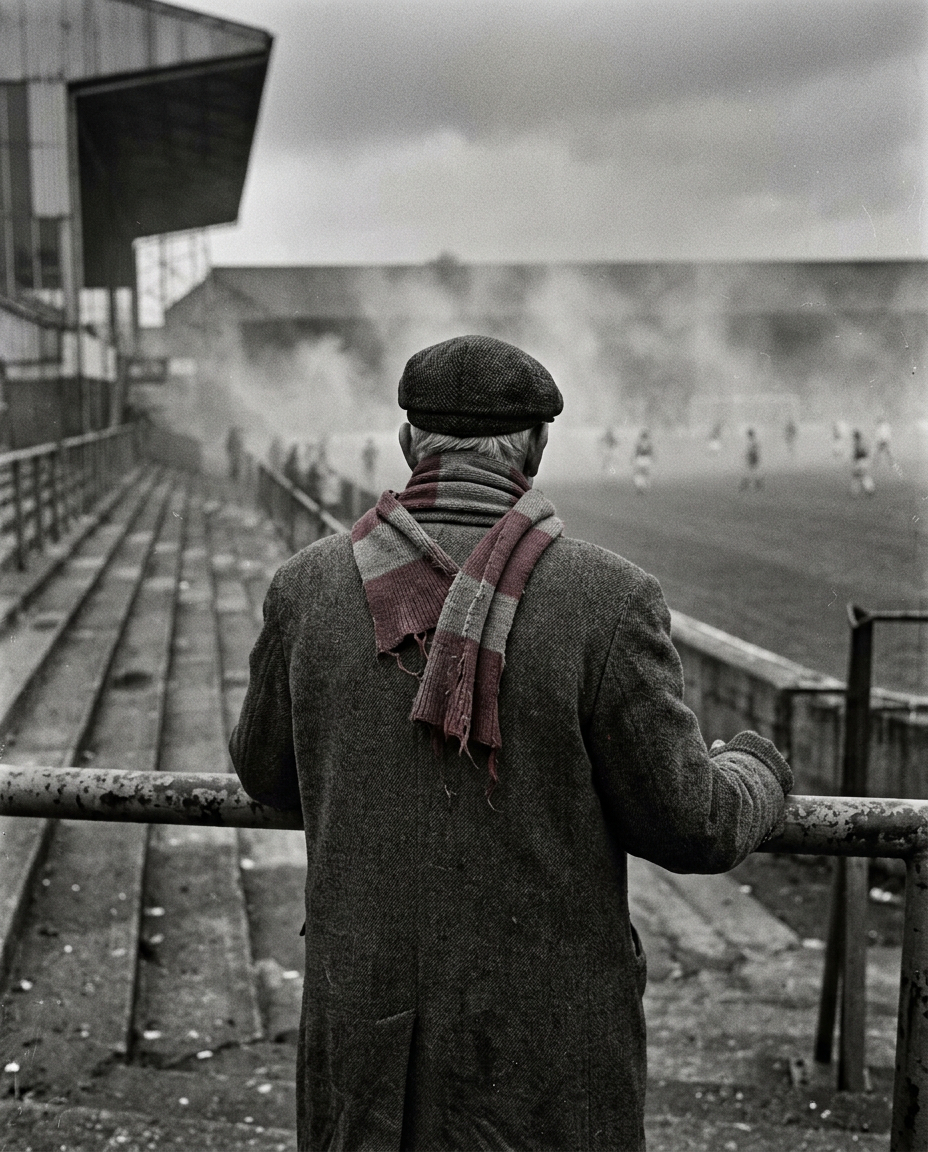
The culture of football did not emerge from strategy meetings or marketing departments. It emerged from repetition.
From generations of supporters returning to the same places so often that rituals began to form around them.
The songs that still echo through stadiums were not commissioned.
The traditions that define clubs were not designed.
The matchday routines, the superstitions, the meeting points, the banners, the jokes, the stories and the language all emerged naturally from people spending their lives around the game.
Nobody appointed them custodians of football culture.
They became custodians because they stayed.
Year after year.
Decade after decade.
Long enough for their habits to become tradition.
What makes this generation remarkable is not merely their loyalty.
Football has always inspired loyalty.
What makes them remarkable is the period through which they remained loyal.
They attended when stadiums were crumbling.
When television paid little attention.
When facilities were poor.
When football was not fashionable.
When supporting a club carried very little social value beyond the satisfaction of belonging.
They carried the culture through years when the game offered them far less than it does today.
And yet they continued to show up.
Not because they expected rewards.
Because attendance had become
part of their identity.
Many of them are still here.
You can find them in almost every stadium if you know where to look.
Older now.
Quieter perhaps.
Some standing where they have always stood. Others sitting where terraces once existed. Some moving more slowly than they once did. Some arriving alone after losing friends who shared the journey for decades.
Modern football still welcomes them through the turnstiles.
But increasingly it feels as though the game no longer speaks directly to them.
The advertisements are aimed elsewhere.
The broadcasts are aimed elsewhere.
The marketing is aimed elsewhere.
The future, it seems, belongs to newer audiences.
And perhaps that is inevitable.
Football cannot remain frozen in time.
No living culture can.
Yet there is something worth remembering before the game rushes too eagerly toward whatever comes next.
The global sport that exists today was not built from nothing.
It rests upon foundations laid by people whose names rarely appear in history books.
The terraces did not fill themselves.
The songs did not sing themselves.
The culture did not create itself.
Somebody built it.
Somebody carried it.
Somebody protected it long enough
for future generations to inherit it.
Perhaps that is why old supporters deserve more than nostalgia.
Nostalgia can be patronising.
It treats people as relics.
As survivors of a vanished age.
But these supporters are not relics.
They are the living connection
between football’s past
and football’s future.
They are proof that the game existed before the cameras arrived and that it will continue to exist after today’s trends have disappeared.
They remind us that football’s greatest asset has never been its players, its stadiums or its television contracts.
Its greatest asset has always been the people who cared about it when caring required something more than simply watching.
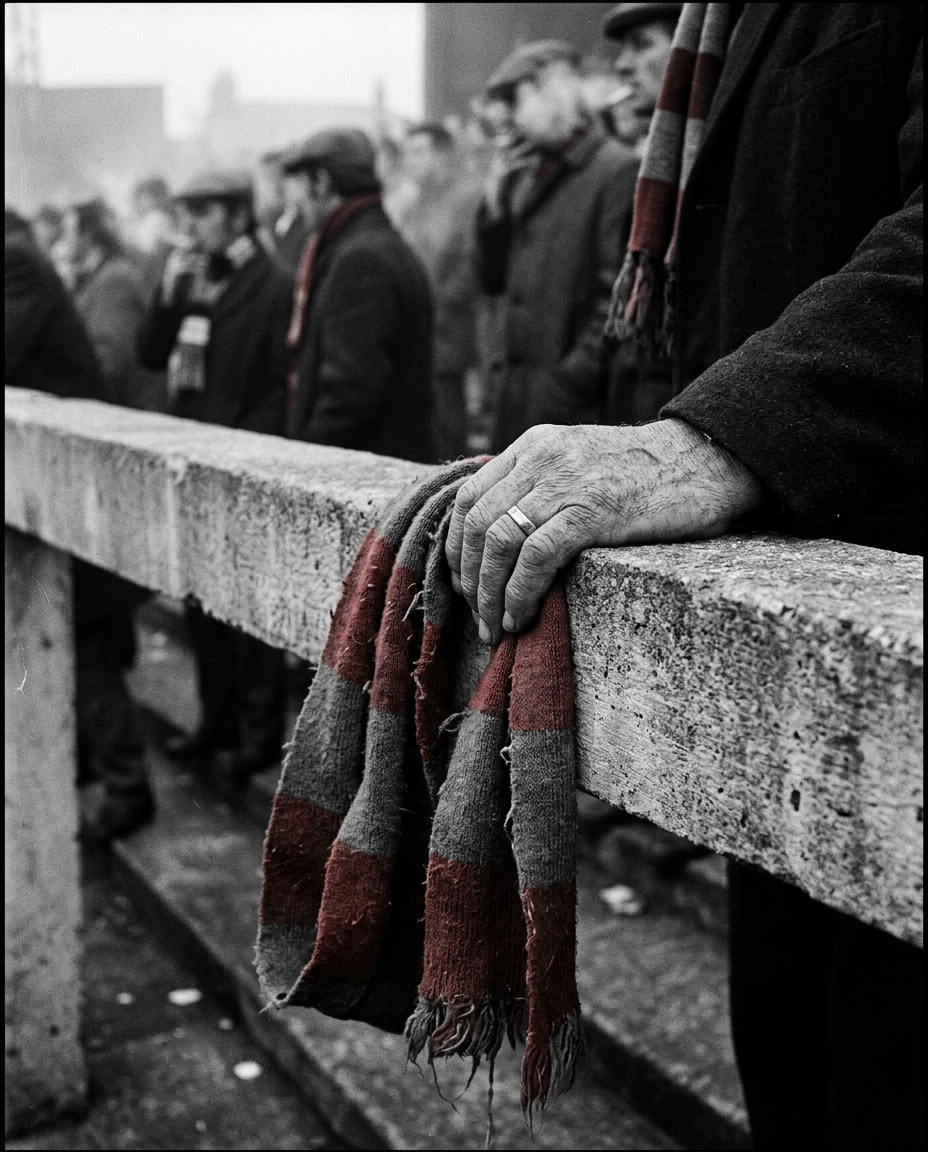
One day, many of these supporters will be gone.
Their places on the terrace will be occupied by others. Their stories will survive only in fragments.
A photograph in a drawer.
A scarf hanging in a garage.
A song somebody still remembers.
A route to a stadium that no longer exists.
The game will continue, as it always does.
Football is very good at moving forward.
Perhaps too good.
But if the sport wishes to understand itself honestly, it should occasionally pause and look over its shoulder.
Because behind every great club, every famous stadium and every celebrated moment stands an older generation that built the culture long before anyone realised it was worth preserving.
These are the people modern football forgot.
Not completely. Not yet.
But enough that somebody should remember them.
That, perhaps, is where
the archive begins.