Nobody remembers how many matches they watched.
Not even they could tell you.
Some attended their first game holding their father’s hand. Others arrived as teenagers with a few coins in their pocket and a scarf wrapped around their neck. Years passed. Managers came and went. Players became legends and were forgotten. Entire stands were demolished and rebuilt.
Yet every Saturday, they returned.
Football history tends to remember great goals.
It remembers title-winning teams.
It remembers famous names.
What it rarely remembers are the men who stood behind those moments.
The supporters who never stopped showing up.
Not when the club was successful.
Not when it was fashionable.
Not when television arrived.
Not when the team was relegated.
Not when the rain fell sideways across an uncovered terrace.
They came because attendance itself became part of who they were.
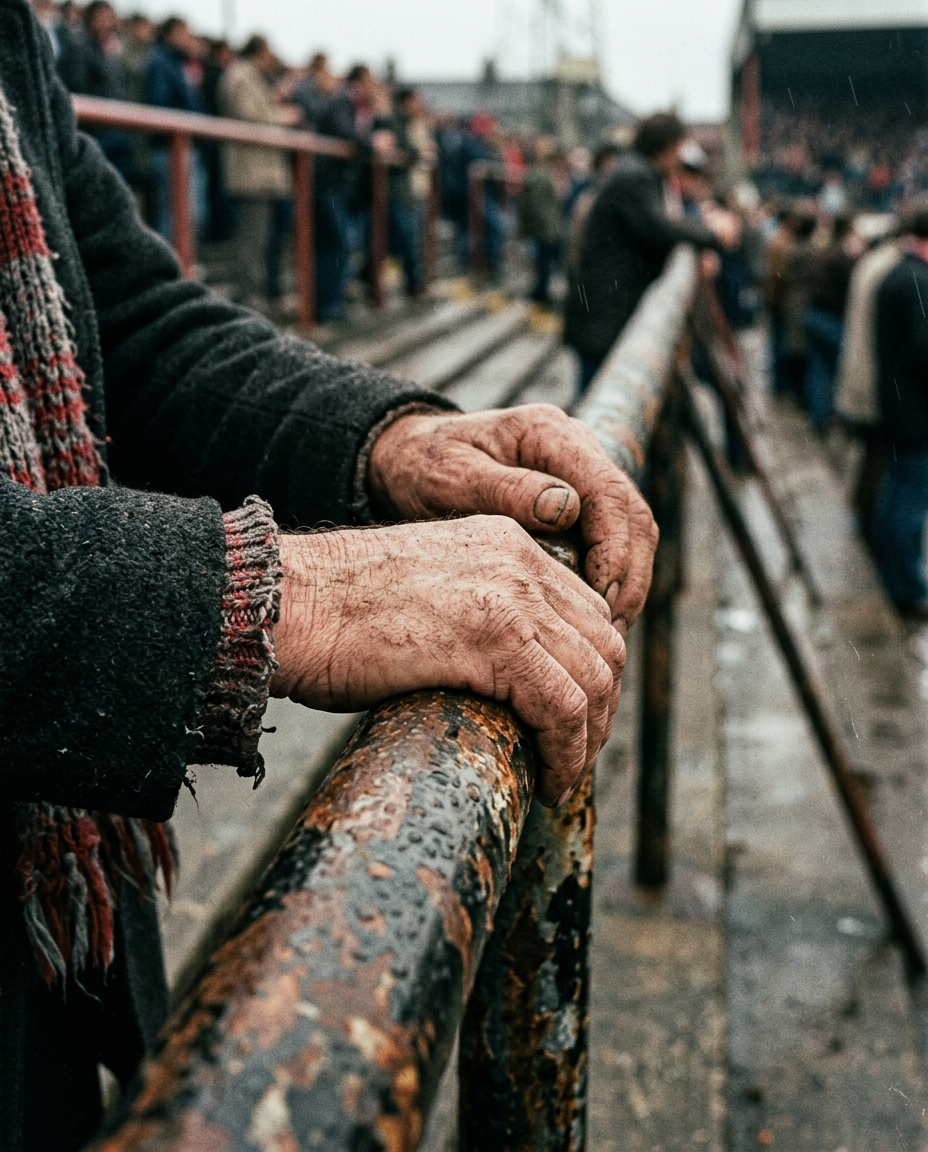
Every football ground had them.
The man who occupied the same section of the terrace for thirty years.
The man who knew every steward by name.
The man who could describe a match from 1958 with more clarity than what he had for breakfast yesterday.
The man who never spoke much during the week but became a different person on matchday.
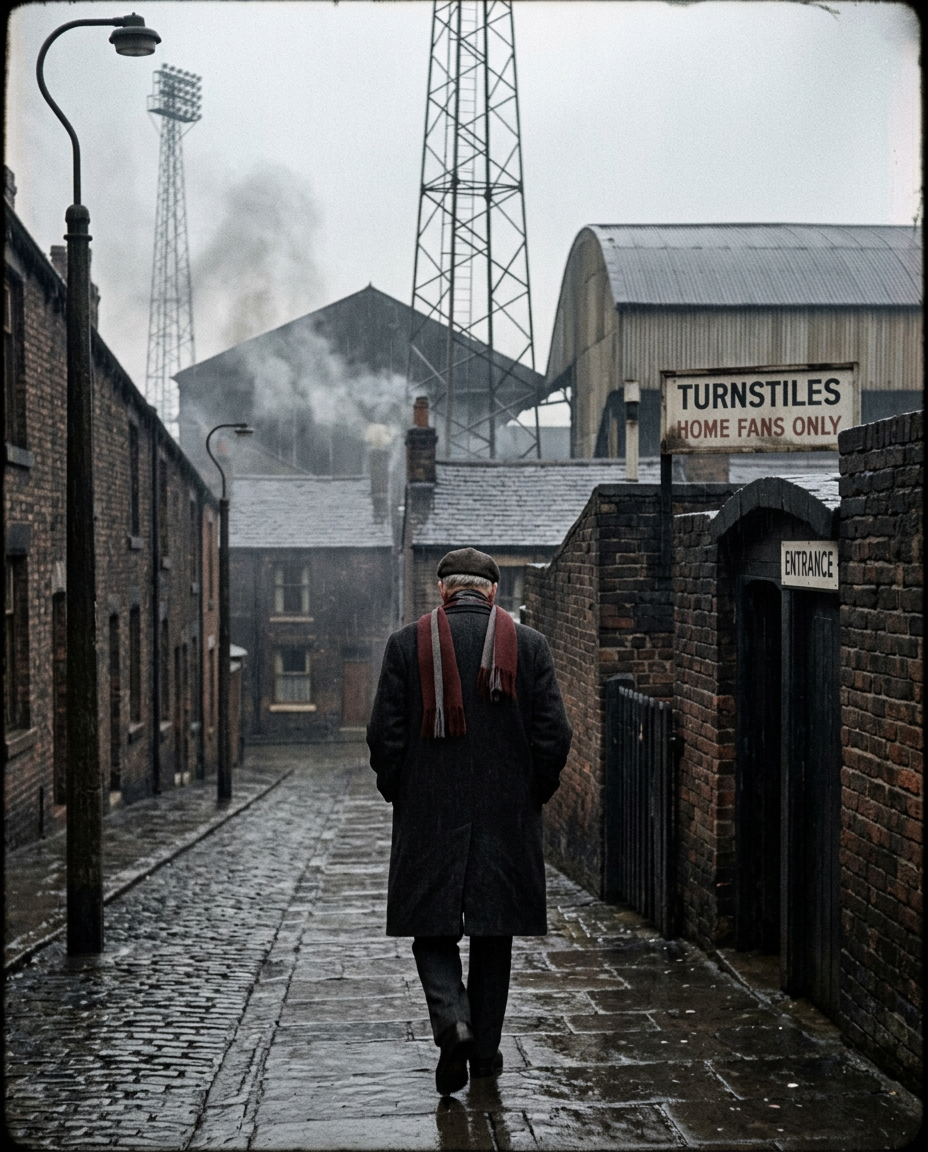
His route never changed.
The same streets.
The same railway station.
The same pub.
The same gate.
The same concrete step.
Entire decades passed beneath his feet.
Modern football often speaks about loyalty.
Usually, it means loyalty while things are going well.
But these men understood a different version of the word.
A harder version.
A quieter version.
The kind of loyalty that survives disappointment.
The kind that survives failure.
The kind that asks for nothing in return.
Many spent years watching teams that never won anything important.
Many endured seasons of frustration, disappointment and false hope.
Still they came.
Not because they expected glory.
Because the club belonged to them.
And they belonged to it.
There was a time when football attendance required sacrifice.
Factory shifts ended minutes before kickoff.
Money was scarce.
Travel was uncomfortable.
The terraces were cold.
The view was often terrible.
The facilities were primitive.
Nobody cared.
Football was never sold as a premium experience.
It was simply where people felt alive.
For ninety minutes, surrounded by thousands of strangers who somehow felt like family, life’s burdens became easier to carry.
The match mattered.
But the gathering mattered too.
Perhaps that is what modern football struggles to understand.
People did not fall in love with football because it was convenient.
They fell in love because it gave structure to their lives.
A rhythm.
A community.
A reason to leave the house.
A story bigger than themselves.
The men who never missed a match were not obsessed with entertainment.
They were devoted to belonging.
Many of them are gone now.
Some rest in cemeteries overlooking the towns where they spent their lives.
Some are remembered only through fading photographs.
Some survive in family stories told by sons and grandsons.
Yet traces of them remain everywhere.
In old ticket stubs.
In weathered scarves.
In terrace songs still sung decades later.
In the rituals that continue every weekend.
Football changes constantly.
Owners change.
Players change.
Competitions change.
Stadiums change.
But every generation produces a handful of people who understand something timeless.
The result matters.
The performance matters.
The victory matters.
But showing up matters too.
And perhaps that is the quiet lesson left behind by the men who never missed a match.
Long after the final whistle fades,
loyalty remains.