Football supporters often speak about clubs as though they are permanent.
The badge remains.
The colours remain.
The name survives.
Yet anyone who has followed a club long enough eventually discovers an uncomfortable truth: the places we associate with football are often far more fragile than the emotions attached to them.
A stand is demolished.
A terrace is rebuilt.
A turnstile disappears.
A familiar route changes forever.
One day, without quite realising it, you find yourself standing in the same stadium but no longer in the same place.
There was a man who attended every home match for more than three decades from the exact same concrete step.
Not the same section.
Not the same stand.
The same step.
If you had arrived at the ground twenty minutes before kickoff, you would have found him there.
If you had arrived ten years later, you would have found him there again.
The people around him changed. Some grew older. Some stopped coming. Some passed away. New faces appeared. Generations rotated through the terrace like seasons.
The step remained.
And so did he.
To outsiders, this attachment can appear irrational.
After all, it was only a piece of concrete.
Uneven.
Cold.
Uncomfortable.
There was nothing remarkable about it.
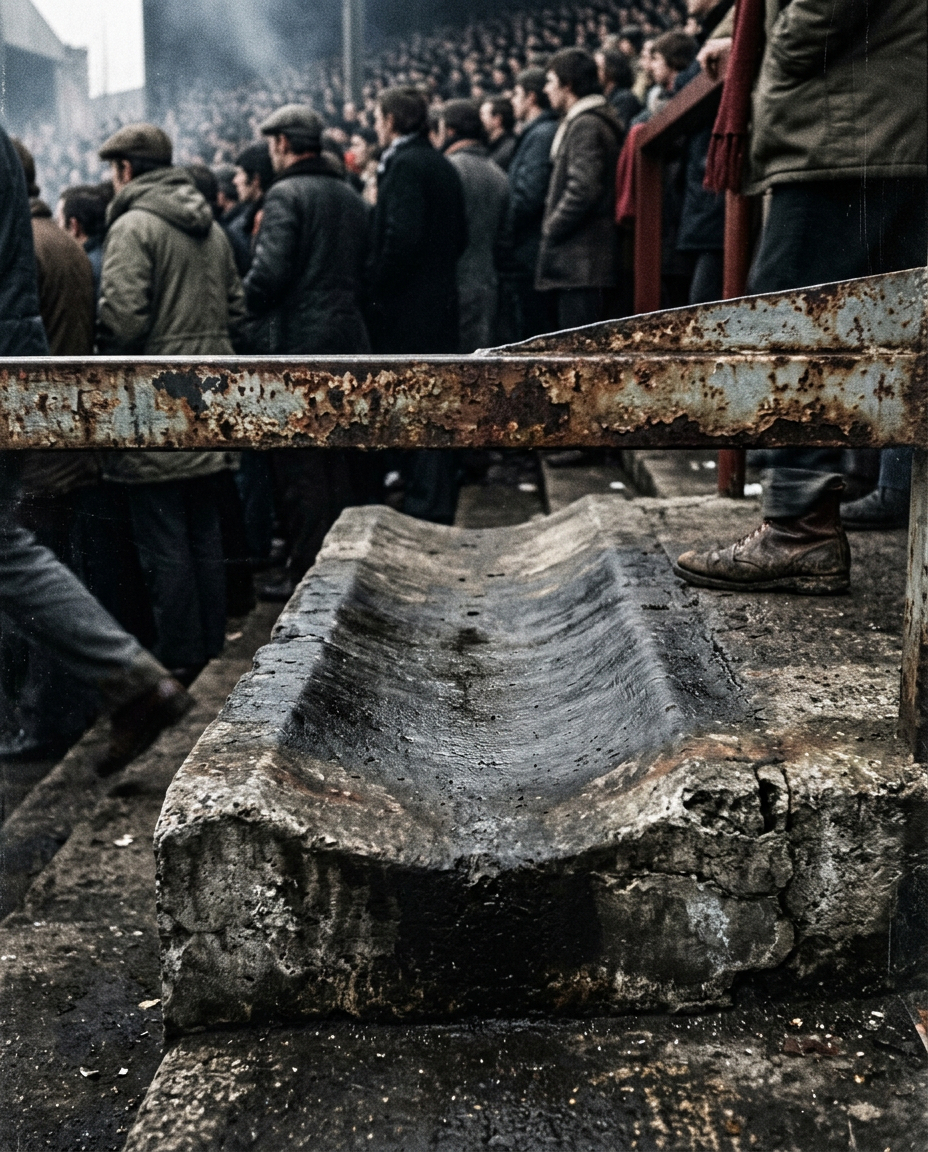
No plaque.
No special view.
No historical significance.
Yet over time, that small rectangle of concrete accumulated something far more valuable than architectural importance.
It accumulated memory.
From that position he witnessed promotions and relegations.
Victories that lasted a lifetime and defeats that felt equally permanent.
He watched players arrive as hopeful teenagers and leave as club legends.
He celebrated goals with people whose names he never knew.
He argued with strangers who eventually became friends.
The step became an address.
Not in a legal sense.
In an emotional one.
Football grounds possess thousands of locations like this.
Places invisible to everybody except the people who occupied them.
A certain barrier behind the goal.
A specific crush rail.
A corner of a terrace beneath a leaking roof.
The exact seat a father once used.
The exact row where a group of friends always gathered.
Football memory often attaches itself to geography.
Not grand geography.
Small geography.
Personal geography.
When stadiums are rebuilt, something curious happens.
The club survives.
The football survives.
The crowd survives.
Yet supporters often mourn the disappearance of spaces they never technically owned.
A wall.
A staircase.
A gate.
A step.
The grief confuses people who have never experienced it.
Why become emotional about concrete?
Because the concrete was never really the point.
The memories attached to it were.
The terrace where our supporter stood disappeared in 1994.
Progress demanded it.
Safety regulations required it.
The old structure gave way to something newer, cleaner and more practical.
The decision was sensible.
Most supporters agreed.
Even he agreed.
That did not make the loss easier.
On the final day before demolition, many supporters visited the stand one last time.
Some took photographs.
Some removed small fragments as souvenirs.
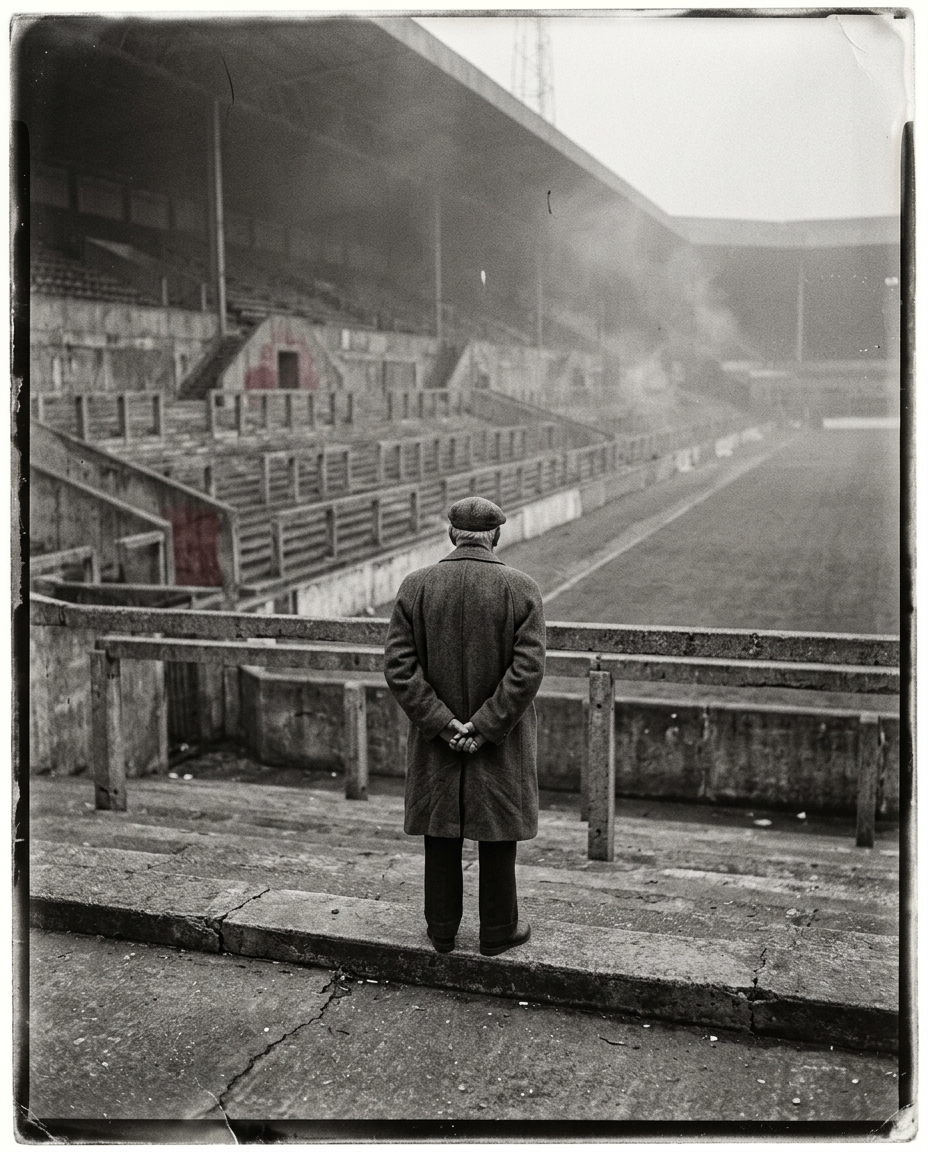
Others simply stood quietly, looking across a football ground they knew was about to change forever.
Among them was the man who had occupied the same step since 1958.
For a while he stood exactly where he always had.
Watching.
Remembering.
Saying nothing.
Years later, somebody asked him whether he missed the old terrace.
His answer surprised them.
He said he did not miss the terrace.
He missed the version of himself
that existed there.
The young man arriving for his first match.
The father bringing his children.
The friend standing beside people who were no longer alive.
The supporter who believed football grounds lasted forever.
The concrete step is gone now.
The stand is gone.
The stadium itself may one day disappear.
That is the nature of places.
But memory obeys different rules.
A supporter can return to a terrace decades after its demolition and still know exactly where he used to stand.
Exactly what he could see.
Exactly who stood beside him.
Exactly how it felt.
Some places survive long after they have ceased to exist.
That old concrete step was one of them.