There was no single afternoon when football changed. No final whistle marked the end of one age and the beginning of another. Nobody walked out of an old ground, looked back at the turnstiles, and understood that something essential had just slipped away.
The transformation was quieter than that. It arrived through small adjustments that seemed reasonable at the time. A new advertising board appeared along the touchline. A television platform occupied a corner of the stand. Ticket prices rose, first slightly, then permanently. Stadiums became cleaner, brighter, safer, more comfortable. Families returned to places that had once felt hostile. International audiences discovered clubs they had never seen in person. The game expanded beyond its old streets, beyond its old towns, beyond the men who had carried it through smoke, rain and winter for generations.
Much of this was progress. It would be dishonest to pretend otherwise.
But progress always asks for something in return.
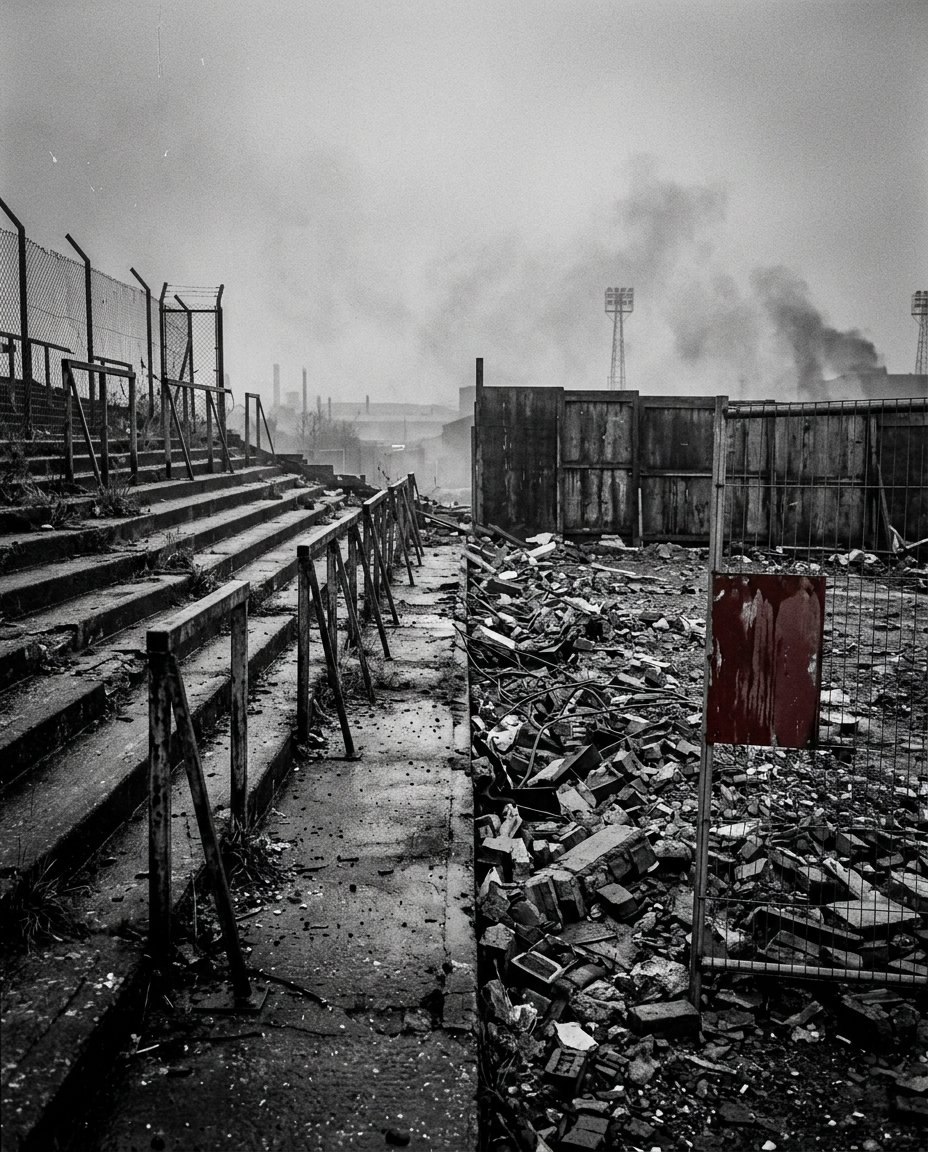
For most of its life, football was built around attendance. The supporter did not merely watch the match; he completed it. The sound, the pressure, the anger, the humour, the songs, the insults, the rituals before and after — all of it came from people who were physically present. Football happened on the pitch, but it lived in the stands.
The old terraces understood this instinctively. They were not sentimental places. They were rough, uncomfortable, often unforgiving. Yet they gave football something modern presentation struggles to reproduce: a sense that the match belonged to those who had made the journey.
When television began to move from observer to architect, the relationship changed. Football discovered that it could earn more from people who never entered the ground than from those who stood there every week. The supporter behind the goal was still important, but he was no longer the only audience that mattered. Slowly, almost politely, the centre of gravity shifted.
The language changed before many people realised the meaning had changed with it.
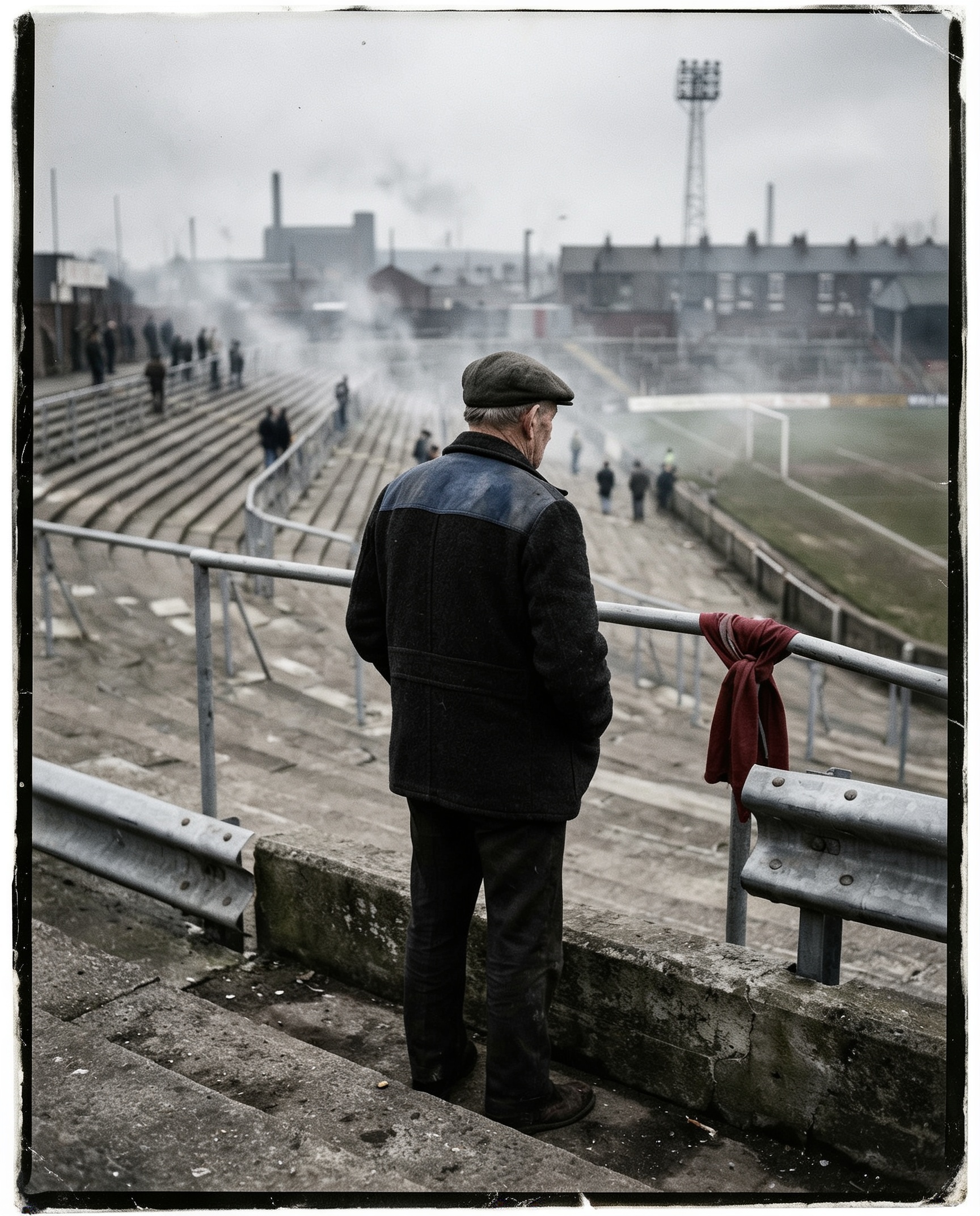
The terraces noticed first.
Not because they understood broadcasting contracts or commercial strategy. Most of the men standing beneath those roofs were not interested in boardroom language. But football crowds possess a powerful instinct for detecting when something is being taken from them. They felt it in the pricing. In the scheduling. In the distance between club and supporter. In the strange new sensation that decisions were increasingly made for people watching football rather than for people living it.
That was the wound.
Not that football became visible to the world. Not that the game grew. Not that more people were able to fall in love with it from far away.
The wound was that the people who had kept football alive through its coldest, poorest, least glamorous decades were gradually repositioned as one audience among many.
And yet, the most important thing survived.
The songs survived. The routes to the ground survived. The pubs survived. The old arguments survived. Fathers still brought sons. Friends still arranged their weeks around kickoff. Men still carried clubs inside them like inherited burdens. Even as football became entertainment, something beneath the spectacle resisted conversion.
Because football has never behaved like ordinary entertainment.
A film ends when the credits roll. A concert ends when the lights come up. A show can be enjoyed, reviewed and forgotten.
Football follows people home.
It enters families. It shapes friendships. It ruins weekends. It gives men something to discuss when they cannot discuss anything else. It becomes geography, memory, inheritance, language. It becomes the thing a father gives his son without knowing whether he is offering a gift or a sentence.
That is why football could never be fully converted into content. It can be packaged, sold, streamed and broadcast across the world. It can be surrounded by sponsors, statistics, pundits and production value. But somewhere beneath all of that, the old force remains: people attaching their lives to something that does not promise to reward them.
Perhaps that is what the terraces knew.
They knew football was not valuable because it entertained. It entertained because it mattered. And it mattered because people had given it parts of themselves that money could not create.
Modern football did not destroy the old game completely. Nothing that lives inside people disappears that easily.
But it did change the terms.
Once, football asked you to come.
Now, it asks you to watch.
There is a difference.