Football was never supposed to be comfortable.
At least, not for most of its history.
There were no heated seats.
No climate-controlled hospitality lounges.
No retractable roofs.
No promises.
Only a fixture list pinned to a wall and the understanding that, come Saturday afternoon, you would be there.
Whatever the weather.
Rain occupied a special place in football culture.
Not because supporters enjoyed it.
Most hated it.
The cold soaked through coats.
Scarves became heavy.
Shoes filled with water.
The walk home felt twice as long.
Yet the rain never became a reason to stay away.
It was simply another opponent to overcome before kickoff.
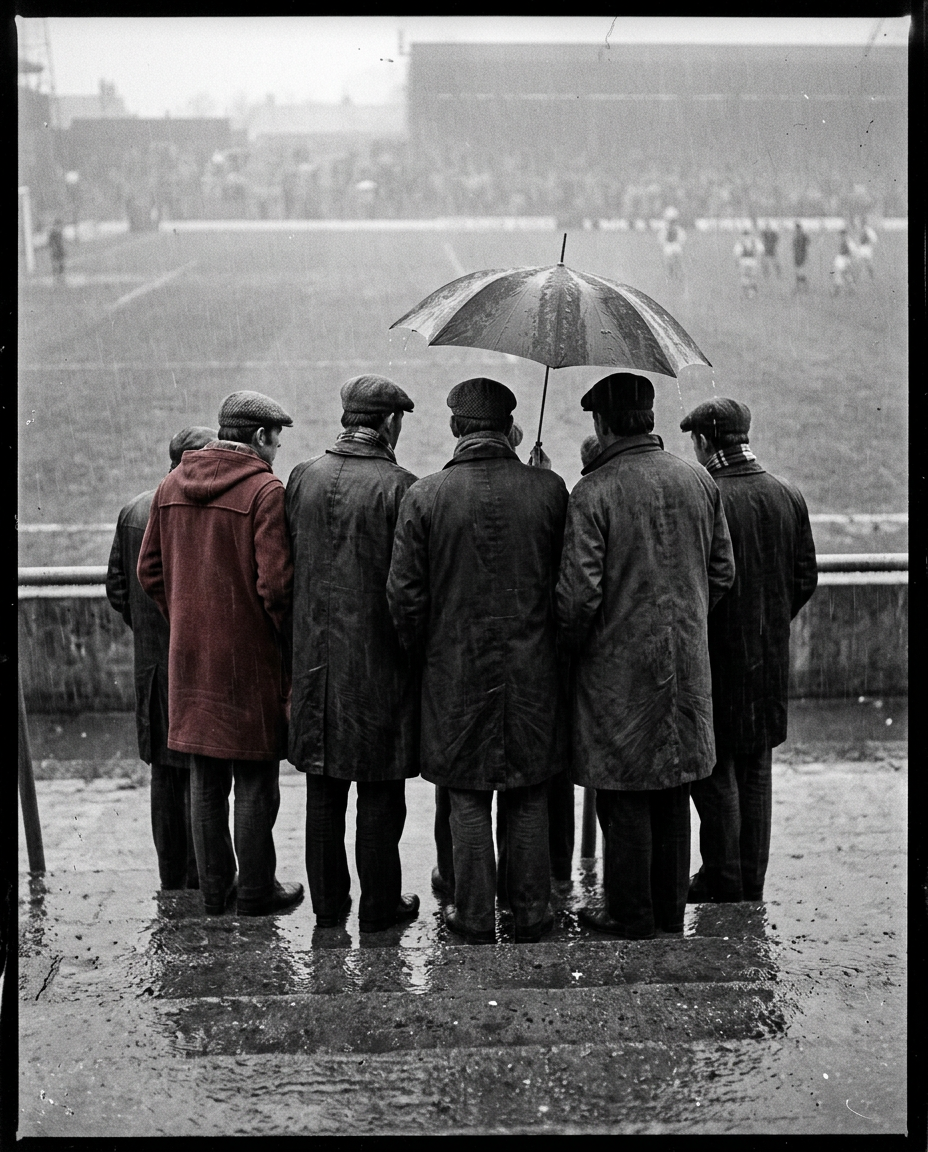
Older supporters rarely spoke about bad weather as though it were extraordinary.
It was expected.
A winter fixture meant rain.
Mud.
Wind.
Frozen fingers.
Visibility reduced by mist and cigarette smoke.
The conditions were accepted in the same way players accepted difficult pitches.
Complaining changed nothing.
Showing up changed everything.
The terraces reflected this mentality.
Many offered little protection from the elements.
Some supporters spent ninety minutes exposed to rain that fell uninterrupted from first whistle to last.
Others stood beneath roofs that leaked almost as much as they sheltered.
Nobody expected a refund.
Nobody expected compensation.
The match would begin regardless.
So would the supporters.
The pitches suffered too.
Modern football supporters often struggle to imagine the condition of many playing surfaces.
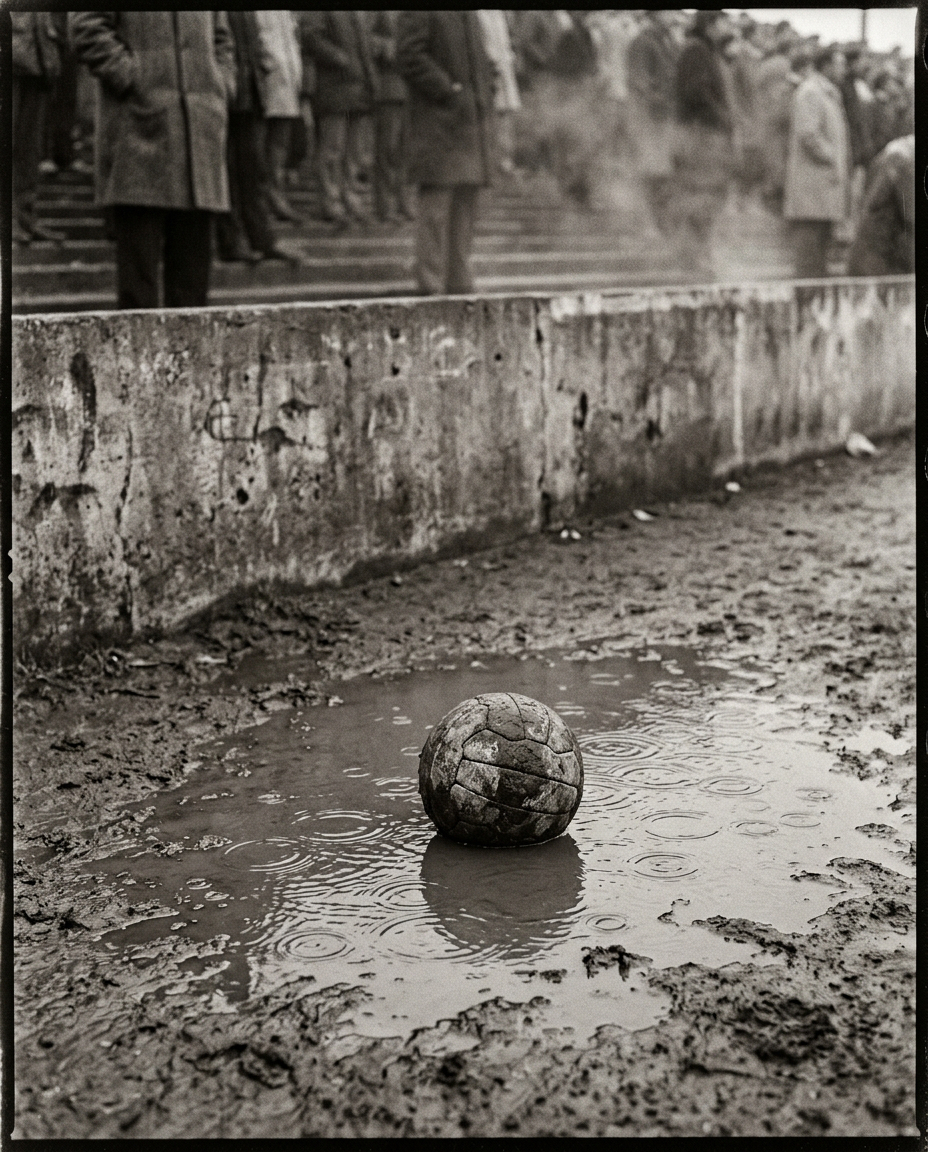
By February, some resembled construction sites more than sports fields.
Grass disappeared beneath mud.
Standing water collected near touchlines.
The ball stopped unexpectedly.
Players slipped constantly.
Every challenge carried consequences.
Football became less predictable.
More honest.
There was beauty in those conditions.
Not because they were ideal.
Because they removed every unnecessary layer surrounding the game.
When the rain arrived, only the essentials remained.
Twenty-two players.
One ball.
Thousands of supporters.
Nothing else mattered.
Perhaps this explains why old photographs taken in terrible weather continue to resonate.
The images are uncomfortable.
The faces are wet.
The conditions appear miserable.
Yet the people remain.
Nobody is leaving.
Nobody is looking for shelter.
Nobody appears surprised.
They are exactly where they intended to be.
Loyalty reveals itself most clearly when circumstances become inconvenient.
Anyone can attend when the sun is shining and the team is winning.
The real test arrives when the opposite is true.
When the forecast is dreadful.
When the team is struggling.
When comfort suggests staying home.
That was the challenge accepted
by generations of supporters.
Again and again.
Football today offers experiences previous generations could scarcely imagine.
Better facilities.
Better safety.
Better visibility.
Better comfort.
Most of those improvements are welcome.
Necessary, even.
But something valuable existed in the old relationship between supporters and adversity.
A shared understanding that attending football occasionally demanded sacrifice.
And that sacrifice strengthened belonging.
The rain mattered.
The mud mattered.
The cold mattered.
Not because they improved football.
Because they revealed who truly cared.
Long after the result was forgotten, those memories remained.
The freezing walk to the ground.
The soaked scarf.
The muddy terrace.
The shared laughter.
The final whistle.
The journey home.
Football offered no guarantees.
And yet they came anyway.
That was loyalty.