Most football supporters never notice when something disappears.
Not immediately.
A turnstile is replaced.
A floodlight tower comes down.
A terrace becomes seating.
A stand is demolished during the summer and rebuilt before the season begins.
The game continues.
The fixture list survives.
Life moves on.
Only later does somebody realise that a piece of football’s memory has quietly vanished.
The wooden terraces are among the last survivors.
Scattered across lower divisions, hidden from television cameras and international attention, they remain standing in places where modern football rarely looks.
They were never supposed to last this long.
Built decades ago from timber, steel and practicality, many have survived wars, economic crises, ownership changes and countless winters.
Every season feels
like borrowed time.
To modern eyes they often appear fragile.
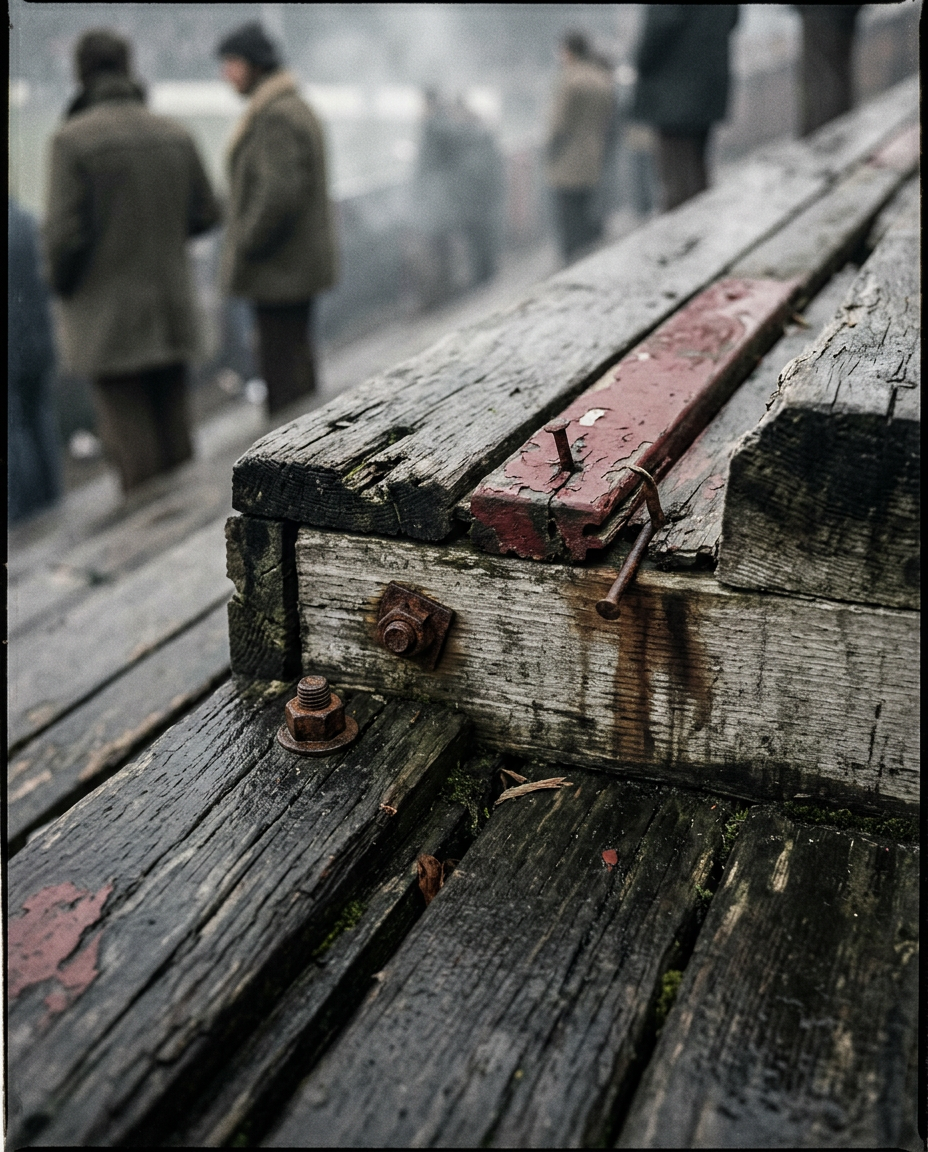
The paint is faded.
The boards are uneven.
The handrails have been touched by generations.
Every surface carries evidence of use.
These structures were not preserved by museums.
They survived because people continued using them.
Week after week.
Year after year.
There is something profoundly human about old wooden terraces.
Unlike concrete, timber ages visibly.
It records history.
Every mark tells a story.
Every repair reveals another chapter.
Every replacement board becomes evidence that somebody cared enough to keep the structure alive.
Football architecture rarely feels personal.
Wood does.
The sound is different too.
Supporters who remember these terraces often speak about the noise.
Not simply the singing.
The structure itself.
The creaking beneath thousands of feet.
The vibration during celebrations.
The subtle movement of the stand during moments of collective excitement.
The building participated in the experience.
It felt alive.
Many of the great football cathedrals of the twentieth century have disappeared.
Some were demolished.
Others were transformed beyond recognition.
Progress demanded change.
In many cases, change was necessary.
Safety improved.
Facilities improved.
Comfort improved.
Yet every improvement created distance from something older.
Something rougher.
Something more intimate.
The remaining wooden terraces occupy an unusual position.
Too old to be efficient.
Too valuable to ignore.
Too rare to replace.
They survive because they possess something modern stadiums cannot manufacture.
Authenticity.
Not as a marketing slogan.
As a physical reality.
When you stand inside one of these structures, you are surrounded by evidence of football’s continuity.
The same boards carried supporters before your parents were born.
The same handrails were gripped during promotions, relegations, victories and heartbreak.
Generations passed through the same spaces.
The building remembers
even when people forget.
One day, most of them will be gone.
That is unavoidable.
Time eventually wins every argument.
The timber will weaken.
The regulations will change.
The economics will shift.
Another terrace will disappear.
Then another.
And another.
Which is precisely why they matter today.
Not because they represent the past.
Because they remain part of the present.
Still standing.
Still creaking.
Still carrying supporters toward another Saturday afternoon.
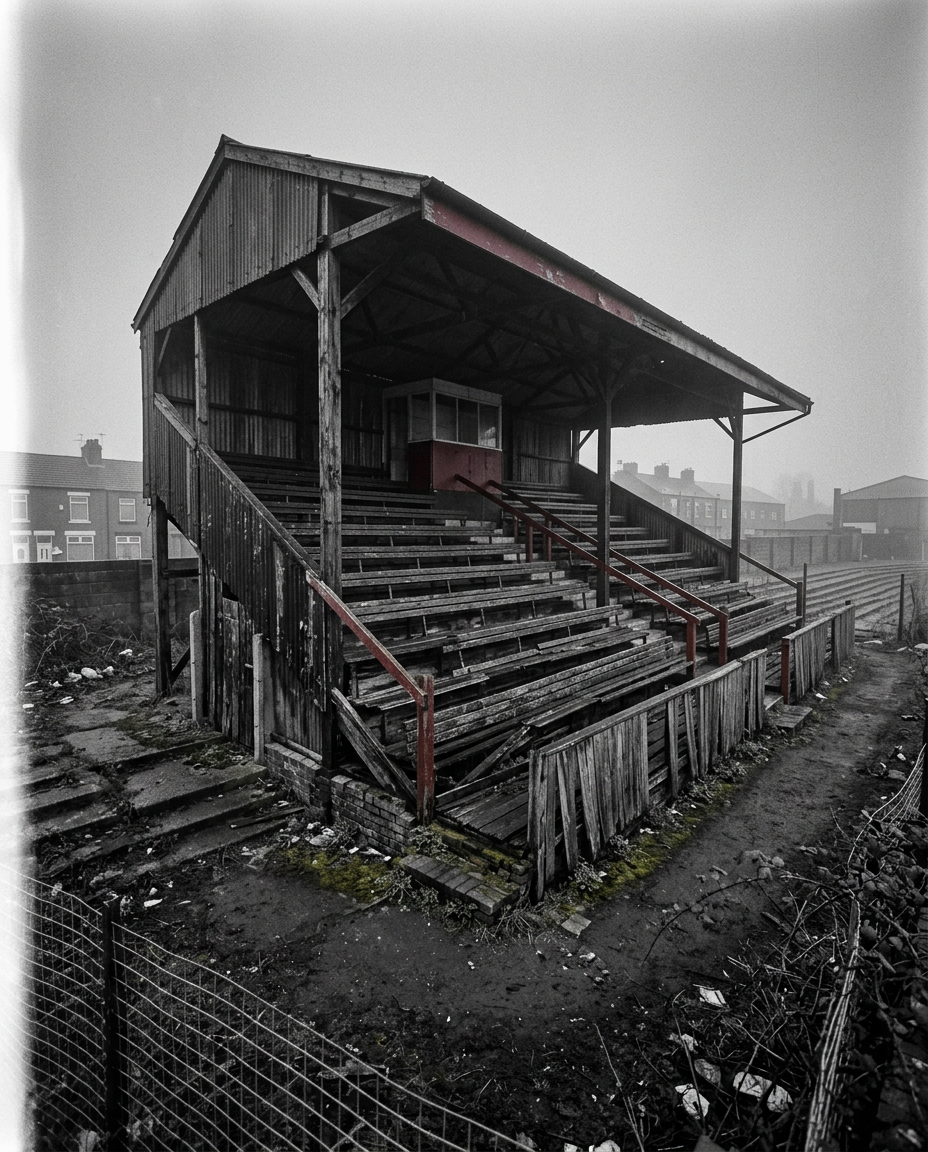
The last wooden terraces are not monuments.
They are living football history.
And the clock is running.